

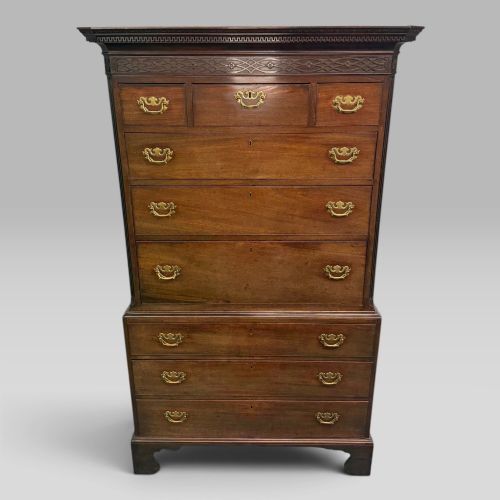
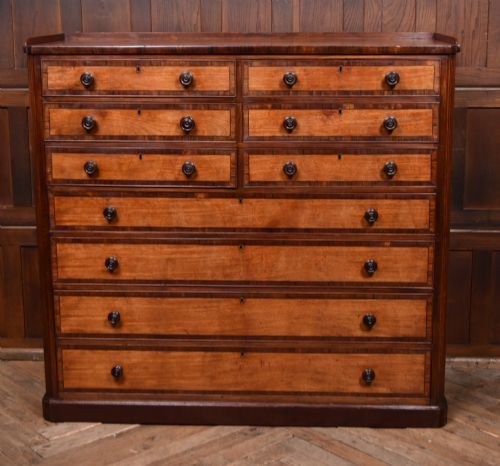
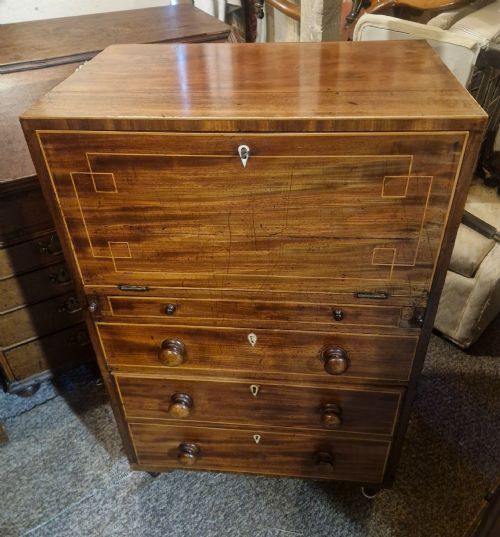
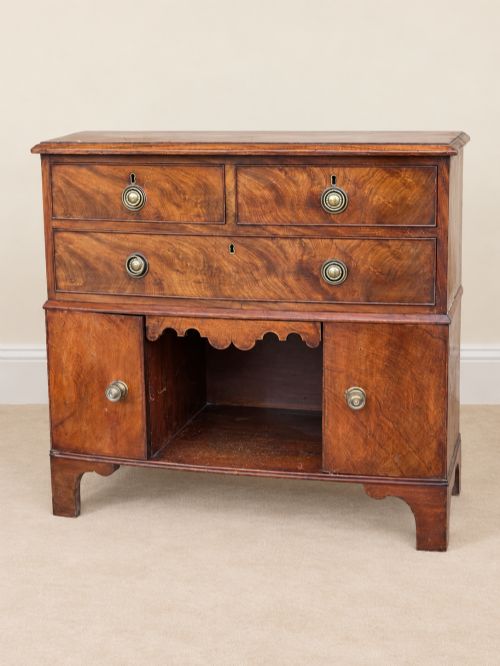
Antique Tallboy with Desk
An antique tallboy with desk combines a commanding chest of drawers with a pull-out writing surface for domestic organisation.
Antique Tallboy with Desk
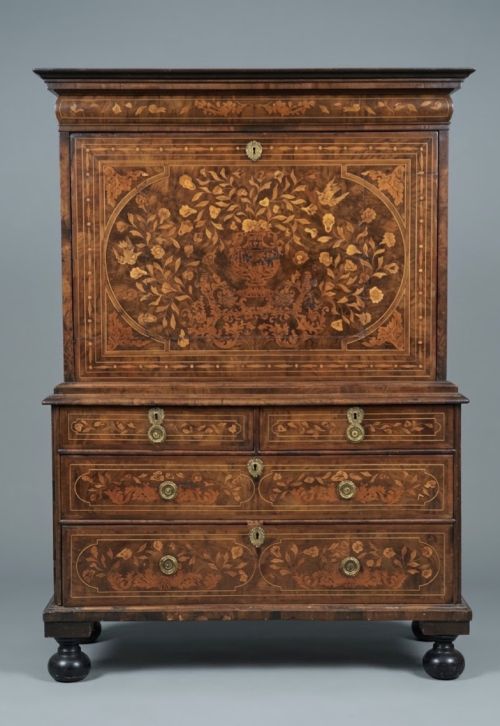
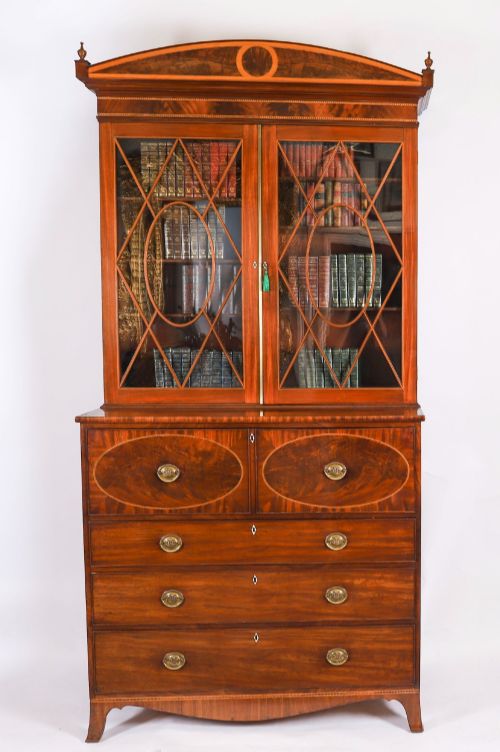
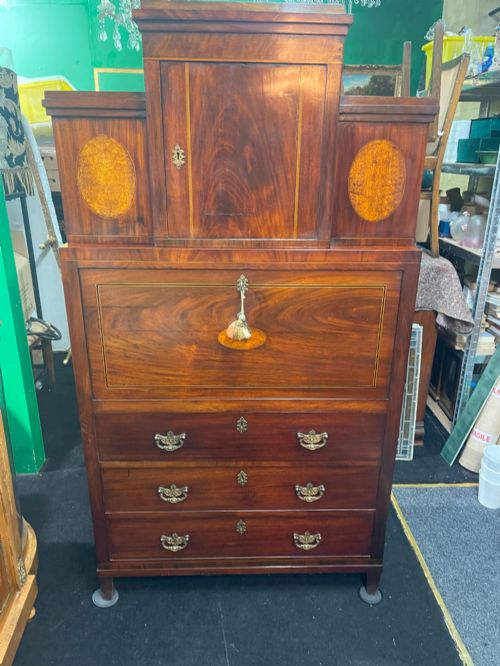
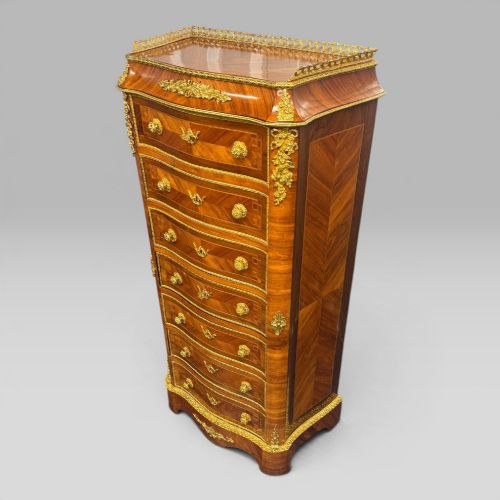
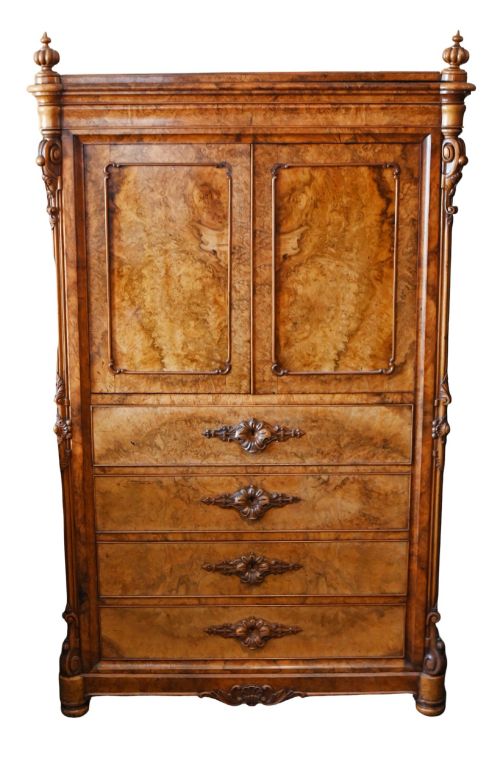
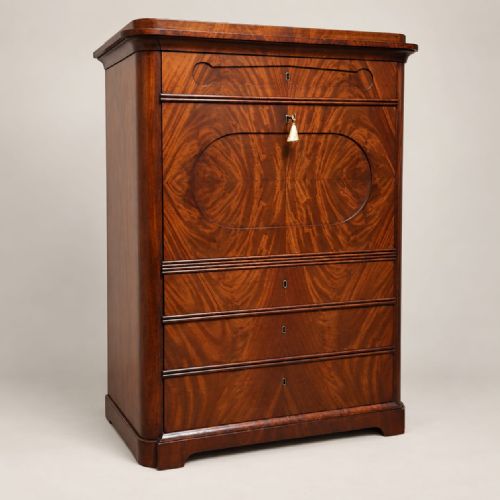
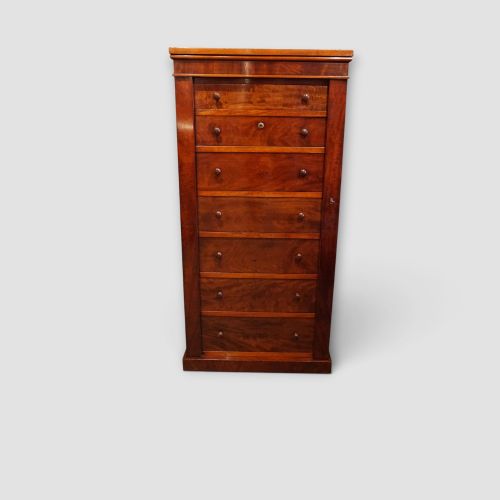
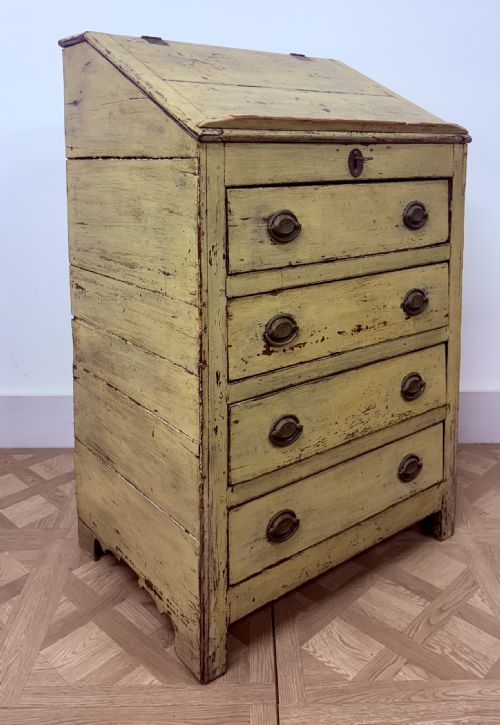
When you search for an antique tallboy with desk, you encounter substantial furniture pieces designed for writing and storage. The examples on this page span the 1700s, Georgian era, Victorian period, and 1920, taking forms such as secretaire chests on chest, secretaire bookcases, and bachelors chests.
The most prevalent versions feature a dedicated writing drawer or fold-down flap integrated into a tall chest of drawers. These items originate from English and French workshops, utilising woods like mahogany, walnut, and pine.
Makers combined vertical storage with functional writing surfaces to suit domestic spaces. Bureau cabinets and secretaire Wellington chests appear frequently alongside classic chest on chest configurations.
Materials and construction
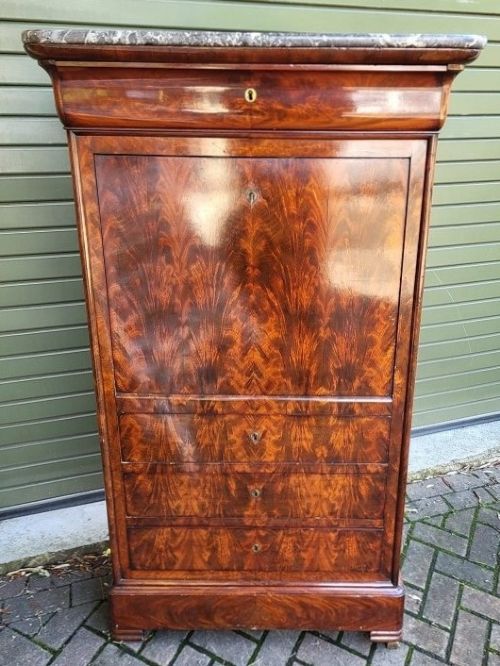
Cabinet makers constructed these pieces using solid timbers like oak and pine for internal carcases and drawer linings, applying fine veneers such as flame mahogany, walnut, and birds-eye maple to primary surfaces. Pollard oak and maple veneer also feature in specific regional examples.
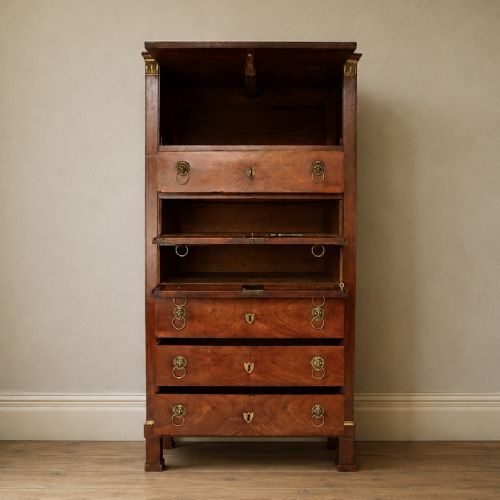
Joinery techniques relied on dovetailed drawer construction and precise frame assembly to support the weight of tall formats and heavy writing drawers. Brass hardware, including drop handles and escutcheons, secures doors and drawers while adding structural accents.
Antique Tallboy with Desk Retail Price Guide 2026
Typical asking prices for tallboy with desk among the pieces listed under this phrase on Sellingantiques today, from the lower quarter to the upper quarter. They describe what is for sale here now, not the wider market.
Materials documented across the current selection include brass, mahogany, pine, oak, walnut, glass, maple veneer, and flame mahogany veneer.
Judging quality in tallboys with desks
Quality rests in the selection of timber veneers and the precision of the internal desk fittings. Pieces displaying book-matched flame mahogany or figured walnut demonstrate superior material selection by the cabinet maker.
The mechanical execution of the writing compartment defines the tier of work. Smoothly operating fall-front flaps, well-fitted pigeonholes, and secret drawers indicate high workshop standards.
The Antique Tallboy with Desk Glossary
- Tallboy
- A tall chest of drawers, often constructed as one chest stacked upon another chest. This format maximises vertical storage capacity in smaller rooms.
- Secretaire
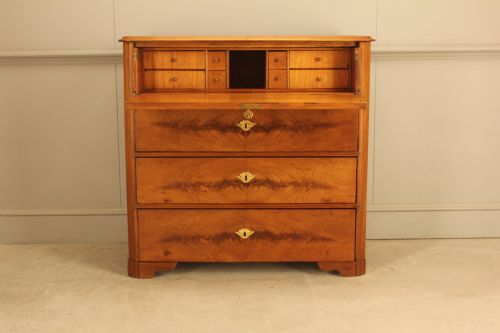
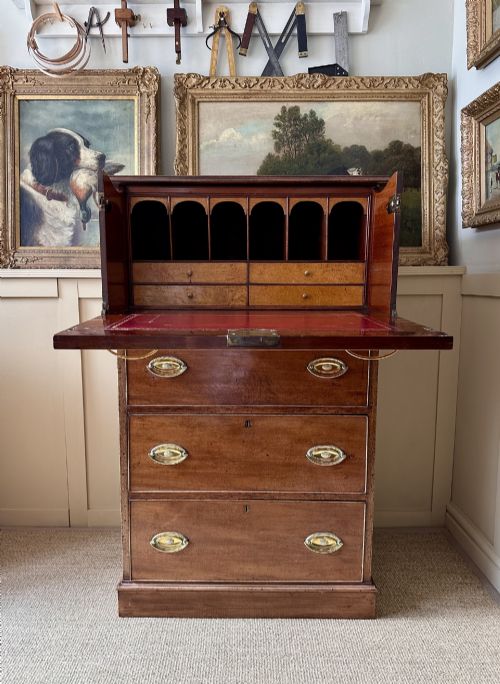
- A desk or chest of drawers featuring a concealed writing drawer or a fold-down front panel. It reveals pigeonholes and small drawers when opened.
- Bachelors chest
- A low chest of drawers equipped with a brushing slide or folding top used for writing. These compact items date primarily to the Georgian period.
- Bureau bookcase
- A combination of a sloping-front desk and a shelved upper cabinet. The upper section typically encloses books behind glass or panelled doors.
- Dovetail
- A joint formed by interlocking wedge-shaped fingers, used extensively in period drawer construction. Hand-cut dovetails indicate traditional craftsmanship.
Antique Tallboy with Desk: Frequently Asked Questions
What is a secretaire chest?
A secretaire chest looks like a standard chest of drawers from the outside, but the upper drawer pulls out or folds down to reveal a writing surface and small compartments.
This clever design allowed homeowners to write letters without needing a separate, bulky desk taking up floor space.
How do I date an old tallboy?
Dating relies on examining the timber species, secondary woods inside the drawers, and construction methods like hand-cut dovetails. Hardware styles and veneer types also offer strong clues to the decade of manufacture.
Cabinet makers changed their styles across the Georgian and Victorian eras, shifting from solid walnut and figured mahogany to heavier moulded designs.
Where should I place one?
These tall pieces require solid wall placement and careful measuring of ceiling heights due to their vertical proportions. They suit studies, living rooms, or large bedrooms where storage and a writing space are both needed.
Keep them away from direct sunlight and heat sources to protect fragile wood veneers and polished surfaces.
Are writing drawers deep enough?
Writing drawers house internal compartments for stationery, inkwells, and letters, which reduces the flat depth available for modern paper formats. They were designed for correspondence using quill and ink rather than large ledgers.
The pull-out flaps and fold-down fronts provide adequate support for reading and light writing tasks.