


Antique Tall Boy
An antique tall boy provides monumental storage by stacking one robust chest directly upon another.
Antique Tall Boy
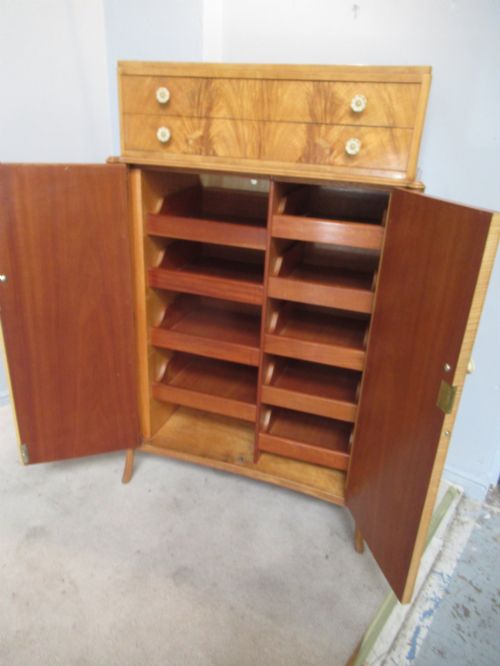
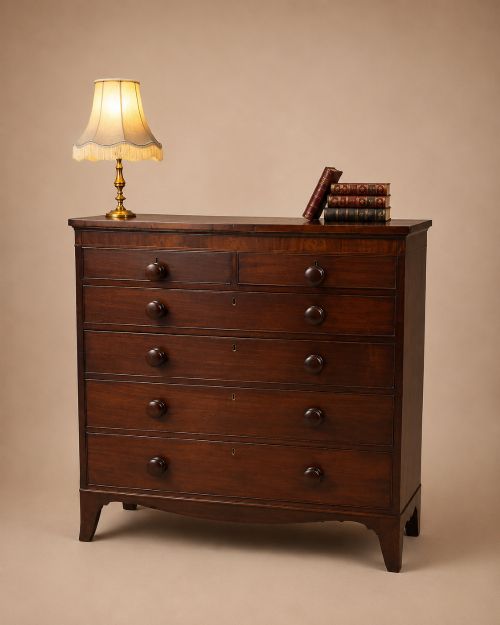
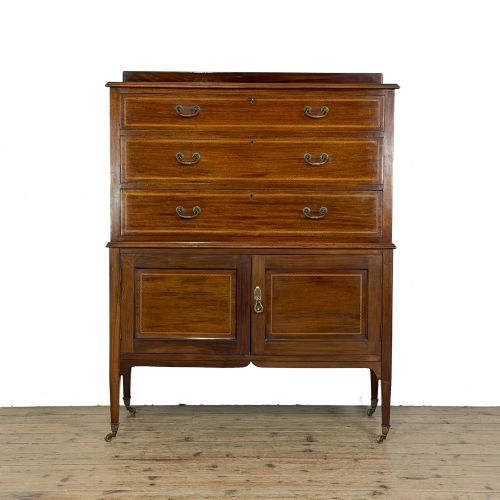
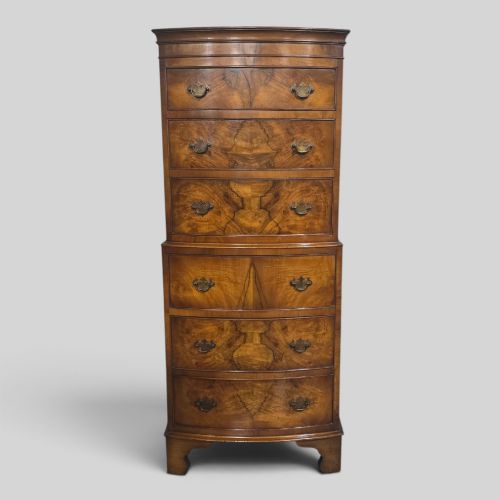
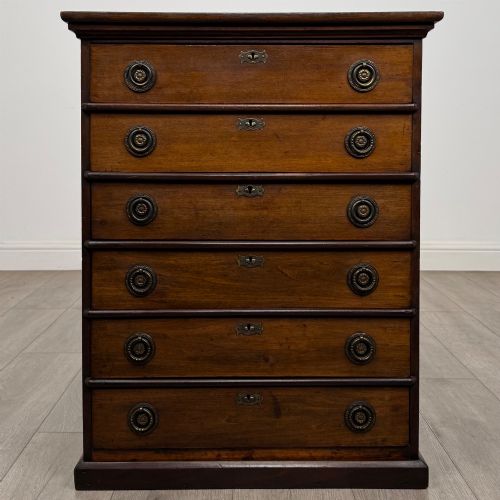
An antique tall boy is a commanding piece of vertical furniture designed to maximise bedroom storage without claiming too much floor space. These pieces typically take the form of a chest on chest or a tall chest of drawers, offering five to seven tiers of storage.
The selections available here span from the mid eighteenth century through the Georgian and Edwardian eras up to the nineteen twenties and thirties. Mahogany and burr walnut dominate the pieces, though examples in oak, pine and satinwood also appear.
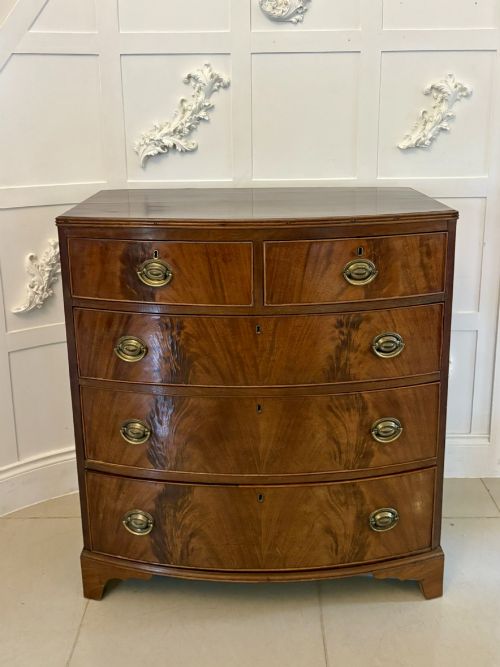
Buyers encounter variations including secretary desks fitted within the upper section, bow front designs, and distinct regional iterations from Irish and Dutch workshops.
Materials and construction
Cabinet makers utilised dense hardwoods such as mahogany and red walnut alongside decorative veneers like burr walnut and flame mahogany. Oak and pine frequently serve as secondary woods for internal drawer linings and carcass backs.
Construction relies on stacked modular carcases, where a smaller upper chest sits securely upon a wider lower base. Brass drop handles, escutcheons and bracket feet complete the structural assembly.
Several tall boys hide secret compartments inside their secretaire drawers, built to keep love letters away from inquisitive household staff.
Factors determining quality
The choice of timber grain defines the visual impact, with matched burr walnut and figured flame mahogany representing the upper echelon of cabinet making. Superior examples demonstrate continuous grain patterns across multiple drawer fronts.
Internal joinery and secondary timber selection distinguish workshop standards. Finely cut dovetails and original brass hardware indicate meticulous craftsmanship that survives from the eighteenth and nineteenth centuries.
Heals of London·Waring s Gillows
The Antique Tall Boy Glossary
- Tallboy
- A tall chest of drawers made in two sections, often configured as a chest on chest. This vertical format provides extensive storage capacity while maintaining a compact footprint.
- Chest on chest
- A specific form of tall furniture consisting of an upper chest resting directly upon a slightly larger lower chest. The design creates a distinct horizontal dividing line mid-way up the elevation.
- Secretaire
- A desk drawer featuring a drop-down front that reveals a fitted interior of small compartments and pigeonholes. These integrated writing compartments often occupy the upper bureau section.
- Brushing slide
- A pull-out shelf positioned beneath the top surface or between drawers, historically used for folding linen or writing correspondence. It retracts flush when not in use.
Antique Tall Boy: Frequently Asked Questions
What is an antique tall boy?
An antique tall boy is a vertical storage unit consisting of multiple stacked drawers, most commonly built as a chest on chest.
Cabinet makers developed this form during the eighteenth century to provide maximum drawer space within a narrow footprint.
How do I date a tall boy?
Dating relies on examining the timber species, handle hardware, foot styles and structural joinery techniques. Georgian pieces often feature oak linings and bracket feet, while later revival pieces show twentieth century construction methods.
Specific design details like bow fronts or secretaire drawers also help place the piece within Georgian, Regency or Edwardian periods.
Are tall boys difficult to move?
Tall boys are heavy pieces of furniture, but the traditional chest on chest design splits into two separate modular sections for transport.
Lifting the upper chest off the lower base significantly reduces the weight and height when moving the furniture between rooms.
What woods were used for tall boys?
Mahogany and burr walnut are the primary decorative timbers found across these chests, complemented by oak, pine and satinwood.
Cabinet makers selected dense hardwoods for durability and figured veneers for aesthetic richness on the exterior surfaces.