
Antique Table Top Desk
An antique table top desk brings practical writing space and period presence to a room, ranging from compact Davenport forms to larger pedestal designs.
Antique Table Top Desk
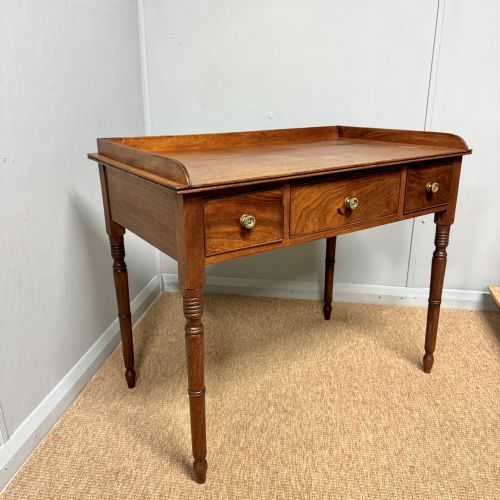
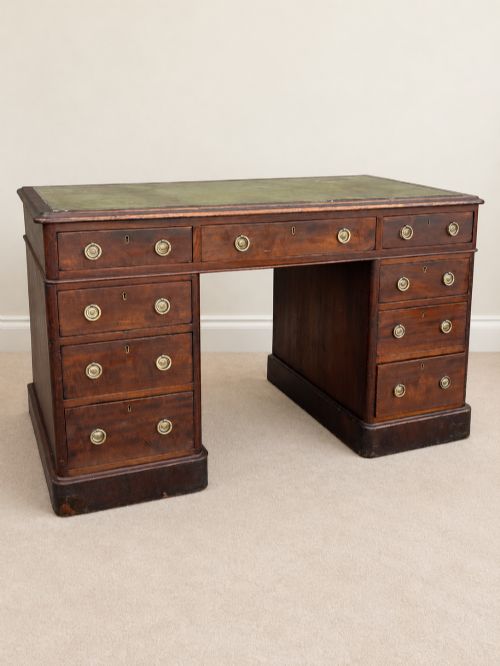
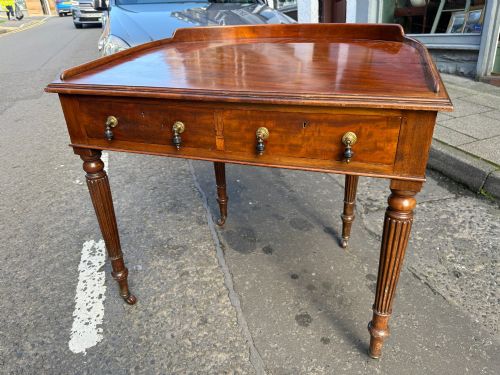
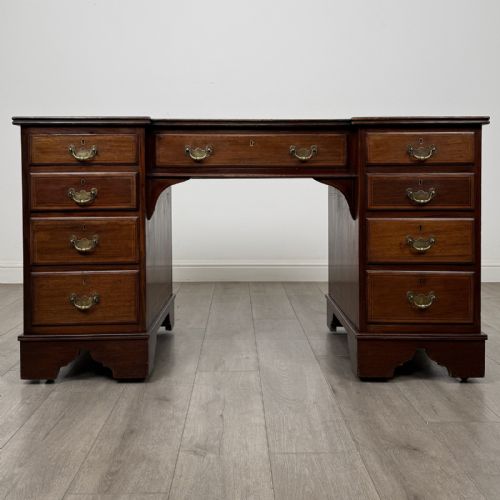
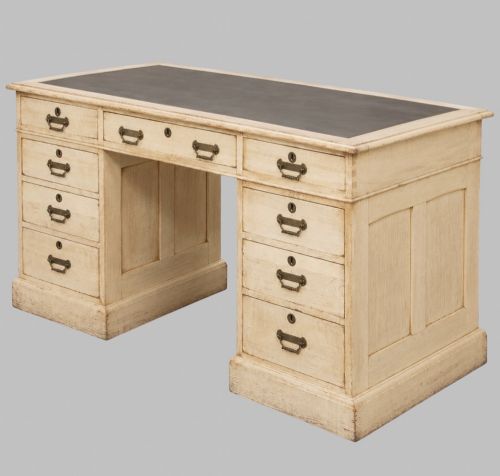
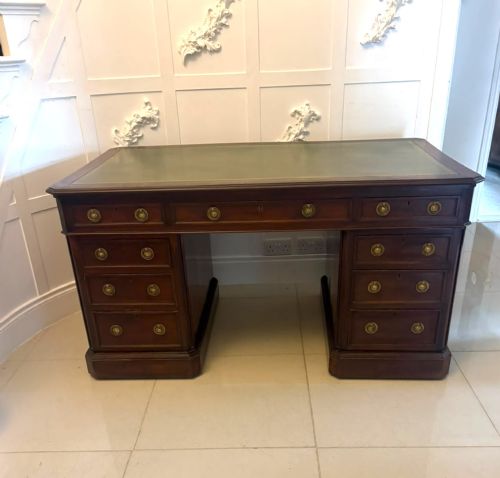
An antique table top desk encompasses writing tables, partner desks, and Davenport models designed for domestic and study use. Buyers searching for an antique table top desk encounter pieces primarily from the nineteenth century, including Victorian and Edwardian examples.
Materials and construction methods
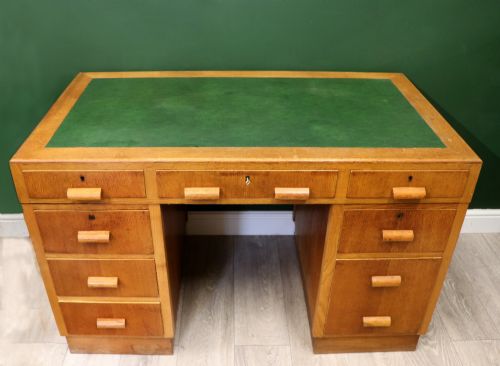
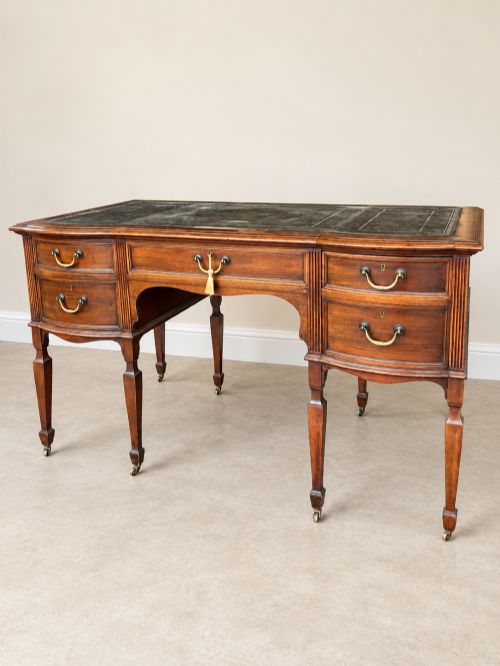
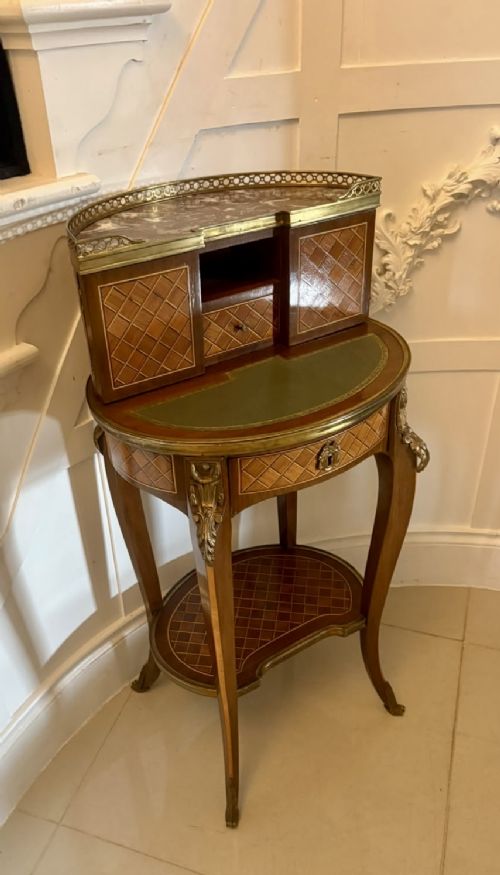
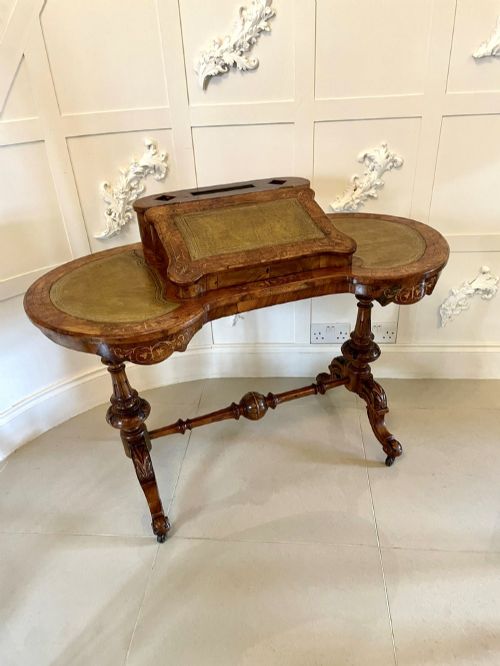
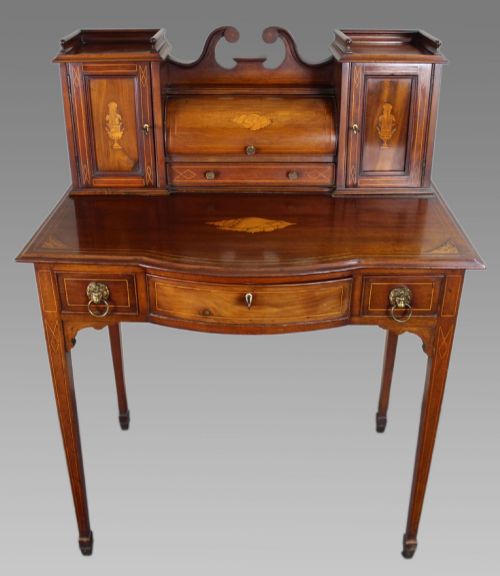
Cabinetmakers utilised solid and veneered hardwoods such as mahogany, oak, and walnut, often applying satinwood or kingwood for decorative contrast and inlay. Desk tops frequently incorporate tooled leather writing inserts bordered by blind tooling or gilt decoration.
Structural integrity relied on traditional joinery for drawer construction and carcase assembly, paired with cast brass handles, escutcheons, and occasional ormolu mounts on French influenced pieces.
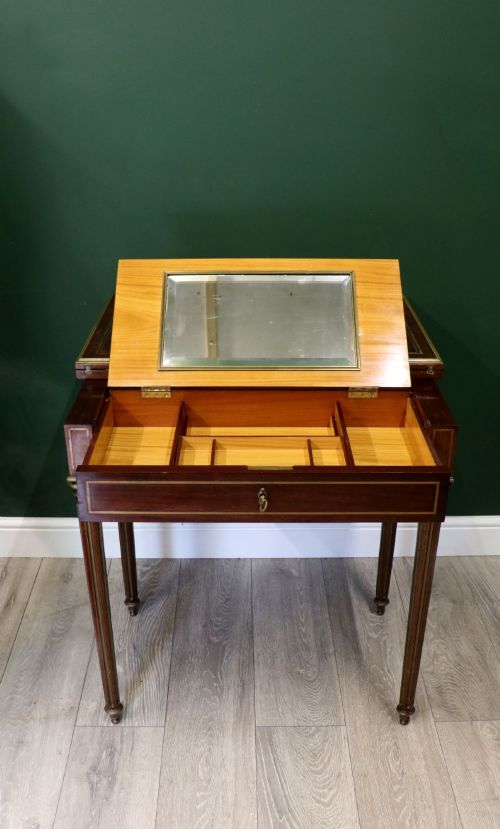
Several desks hide clever stationery drawers and pull-out writing slides for secret correspondence.
Distinctions in quality
Quality rests on the selection of timber veneers, such as figured burr walnut or flame mahogany, and the precision of inlaid marquetry work. Superior examples demonstrate refined proportions, well-executed drawer joinery, and retained original hardware.
Interior fittings also differentiate the range, with better desks offering dedicated stationery drawers, writing slides, and functional locking mechanisms with matching keys.
W. Walker and Sons London·Howard and Sons·Maple and Co.
The Antique Table Top Desk Glossary
- Davenport desk
- A compact writing desk featuring a sloping lid that lifts to reveal stationery compartments, supported by a pedestal of side drawers.
- Partners desk
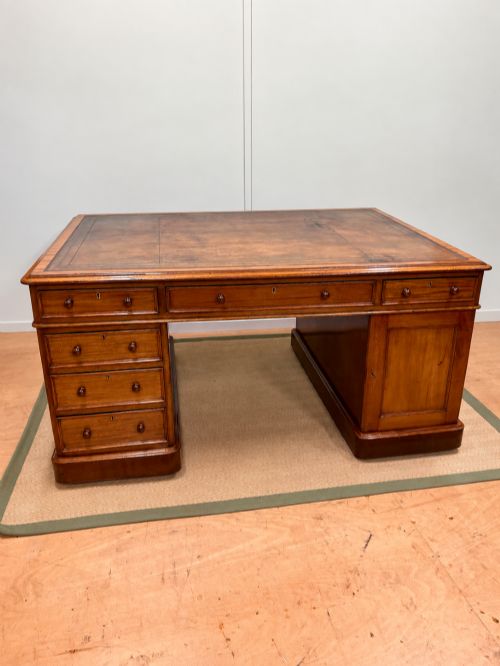
- A large double-sided pedestal desk designed for two people to work opposite one another, featuring drawers and cupboards on both faces.
- Ormolu
- Gilded bronze mounts and decorative trimmings applied to furniture, commonly found on French nineteenth-century writing tables.
- Marquetry
- Decorative veneer patterns formed by fitting together thin pieces of wood, ivory, or shell to create pictorial or geometric designs.
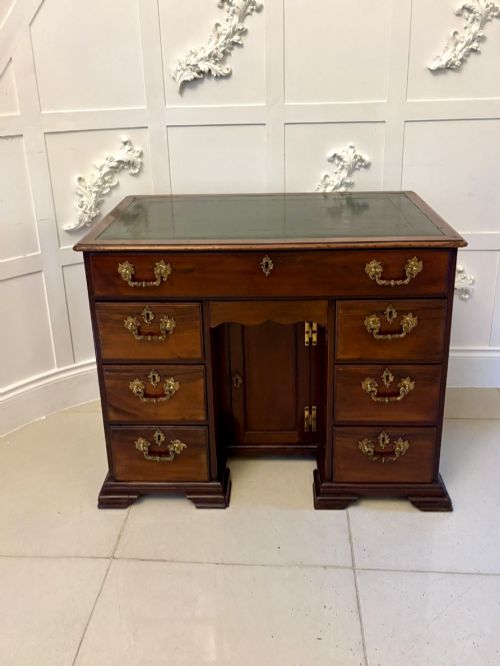
- Kneehole desk
- A freestanding desk with a central recess for the user's legs, flanked by pedestals containing banks of drawers.
Antique Table Top Desk: Frequently Asked Questions
What is a Davenport desk?
A Davenport is a compact form featuring a sloping, leather-lined writing surface above a pedestal of drawers.
These pieces were designed for drawing rooms and boudoirs where space was limited.
How do I identify a partners desk?
A partners desk is built to be freestanding with drawers and cupboards accessible from both sides.
They offer generous proportions and were traditionally used in libraries and studies.
What woods were commonly used?
Mahogany, walnut, and oak form the primary carcases for these writing pieces.
Cabinetmakers often added burr walnut, satinwood, and kingwood veneers for decorative contrast.
Are the writing surfaces original?
Many desks retain their tooled leather inserts, though some have been replaced over time due to wear.
Original leathers typically show patination consistent with age and use.