



Antique Table Top Bookcase
An antique table top bookcase is a compact piece of desk furniture designed to keep volumes within arm's reach.
Antique Table Top Bookcase
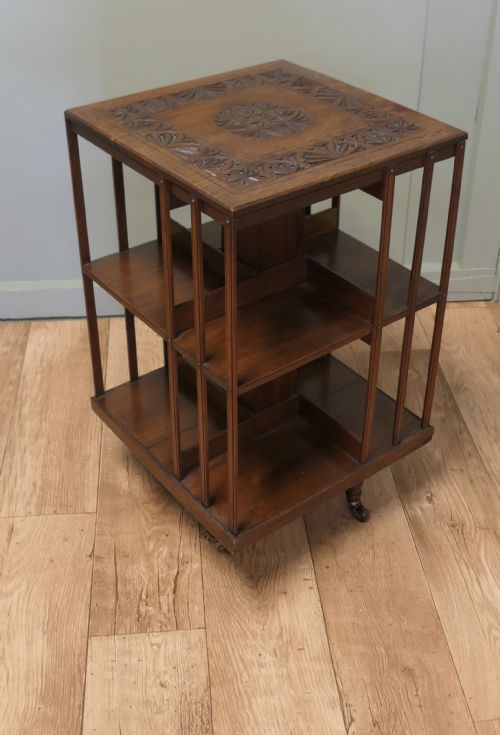
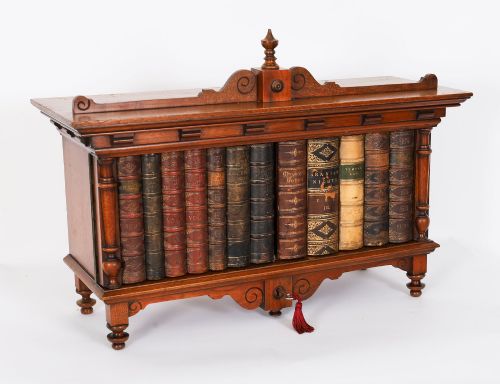
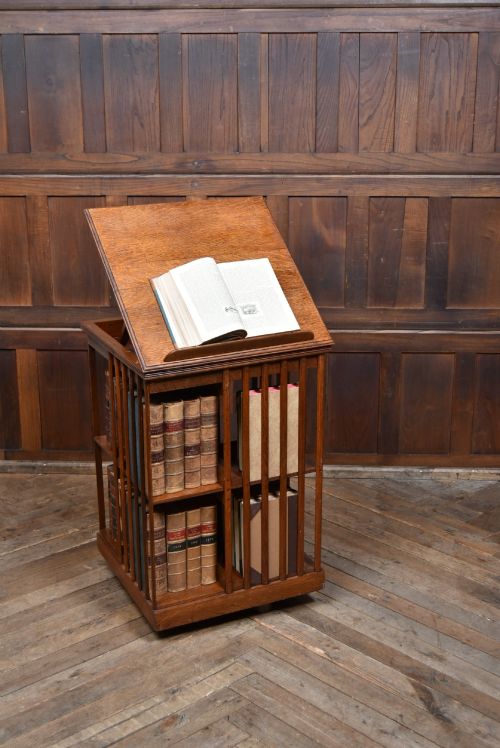
An antique table top bookcase provides a practical way to store and display books directly on a desk, counter or side table. These small furniture pieces range from open shelving units and tambour cabinets to revolving designs intended to sit neatly on top of larger pieces of furniture.
On this page, the antique table top bookcase typically takes the form of a revolving oak or mahogany bookcase dating from the Edwardian era or the nineteenth century. Buyers also encounter desk cabinets, tambour writing tables and occasional book tables constructed in rosewood, walnut and mahogany.
The styles span the Georgian, Regency, Victorian and Edwardian periods, alongside Arts and Crafts and Art Nouveau interpretations. Makers from these eras adapted standard full-size library furniture into miniature formats suited for studies and parlours.
How they were made
Makers constructed these pieces primarily using dense timbers such as mahogany, oak and rosewood, often selecting figured grain for visible surfaces. Brass handles, hinges and inlaid details appear frequently to accent the primary woods.
Revolving models rely on internal wooden or iron pivot mechanisms that allow the tiers to turn smoothly on a stable base. Other variations incorporate tambour shutters, glazed glass panels, leather writing inserts and inset marble tops.
Antique Table Top Bookcase Retail Price Guide 2026
Typical asking prices for table top bookcase among the pieces listed under this phrase on Sellingantiques today, from the lower quarter to the upper quarter. They describe what is for sale here now, not the wider market.
Listings span the Georgian, Regency, Victorian, Edwardian, Arts and Crafts and Art Nouveau styles in mahogany, oak, rosewood and walnut.
What varies in quality
The standard of construction depends largely on the choice of timber and the precision of the joinery used in the frame and shelves. Superior examples feature solid mahogany or oak rather than thinner veneers, along with crisp carving and well-fitted drawers or tambour doors.
In revolving models, the smoothness and silence of the turning mechanism separate standard items from finer workshop productions. Added decorative elements, such as brass inlay, marble tops and contrasting wood banding, indicate a higher grade of manufacture.
The Antique Table Top Bookcase Glossary
- Tambour
- A flexible shutter made from narrow strips of wood glued to canvas, allowing a desk or cabinet to slide open smoothly around a curve.
- Revolving bookcase
- A rotating table top bookcase designed to spin on a central pivot for easy access to books from multiple angles.
- Inlay
- A technique where pieces of contrasting wood, brass or other materials are inserted into depressions in the primary surface to form decorative patterns.
- Rosewood
- A heavy, durable timber with a dark grain and reddish hue, frequently utilised for decorative nineteenth-century furniture.
- Quarter-sawn oak
- Timber cut radially from the growth rings, producing a distinct speckled figure often seen in Arts and Crafts pieces.
Antique Table Top Bookcase: Frequently Asked Questions
What is a revolving table top bookcase?
A revolving table top bookcase is a small rotating shelving unit designed to sit on a desk or table, allowing books to be reached easily from any angle.
These pieces usually feature a concealed pivot mechanism beneath a stable base, making them practical for daily use in a study or library.
How do I date an antique bookcase?
Dating relies on identifying the prevailing style, construction methods and timber choices associated with periods like the Georgian, Victorian or Edwardian eras.
Secondary woods, types of joinery and the presence of specific decorative details such as brass inlay or tambour shutters also help narrow down the age.
Where should I place a table top bookcase?
These compact pieces fit well on large partner desks, side tables, chests of drawers or sturdy sideboards where books need to be kept close at hand.
Because they occupy minimal surface area, they function effectively in smaller rooms and studies without requiring floor space.
What woods were used for these bookcases?
Cabinetmakers primarily used mahogany, oak and rosewood, occasionally incorporating walnut or lighter woods for inlay work.
Solid construction and dense grain ensured the small frames could support the weight of heavy volumes.