





Antique Table Brassware
Antique table brassware brings character to a room through practical items like candlesticks, kettles, and lamps shaped from metal in past centuries.

Antique Table Brassware
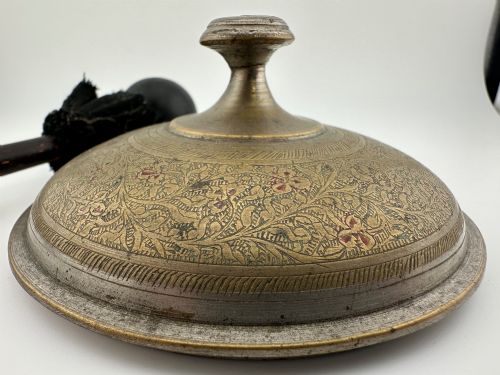
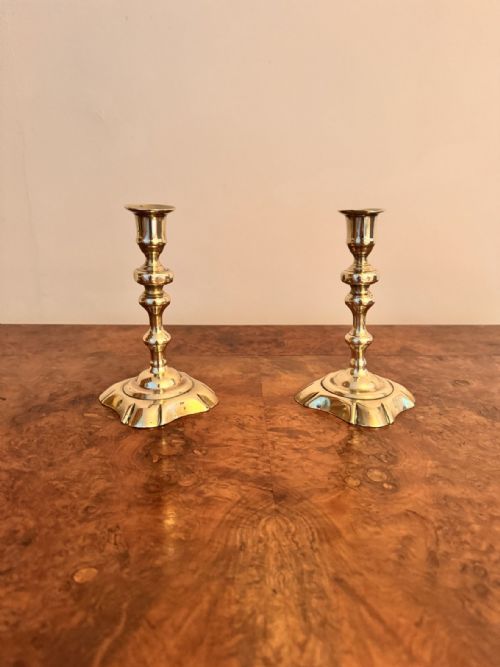
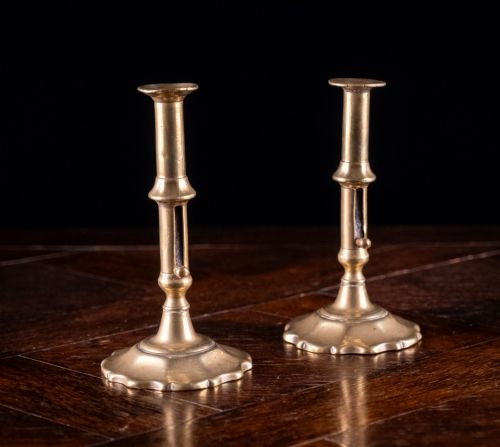
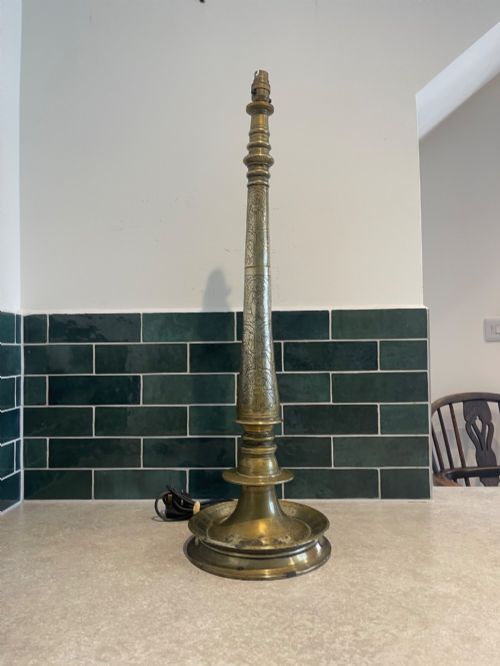
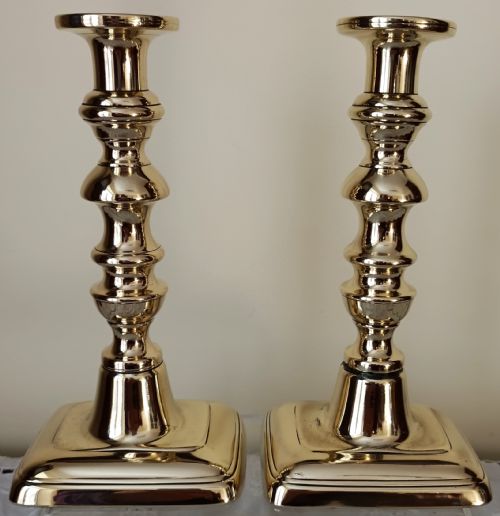
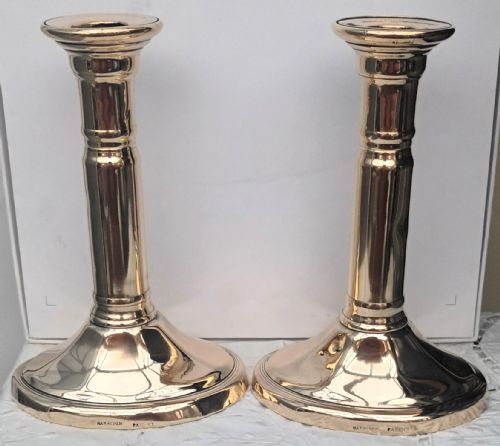
Antique table brassware comprises items designed for domestic use on tables and surfaces, spanning several centuries of metalwork. Candlesticks form the majority of the pieces on this page, alongside spirit kettles, lamps, and sugar casters.
The selection ranges from early eighteenth-century forms, such as seamed ejector candlesticks and Queen Anne designs, through to Victorian baluster shapes and Edwardian spirit kettles on stands. Styles extend across Georgian, Gothic Revival, and Anglo-Indian aesthetics.
These objects served functional roles in lighting rooms and heating water before electric power and modern conveniences altered domestic interiors. Today, buyers select them for their tactile materials and historical forms.
How they were made
Makers utilised brass and cast brass, often combining metalwork with wooden elements where handles or insulators required protection from heat. Techniques varied from casting molten metal in moulds to hammering sheets into repoussé decoration.
Seamed construction involved joining curved sheets of brass, while ejector mechanisms inside nineteenth-century candlesticks allowed users to push out remaining wax stumps. Surface finishes range from polished metallic sheens to patinated textures developed over generations.
Antique Table Brassware Retail Price Guide 2026
Typical asking prices for table brassware among the pieces listed under this phrase on Sellingantiques today, from the lower quarter to the upper quarter. They describe what is for sale here now, not the wider market.
Early inventors clearly grew tired of digging stubborn wax out of deep sockets, giving us the satisfying pop of the ejector mechanism.
What varies in quality
Quality in antique table brassware rests upon the crispness of casting detail, the weight of the metal, and the integrity of construction. Heavy, well-balanced candlesticks and sturdy frames on spirit kettles demonstrate superior craftsmanship compared to lighter production pieces.
The presence of maker marks, patented mechanisms such as telescopic stems, and refined proportions elevate certain items. Pieces that retain their original parts and components without heavy alteration command greater appreciation from collectors.
J.T. & Co·Harrison Patent·Frederick J Smith & Co·Wm. Tonks & Sons
The Antique Table Brassware Glossary
- Brass
- An alloy of copper and zinc used extensively for decorative and utilitarian domestic items. Its warm yellow tone polishes brightly or ages to a deep patina.
- Ejector candlestick
- A candlestick fitted with an internal sliding mechanism to push out the remaining stub of a candle. This clever device made cleaning the socket much easier.
- Repoussé
- A metalworking technique where a design is hammered into relief from the reverse side of the sheet. It creates decorative textures on lamps and kettles.
- Baluster
- A moulded architectural shaft with a swelling lower portion, frequently seen on the stems of nineteenth-century candlesticks. The shape provides a stable visual base.
- Spirit kettle
- A portable kettle mounted on a stand above a small burner, used for heating water at the table. These vessels were popular during the Victorian and Edwardian periods.
Antique Table Brassware: Frequently Asked Questions
How do I clean antique brass?
Most collectors prefer to maintain a gentle patina rather than polishing pieces to a blinding shine. A soft cloth removes dust safely without stripping the historical surface.
Harsh chemical cleaners can damage older metalwork and erase subtle details. Warm soapy water and a gentle dry with a microfiber cloth are usually sufficient for routine care.
Are these candlesticks safe to use?
Antique candlesticks accommodate standard taper candles, though metal sockets require careful monitoring as the wax burns down. Placing a small disc of card inside the socket helps secure an uneven candle base.
Ensure candlesticks stand on level surfaces away from draughts to prevent tipping. Extinguish flames before the wax reaches the metal to protect the antique material.
What is a spirit kettle?
A spirit kettle is a tabletop water vessel suspended over a small burner fuelled by methylated spirits. Victorians and Edwardians utilised them for serving tea without leaving the room.
The matching stands keep the flame elevated safely above wooden tables. Many surviving examples retain their original burners and chains.
How do I date an antique candlestick?
Dating relies on manufacturing methods, base construction, and stylistic clues from the period. Georgian examples often feature distinct base profiles and casting seams, while Victorian pieces introduce baluster stems and mechanical ejectors.
Maker marks and patent names stamped onto the metal provide further evidence for specific decades. Comparing the weight and proportion against known examples helps narrow the era of production.