

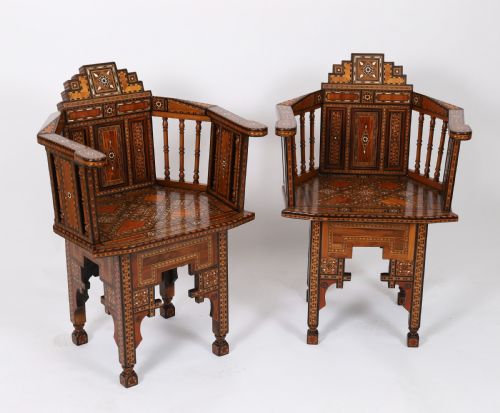


Antique Syrian Chair
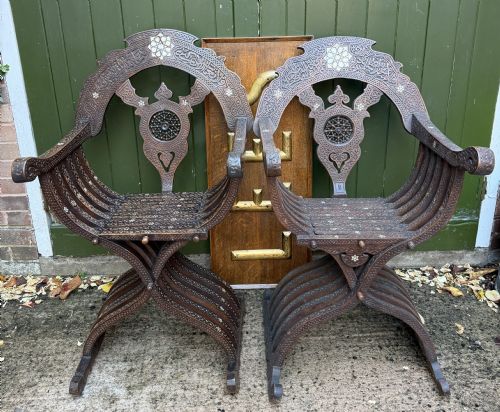
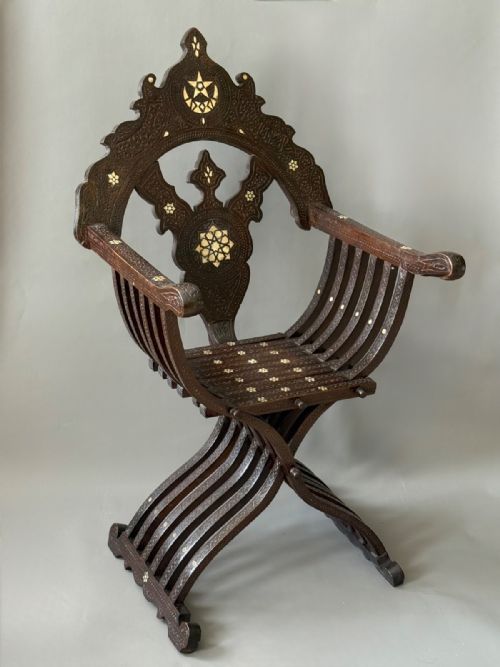
These antique Syrian chairs combine intricate bone and mother-of-pearl inlay with rich walnut and hardwood frames to create striking seating.
Antique Syrian Chair
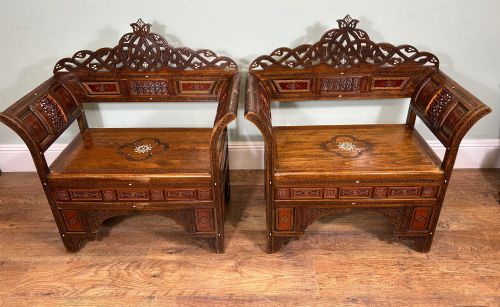
An antique syrian chair brings complex geometry and regional craftsmanship into a room through elaborate woodworking and geometric patterns. These pieces appear mainly as armchairs, side chairs, and folding X-frame shapes.
The material palette relies heavily on walnut and hardwood, embellished with detailed bone inlay, wood inlay, and mother-of-pearl. Such seating spans the nineteenth century through the early twentieth century.
Moorish Revival and Syrian Ottoman styles dominate the selection, showing Levantine and Islamic decorative influences. Buyers frequently encounter armchairs and occasional pairs suited for prominent placement.
How they were made
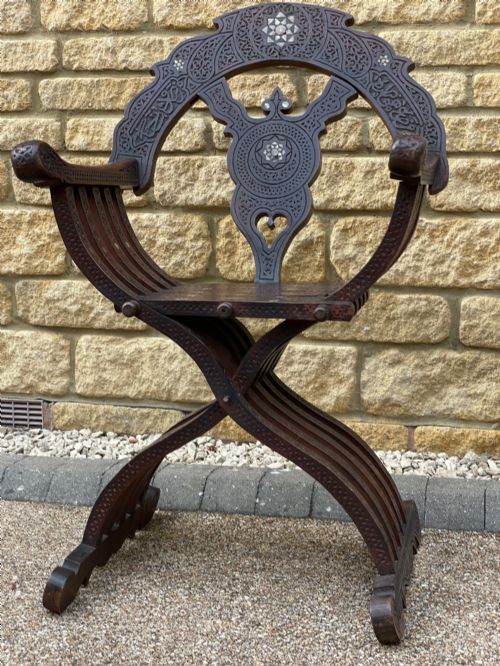
Artisans constructed the foundational frames using solid walnut and assorted hardwoods, often shaping them into folding Savonarola forms or traditional armchairs. Skilled joinery allowed the wood to support dense decorative schemes without losing structural integrity.
Craftsmen applied intricate parquetry alongside meticulous bone and mother-of-pearl inlay directly into the wooden surfaces. This technique required patient hand-cutting of tiny geometric tiles to form complex mosaic patterns across the backrests and frames.
Antique Syrian Chair Retail Price Guide 2026
Typical asking prices for syrian chair among the pieces listed under this phrase on Sellingantiques today, from the lower quarter to the upper quarter. They describe what is for sale here now, not the wider market.
Several examples feature folding X-frames, proving that even nineteenth-century dignitaries appreciated the convenience of portable seating.
What varies in quality
Carved structural elements also separate standard examples from finer works, particularly where deep relief carving adorns the hardwood frame. The sophistication of the regional stylistic influence dictates the visual depth of the finished seat.
The Antique Syrian Chair Glossary
- Parquetry
- Geometric mosaic woodwork formed by fitting small pieces of wood together. This technique creates patterned surfaces across panels and frames.
- Moorish Revival
- An architectural and decorative style popular in the nineteenth century that incorporates traditional Islamic design elements. It relies on horseshoe arches, intricate screens, and detailed surface ornamentation.
- Mother-of-pearl
- The iridescent inner layer of mollusc shells used extensively for decorative inlay. Artisans slice it thinly to catch the light within wooden furniture panels.
Antique Syrian Chair: Frequently Asked Questions
How were these chairs used?
These chairs served as functional seating while also acting as decorative statements within grand domestic interiors. Their ornate surfaces meant they were often placed in reception rooms or parlours.
Folding variants like the X-frame allowed for flexible placement or storage when not in daily use.
How do I live with an antique syrian chair?
Position the chair away from direct heat sources and strong sunlight to protect the delicate wooden frames and natural inlay materials. Gentle dusting with a dry cloth keeps the surface clean without moisture damage.
Treat the piece as a focal point in a room, allowing adequate space around it to appreciate the detailed parquetry.
How do I tell periods apart?
Nineteenth-century examples often lean heavily into traditional Moorish Revival motifs with deep hardwood carving and extensive mother-of-pearl work. Pieces from the early twentieth century may show slight shifts in proportion and construction methods.
Examining the tightness of the inlay work and the style of the frame helps place the chair within its historical era.