

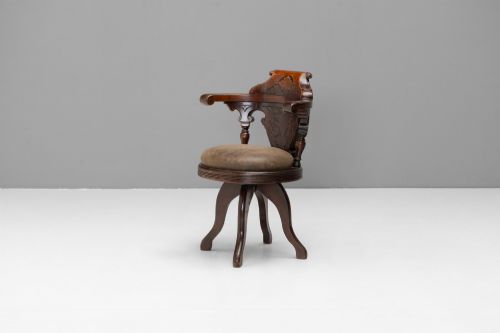


Antique Swivel Desk Seat
An antique swivel desk seat delivers practical utility alongside period character, anchoring a workspace with timber and leather.
Antique Swivel Desk Seat
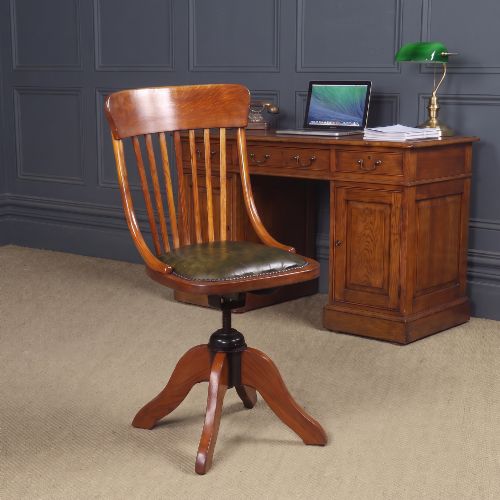
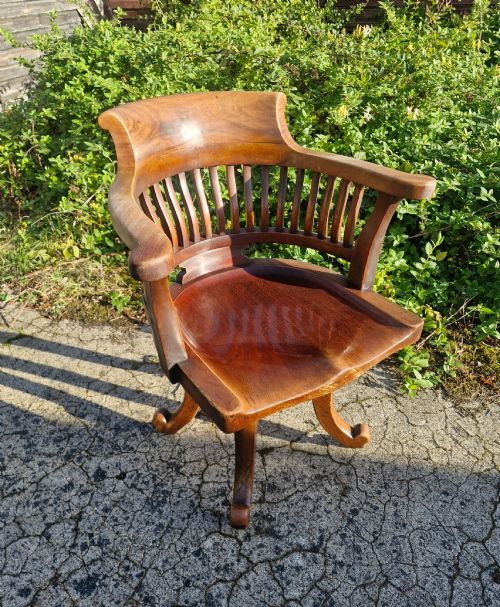
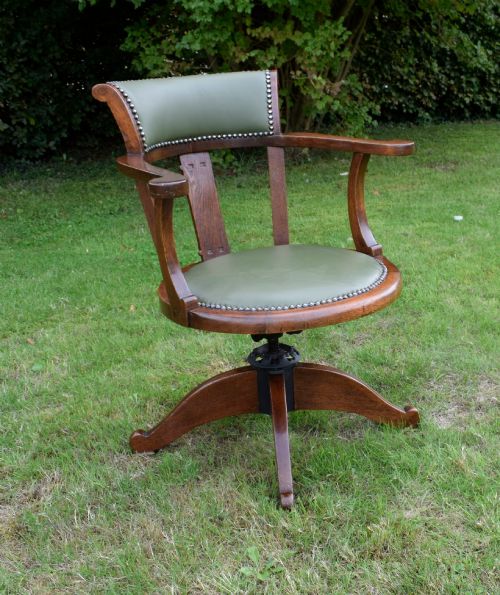
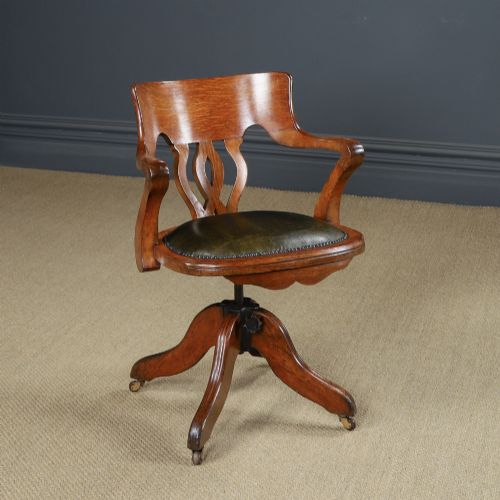
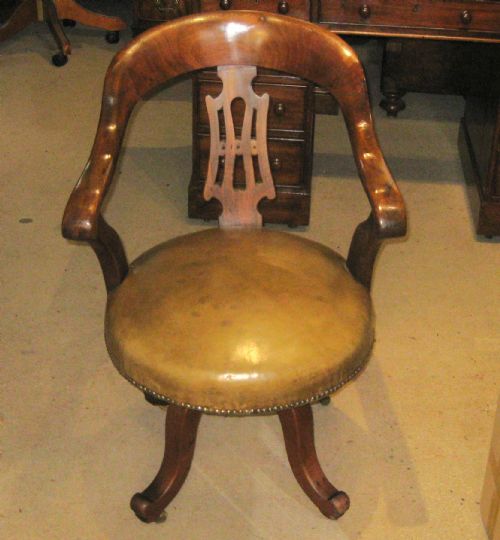
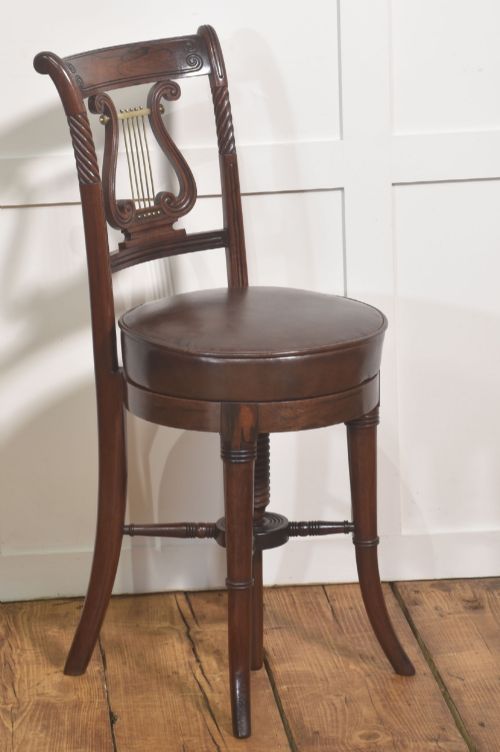
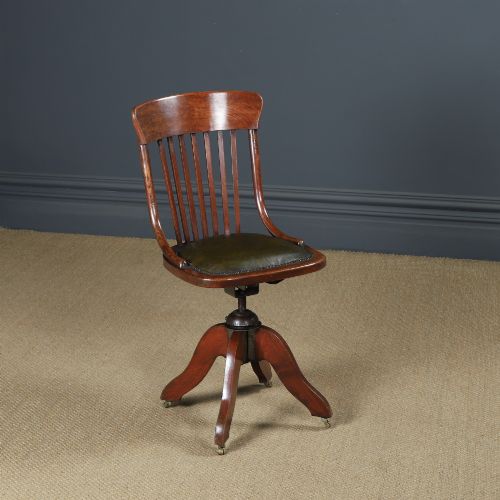
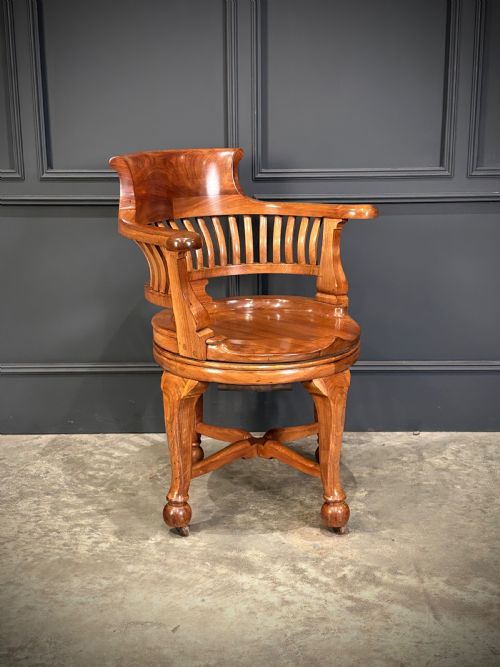
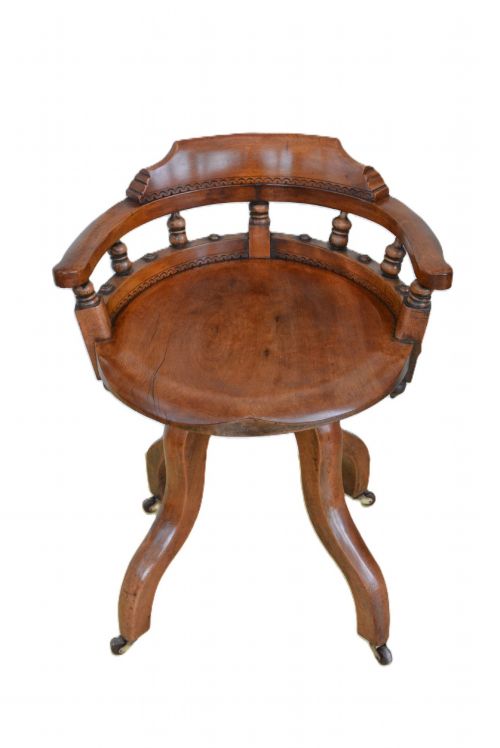
An antique swivel desk seat combines a revolving mechanism with supportive seating tailored for writing tables, captain's desks, and study spaces. When searching for an antique swivel desk seat, buyers encounter forms ranging from heavy Victorian library armchairs to industrial workshop stools and Edwardian office models.
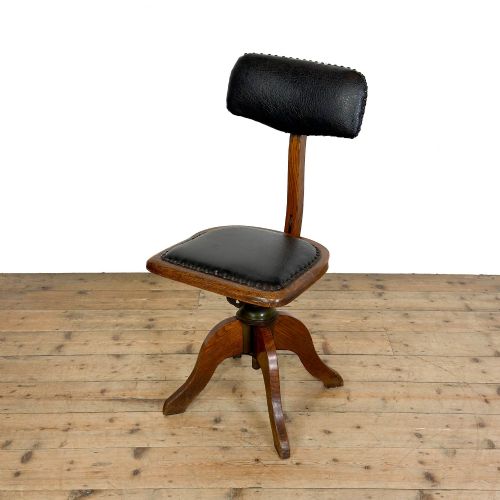
The pieces appearing on this page span the Victorian, Edwardian, and George V periods, alongside industrial examples from the early twentieth century. Common variants include armless office chairs, revolving armchairs, and specialised seating such as ships chairs.
Makers utilise traditional framing timbers like oak, mahogany, and walnut, frequently pairing them with leather seat inserts or exposed metal swivel mechanisms. These seats serve as functional furniture for modern home studies while retaining distinct nineteenth and twentieth-century character.
How they were made
Cabinet makers and manufacturers constructed these seats using robust hardwoods including oak, mahogany, walnut, and beech, joined through mortise and tenon techniques to withstand daily pivoting movement. Solid timber frames provide the structural integrity required for height-adjustable spindles and swivelling bases.
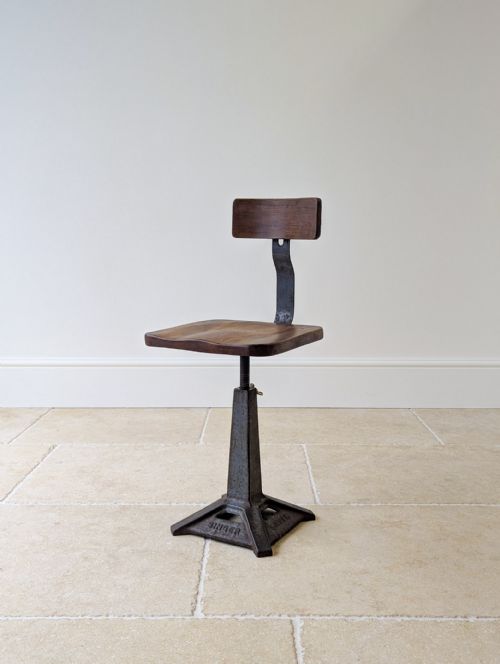
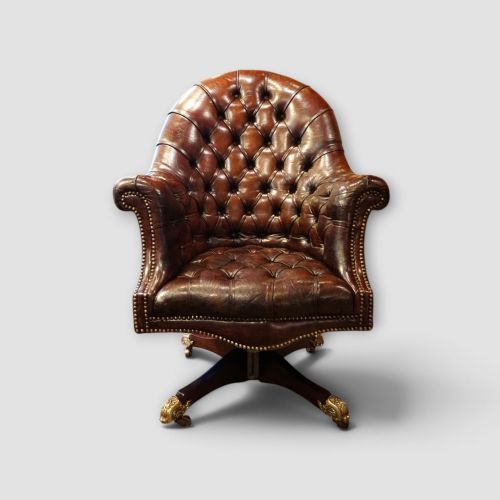
Upholstered versions incorporate leather, hide, or buttoned padding secured over supportive stuffing, while industrial and maritime variants rely on exposed cast iron, brass castors, and turned wood. Metal swivel actions and height-adjustment screws utilise heavy engineering designed for continuous commercial or domestic use.
The selection includes industrial workshop stools, ships chairs, and traditional revolving desk armchairs.
What varies in quality
The refinement of the carving, timber selection, and joinery distinguishes standard office furniture from higher-grade library and boardroom seating. Finely figured mahogany, quarter-sawn oak, and intricate details such as bergere panels or satinwood inlay mark out superior craftsmanship.
The complexity and smoothness of the revolving and tilt mechanism also determine the grade of a piece. Robust brass fittings, original castors, and well-engineered rise-and-fall screws indicate higher-tier production compared to utilitarian workshop models.
Singer·Evertaut·George Bartholomew & Co
The Antique Swivel Desk Seat Glossary
- Swivel
- A revolving mechanism allowing the seat to rotate fully on its base without moving the legs. This movement relies on a central spindle or pivot screw.
- Revolving
- An alternative descriptor for a chair designed to turn around its central vertical axis. It provides ease of access at a partner's desk or writing table.
- Bergere
- A type of upholstered armchair featuring woven cane panels on the back or sides. It appears on lighter Edwardian and Victorian study chairs.
- Castor
- A small wheel fitted to the base of chair legs to assist movement across flooring. Antique examples frequently employ cast brass or iron construction.
- Rise and fall
- An adjustable height mechanism operated by a threaded screw or winding spindle. It allows the seat level to adapt to different desk heights.
Antique Swivel Desk Seat: Frequently Asked Questions
How do I choose the right height?
Most antique swivel desk seats feature adjustable height mechanisms operating on a central screw spindle. Turning the seat raises or lowers the timber frame to match standard desktop levels.
Buyers should measure their knee clearance beneath the desk before purchasing. Consideration must also be given to whether the swivel mechanism includes a tilt function.
Can I use an antique swivel chair daily?
Solid hardwood frames and robust iron spindles make these chairs suitable for regular daily use in a modern study or office. The materials used in construction were originally intended for sustained workplace environments.
Routine maintenance involves checking the central screw mechanism and treating leather seat pads with appropriate balms. Users should avoid overloading tilt-adjustments to preserve the original nineteenth or twentieth-century hardware.
What is the difference between an office chair and a ship's chair?
Office chairs from the Victorian and Edwardian eras typically feature supportive arms, padded leather seats, and functional swivel bases designed for administrative tasks. They prioritize ergonomic support for writing and desk work.
Ship's chairs often incorporate heavier carved wooden frames and specialised pivoting designs intended to remain stable in maritime conditions. These pieces frequently display rich mahogany or oak construction with inset leather writing surfaces.
How do I identify a Victorian swivel chair?
Victorian swivel chairs usually exhibit deep-buttoned leather upholstery, turned wooden spindles, and dark timbers such as walnut and mahogany. Stylistic indicators include Aesthetic Movement detailing or Gothic Revival structural motifs.
Industrial Victorian pieces conversely highlight cast iron bases combined with elm or oak wooden seats. Examining the joinery and the patina on the timber helps confirm the nineteenth-century origin.