

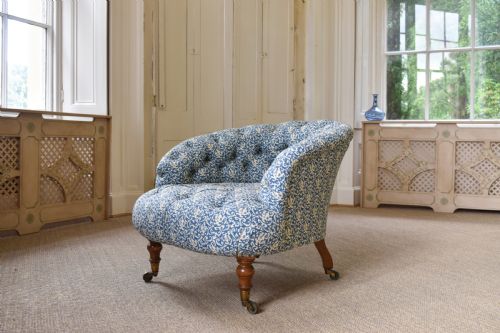
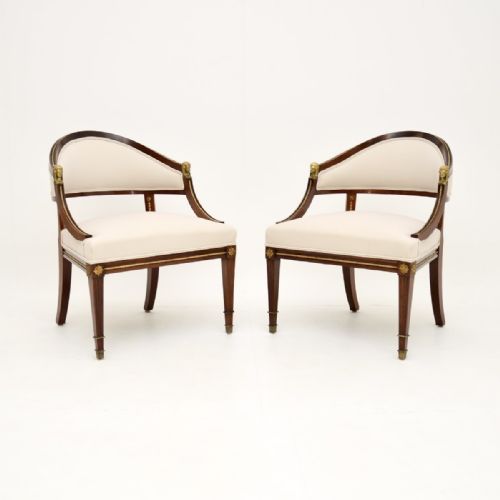
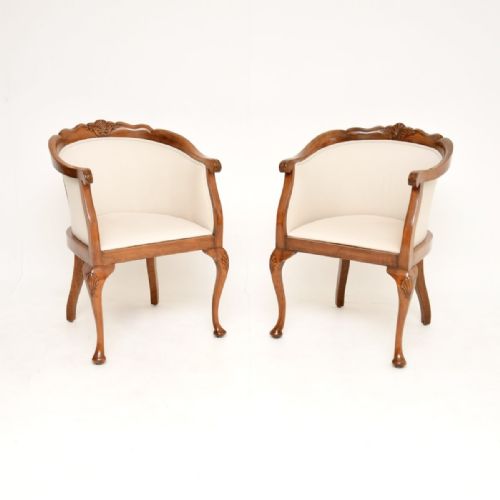

Antique Style Tub Chair
An antique style tub chair wraps you in curved upholstery or cane, offering deep, enclosing comfort suited to a study or drawing room.
Antique Style Tub Chair
When you search for an antique style tub chair, you encounter rounded seating originating in the nineteenth and early twentieth centuries, spanning Victorian, Edwardian, and revival periods. The enclosing, semicircular back unites the arms and backrest into a single continuous curve designed for intimate conversation or desk work.
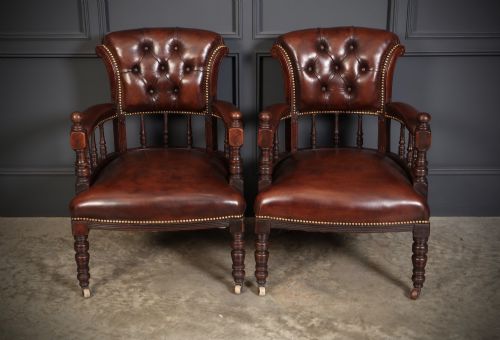
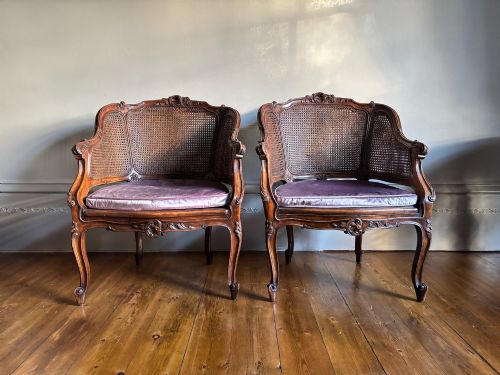
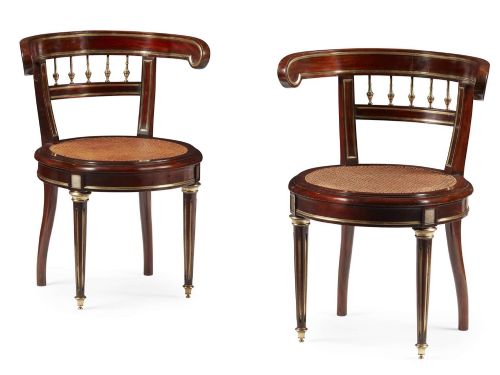
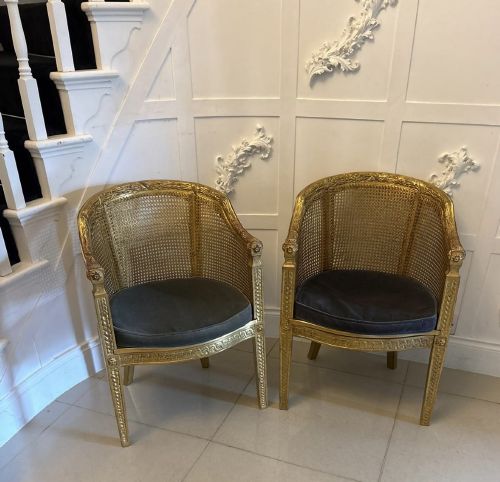
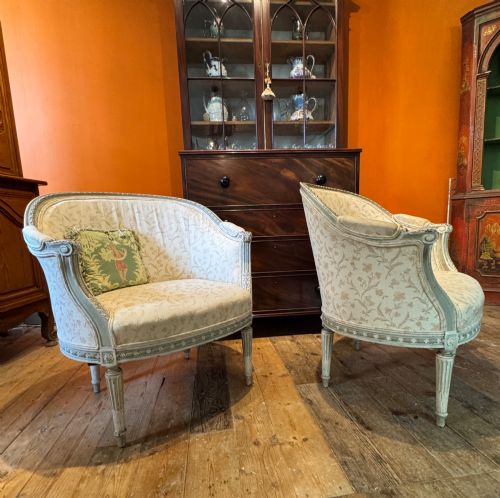
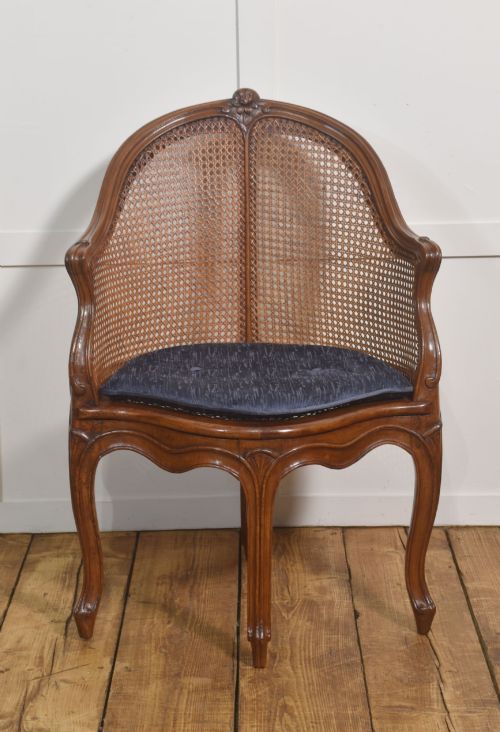
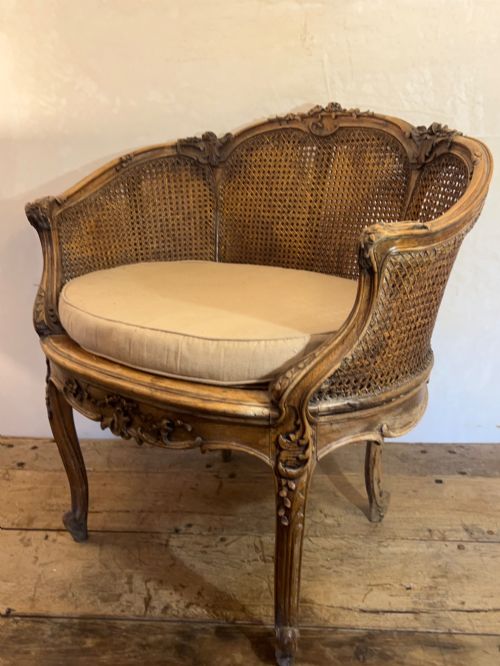
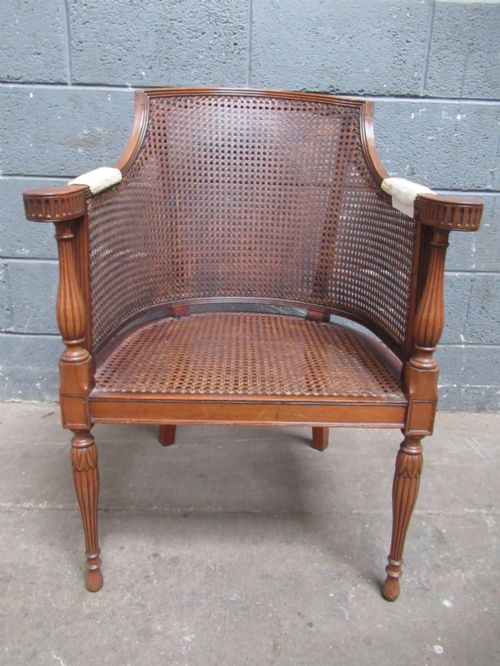
You meet diverse regional expressions on this page, ranging from French Louis XV and Empire styles with carved or gilt frames to English mahogany and walnut library or desk chairs. Many pieces adopt earlier design vocabulary, reflecting Queen Anne, Regency, or Neoclassical tastes executed across the nineteenth and early twentieth centuries.
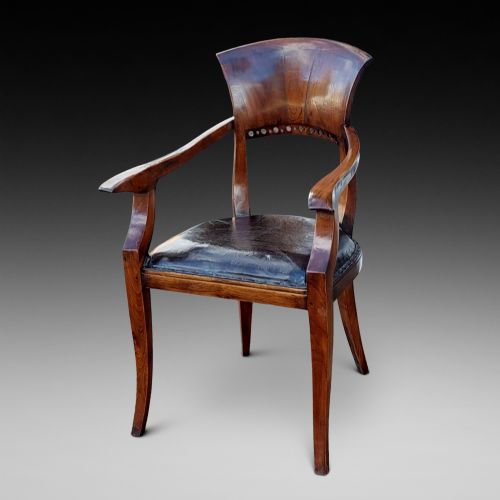
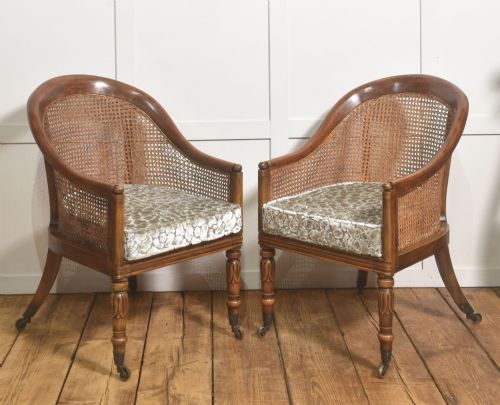
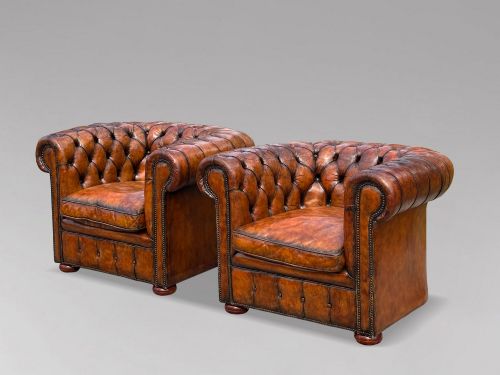
The format serves multiple domestic roles, appearing as padded leather club chairs, caned bergères with exposed timber frames, or swivel desk variants. These pieces function equally well as standalone reading seats or as paired library armchairs flanking a fireplace.
Materials and construction
Frames rely on dense timbers such as mahogany, walnut, oak, and satinwood, often shaped through steam-bending to achieve the characteristic rounded tub profile. Cabinetmakers reinforced these curved structures with corner blocks and joined them using traditional mortise and tenon techniques.
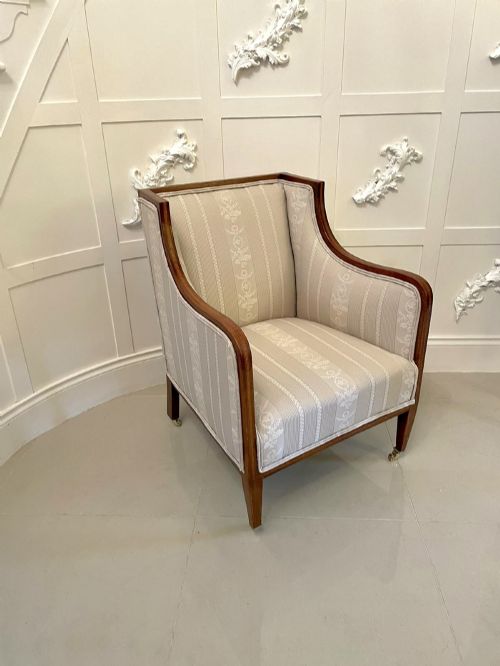
Upholstery methods define the character of these chairs, combining traditional coil springs with horsehair stuffing beneath outer layers of leather, velvet, silk, or woven fabric. Alternatively, many bergère variants incorporate woven cane panels into the back and sides for a lighter structural appearance.
Decorative detailing employs brass mounting, ormolu, giltwood, and hand-applied paint finishes, particularly on French revival models. Inlaid woodwork and carved scroll arms further distinguish individual workshops and stylistic periods.
Antique Style Tub Chair Retail Price Guide 2026
Typical asking prices for style tub chair among the pieces listed under this phrase on Sellingantiques today, from the lower quarter to the upper quarter. They describe what is for sale here now, not the wider market.
Listings feature mahogany, walnut, and beech frames combined with leather, cane, fabric, and velvet upholstery across the nineteenth and twentieth centuries.
Evaluating craftsmanship
Quality reveals itself in the integrity of the curved wooden frame and the precision of the joinery where the back meets the arms. Solid timber construction and finely executed hand-carving separate superior examples from simpler commercial production.
The standard of upholstery and cane work dictates comfort and longevity. Tightly woven cane panels, resilient hand-tied spring systems, and well-chosen textiles denote higher workshop standards.
Coherence of style marks the finest pieces, whether an authentic period chair or a faithful revival piece carrying the distinct attribution or label of a known maker.
Howard And Sons·Gillows·Jenks And Wood·Hille
The Antique Style Tub Chair Glossary
- Corbeille
- A French term denoting a basket-shaped armchair with a rounded, enveloping backrest. These pieces frequently draw upon Louis XV design motifs.
- Ormolu
- Gilt bronze ornamentation applied to furniture frames during the eighteenth and nineteenth centuries. This decorative metalwork enhances Empire and revival pieces.
- Fauteuil
- An open-framed upholstered armchair with exposed wooden arms. They contrast with fully enclosed tub chairs by leaving the sides unpadded.
- Ebonised
- Timber finished with a dark stain or polish to imitate ebony. This treatment appears frequently on nineteenth-century library and desk seating.
Antique Style Tub Chair: Frequently Asked Questions
How do I date these chairs?
Dating relies on timber choice, carving styles, and construction methods, matching details against Victorian, Edwardian, or revival periods.
Secondary evidence such as upholstery webbing and maker stamps helps narrow the decade of manufacture.
Where should I place one?
These compact chairs suit studies, bedrooms, and drawing rooms where deep seating is required without dominating floor space.
Desk variants pair naturally with writing tables, while upholstered club versions anchor reading corners.
Are cane panels durable?
Hand-woven cane is surprisingly resilient, flexing slightly with weight while maintaining its structural tension over decades.
Proper humidity levels prevent the natural material from drying out and snapping.