
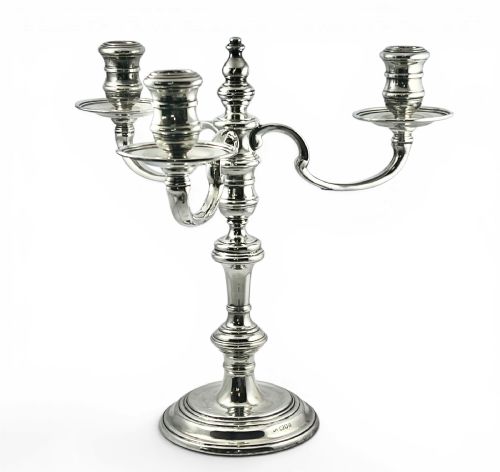


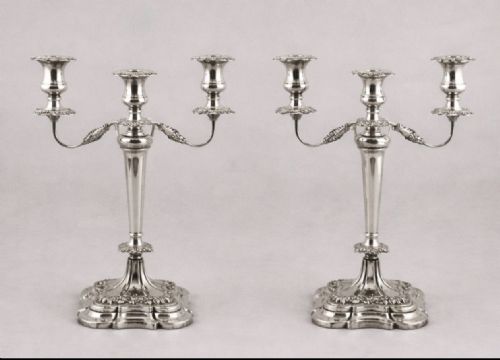

Antique Style Silver Candelabra
These antique style silver candelabra bring undeniable presence to a room, offering the unmistakable weight and shine of period lighting.
Antique Style Silver Candelabra
When you search for antique style silver candelabra, you encounter a variety of multi-light branching fixtures and related lighting forms. The selection includes standard lamps, wall sconces, and converted candlesticks alongside traditional candelabras.
Most pieces date from the nineteenth and twentieth centuries, spanning the Victorian era through the Art Deco period and mid-century revivals. Silver plated items and solid sterling silver pieces dominate the current range, often incorporating decorative figural elements.
Design influences draw heavily on earlier European aesthetics, notably Georgian style, Louis XV, Neoclassical, and Rococo Revival. These decorative motifs shape the bases, stems, and drip pans of the pieces.
How they were made
Construction methods rely heavily on traditional metalworking techniques, combining cast metal components with plated surfaces. Silver plate over base metals appears frequently alongside solid sterling silver and continental grades such as 916 silver.
Makers integrated diverse materials into the lighting structures to enhance their visual appeal and weight. Spelter, onyx, and nickel silver support figural designs and architectural bases, whilst specialist firms utilised advanced plating methods.
Materials include sterling silver, silver plate, spelter, and onyx across various nineteenth and twentieth-century revivals.
What varies in quality
Quality separates pieces through the crispness of cast ornamentation and the integrity of the underlying metal structure. Heavier constructions with detailed figural work, such as cherubs or classical motifs, reflect higher ambition in design and execution.
The durability of the surface finish and the balance of the branching arms dictate the overall refinement of each object. Finer examples maintain structural harmony across multiple light configurations, whereas simpler items rely on basic geometric turning.
Smith & Sissons & Co·Elkington
The Antique Style Silver Candelabra Glossary
- Silver Plate
- A thin layer of silver bonded to a base metal core. This technique provides the visual appeal of solid silver at a different weight and cost.
- Sterling Silver
- A standard alloy composed of high purity silver combined with other metals for strength. It represents the primary precious metal standard in British silversmithing.
- Spelter
- A zinc alloy commonly used for casting decorative figures and statues. It frequently serves as a base for metallic finishes in twentieth-century decorative objects.
- Rococo Revival
- A decorative style characterised by asymmetrical scrollwork, naturalistic plant forms, and shell motifs. It draws inspiration from earlier eighteenth-century French design.
- Candelabra
- A branching lighting fixture designed to hold multiple candles or bulbs simultaneously. They often feature removable branches to function as single candlesticks.
Antique Style Silver Candelabra: Frequently Asked Questions
How do I clean my candelabra?
Maintenance depends entirely upon the surface metal of the specific piece. Sterling silver requires appropriate polish, whilst silver plated items demand gentler care to preserve the thin metallic layer.
Avoid harsh chemical dips that strip away patination or damage secondary materials like onyx and spelter. Soft microfibre cloths help maintain the shine without scratching vulnerable decorative details.
Are these candelabra wired for electricity?
Most traditional candelabra retain their original configuration for holding wax candles. Certain lighting forms within the wider selection, such as standard lamps and wall sconces, incorporate electrical wiring.
Buyers intending to convert branching candelabra for electrical use should consult a qualified professional. Permanent alterations can affect the historical integrity of the piece.
How do I distinguish sterling silver from plate?
British and continental pieces usually carry official hallmarks stamped directly into the metal surface. These small stamps indicate the purity standard, the assay office, and the operating year.
Silver plated items typically lack these specific hallmarks, sometimes bearing manufacturer marks indicating the plating technique instead. Examining the edges where wear might reveal the base metal also helps identify plated surfaces.
What periods do these pieces represent?
The available lighting spans from nineteenth-century Victorian production through the early twentieth century. Pieces often emulate older historical eras rather than originating within them.
Revival movements from the Victorian and Edwardian periods recreate Georgian and Louis XV aesthetics. Later twentieth-century examples introduce distinct Art Deco styling and modernist influences.