
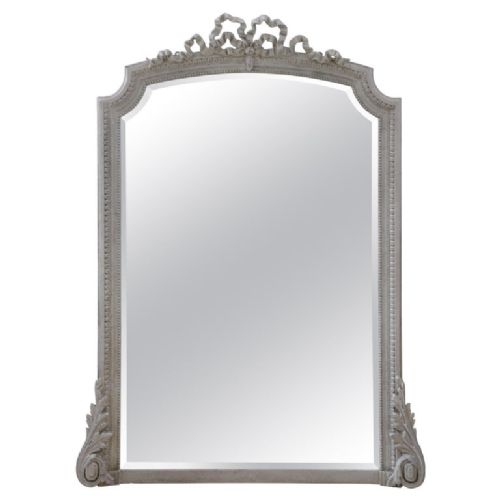
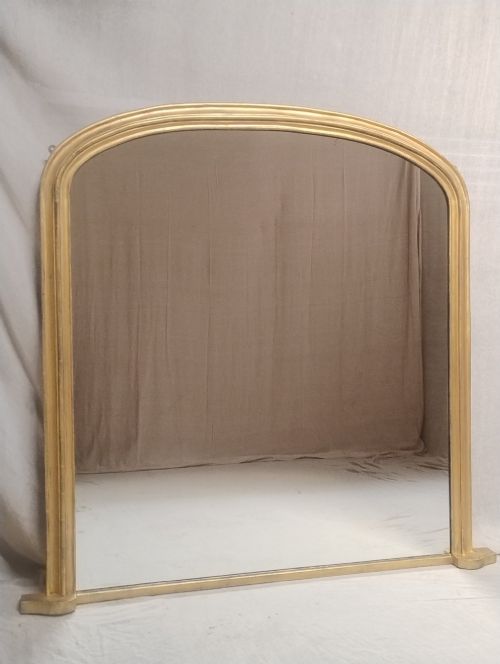
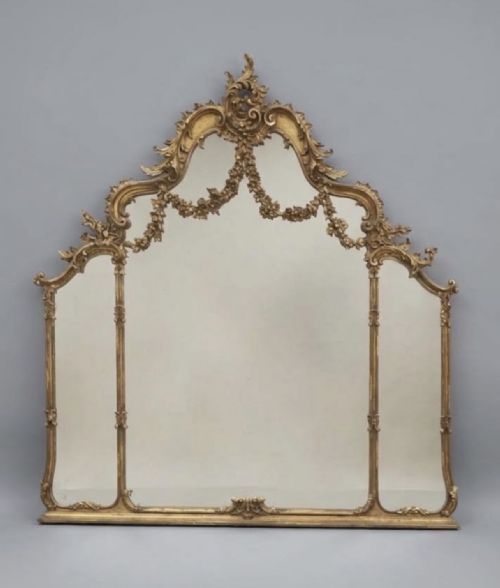
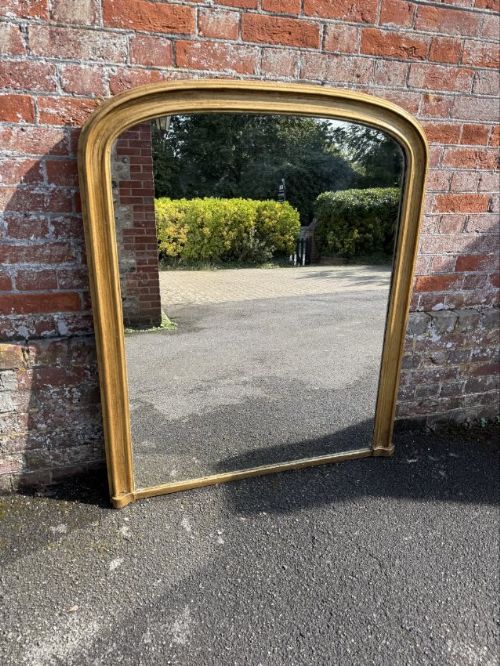


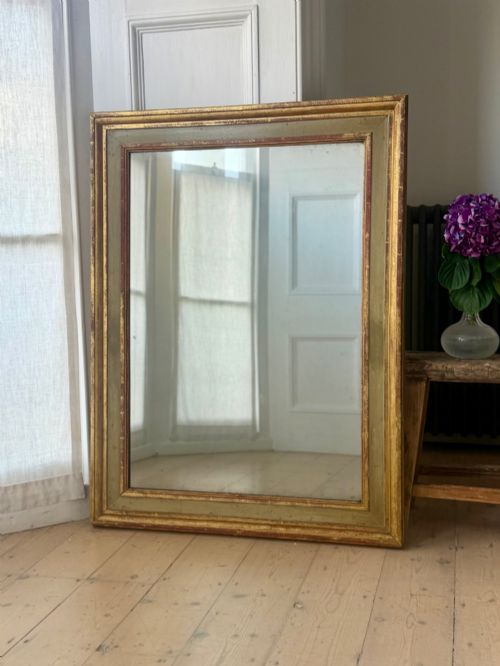
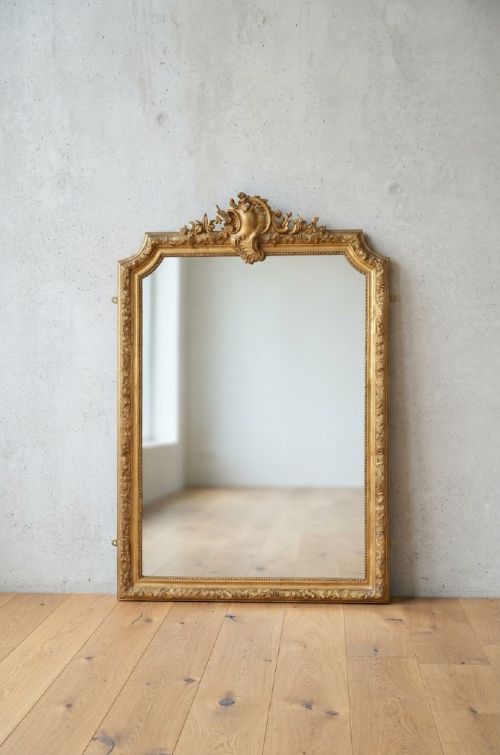
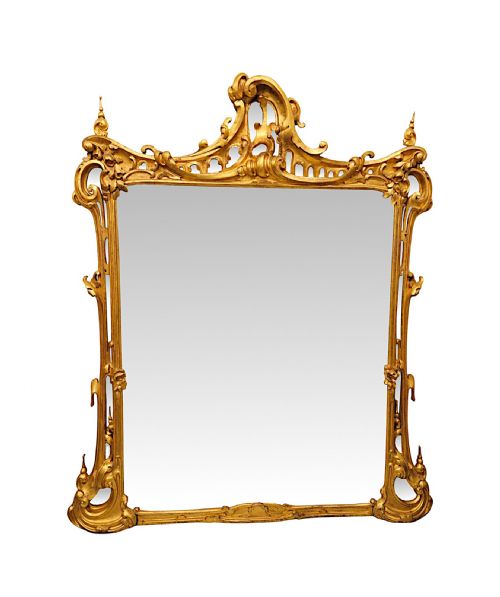
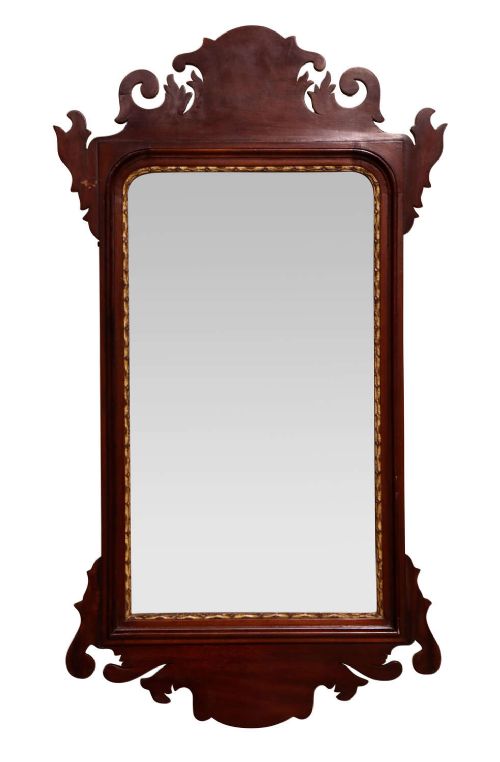
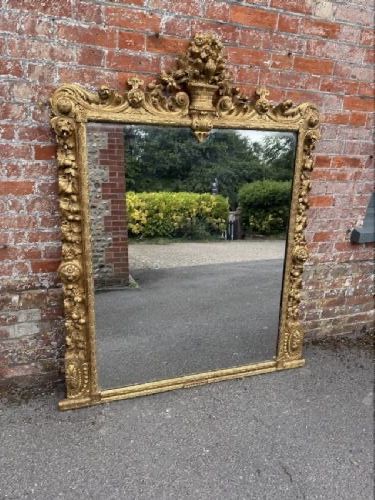
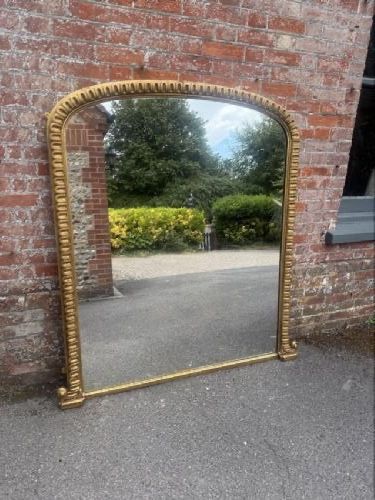
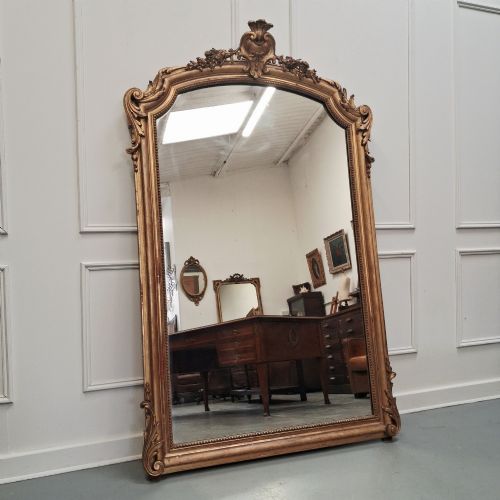
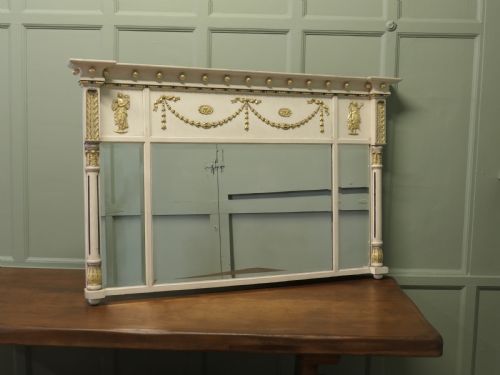
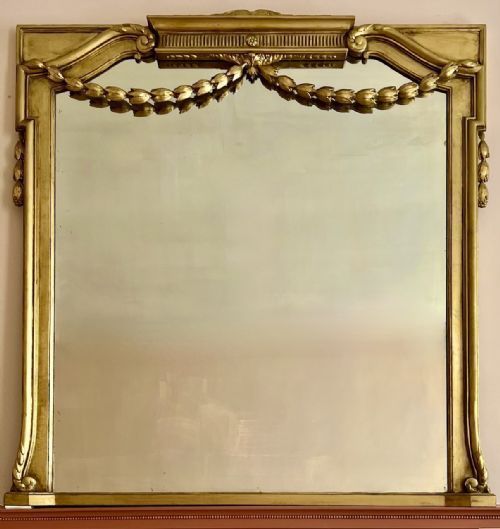
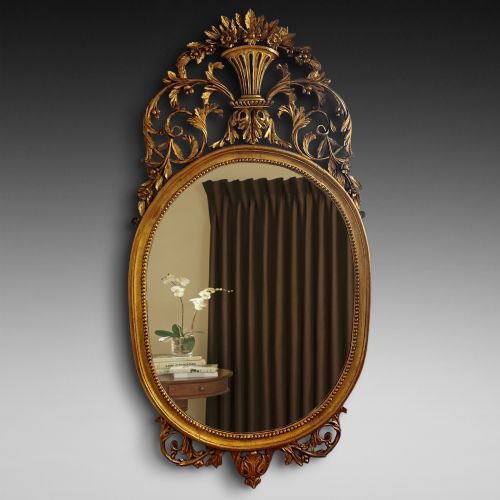
Antique Style Mantel Mirror
An antique style mantel mirror anchors a room with scale and reflective light, bringing period presence above a fireplace.
Antique Style Mantel Mirror
An antique style mantel mirror functions as a substantial architectural feature designed to sit above a fireplace, though many examples hang simply on a principal wall as a pier glass. The selection centres heavily on nineteenth-century pieces, spanning Victorian production and French chateau aesthetics alongside Georgian and early twentieth-century interpretations.
The dominant forms in this category are overmantel mirrors and wall mirrors, frequently featuring arched tops, shaped frames, or large rectangular proportions. Buyers encounter English and French craftsmanship, encompassing styles from Rococo Revival and Neoclassical to Chippendale and French Neoclassical.
Materials and construction
Frames rely on carved wood, gesso, and composition applied over a timber base, finished with gold leaf, silver, or paint to achieve a gilded or decorated surface. Master craftsmen shaped wood and moulded gesso into elaborate scrolls, crests, and cartouches before applying the surface leaf.
Glass plates include mercury glass in earlier examples alongside standard mirror glass, and triple plate configurations appear in specific Regency formats. The framing structures utilise substantial timbers such as mahogany and oak in certain iterations alongside standard softwoods chosen to bear the weight of heavy plaster work.
Listings span the Georgian, Victorian, and early twentieth-century periods, utilising materials such as gesso, giltwood, and mercury glass.
Variations in quality
Quality rests upon the crispness of the hand-carved wooden elements and the depth of the moulded gesso ornament, where sharper relief and finer detailing distinguish superior pieces from mass-produced work. The integrity of the original gilding and the preservation of early mirror plates also dictate the standing of an individual piece.
Proportion and scale play a definitive role, as monumental heights and balanced architectural frames command greater visual authority. The execution of complex elements such as central cartouches, fretwork, and crested tops separates standard regional items from high-status salon mirrors.
The Antique Style Mantel Mirror Glossary
- Overmantel mirror
- A large mirror specifically proportioned to hang on the wall directly above a mantelpiece or fireplace. These pieces often feature horizontal or arched formats designed to match the width of the hearth below.
- Gesso
- A plaster-like mixture applied to wood frames to create a smooth surface for gilding or painting. Artisans carved intricate relief decorations directly into this material once dry.
- Giltwood
- Timber that has been coated with a thin layer of gold leaf. This technique provides a luminous surface that catches ambient room light.
- Mercury glass
- An early type of mirror glass created by pouring a mercury amalgam between two sheets of double-walled glass or coating the back. It typically exhibits characteristic mottled dark spots and a soft reflective depth.
- Pier glass
- A tall mirror designed to hang on the narrow section of wall between two windows. They share similar decorative framing with mantel mirrors.
Antique Style Mantel Mirror: Frequently Asked Questions
Where should an overmantel mirror hang?
These mirrors traditionally sit directly above a fireplace mantel, anchored securely to the wall to support their considerable weight.
They also function effectively on large living room walls as standalone statement pieces that amplify natural light.
How do I identify a nineteenth-century frame?
Nineteenth-century frames typically exhibit hand-carved wooden foundations combined with moulded gesso ornament and heavy timber backing boards.
Closer inspection often reveals subtle irregularities in the gilding and construction methods characteristic of pre-industrial workshops.
What is mercury glass?
Mercury glass refers to early mirror plates produced using a silvering process that often creates a speckled, cloudy appearance over time.
This distinct ageing pattern adds depth to the reflection and helps date the piece to the nineteenth century.
How do French and English styles differ?
French mantel mirrors from this selection frequently embrace Rococo Revival and Neoclassical themes with prominent crests and silvered or gilt finishes.
English counterparts lean towards architectural proportions, mahogany fretwork, and structured overmantel formats.