

Antique Stud Chair
An antique stud chair brings robust leather and exposed brass tacks together in seating built to last through generations of daily use.
Antique Stud Chair
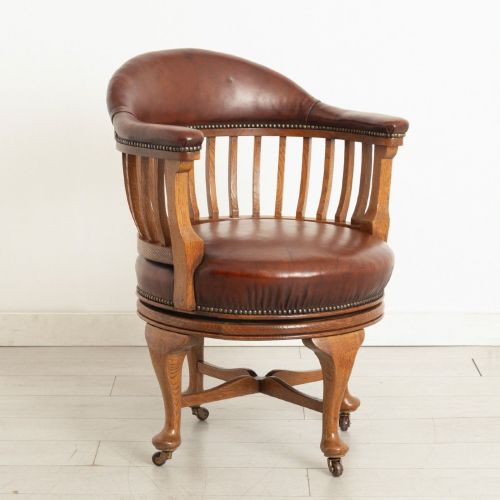
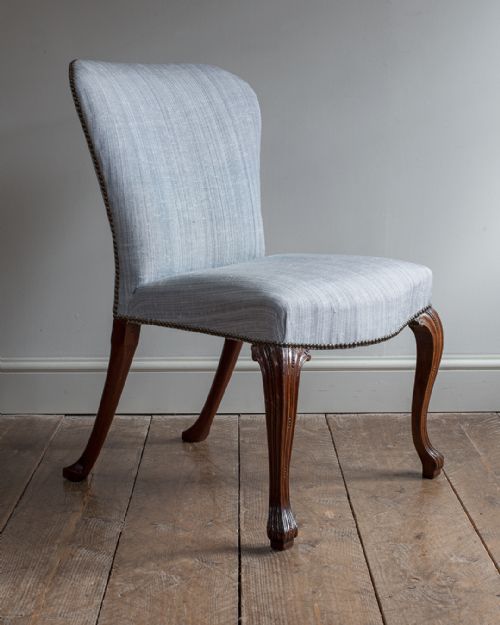
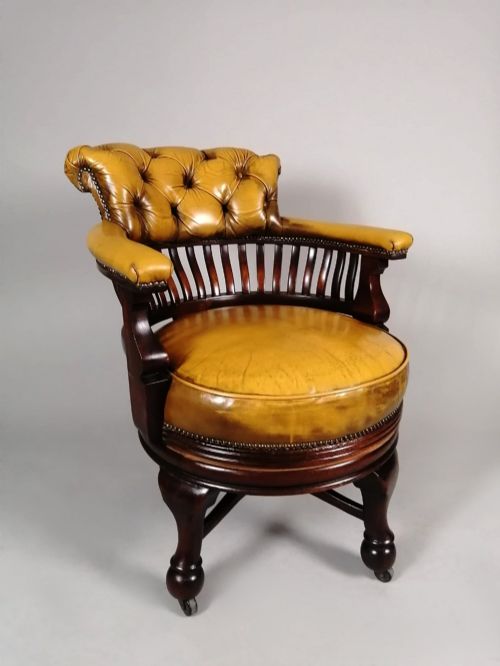
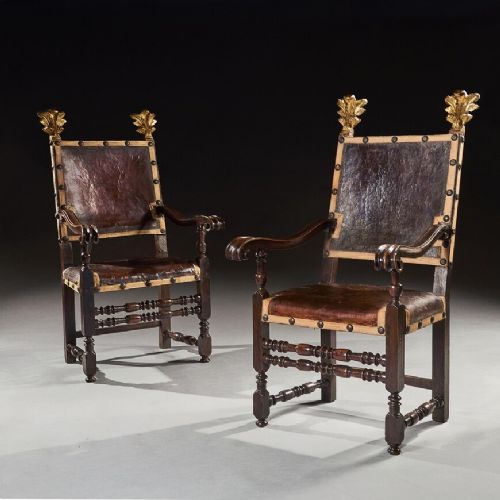
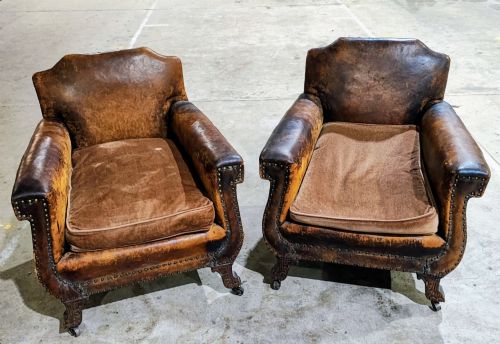
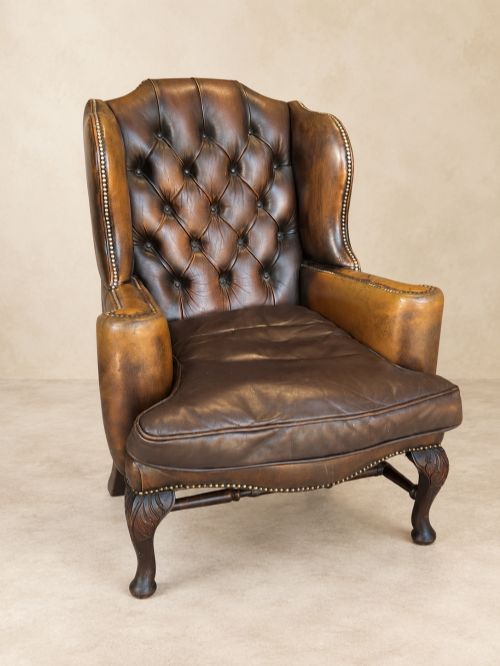
The term antique stud chair refers to upholstered seating finished with rows of metal tacks along the seams, a detail that secures the hide or fabric while adding a distinct border. These pieces appear across several forms, including library armchairs, office swivel chairs, dining seats, and low club chairs.
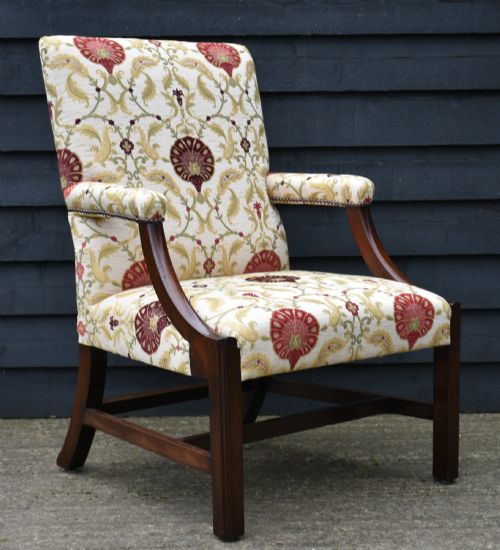
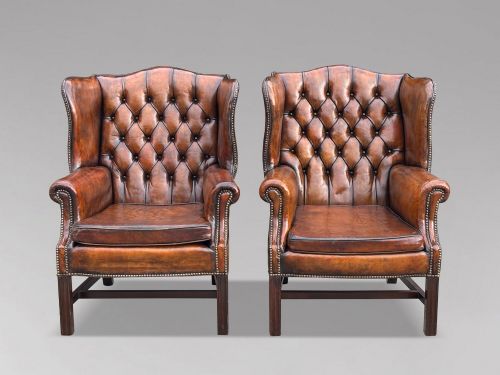
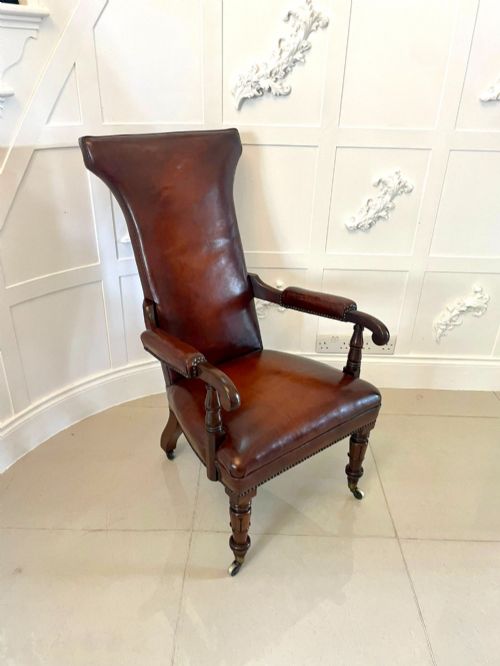
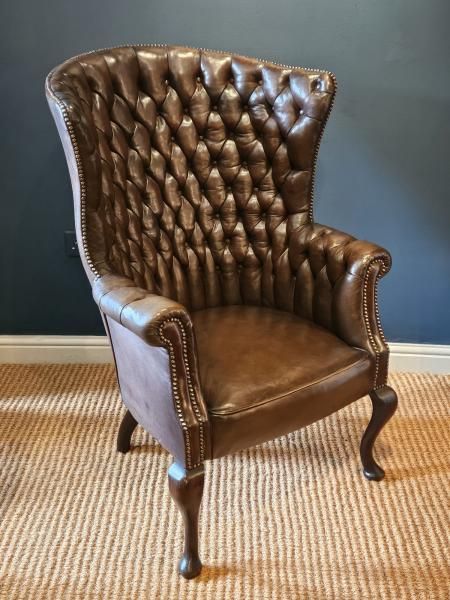
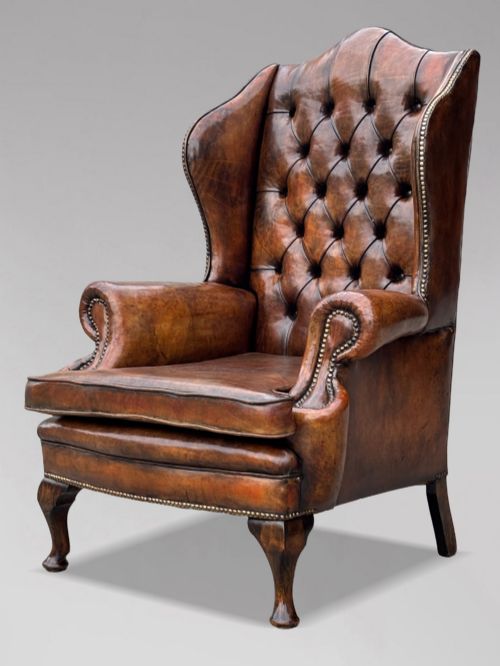
The selection ranges from formal Georgian and Regency mahogany Gainsborough chairs to heavy Victorian button-back armchairs and low-slung 1930s Art Deco club chairs. Oak and mahogany serve as the primary timbers, paired frequently with brown, tan, or oxblood leather.
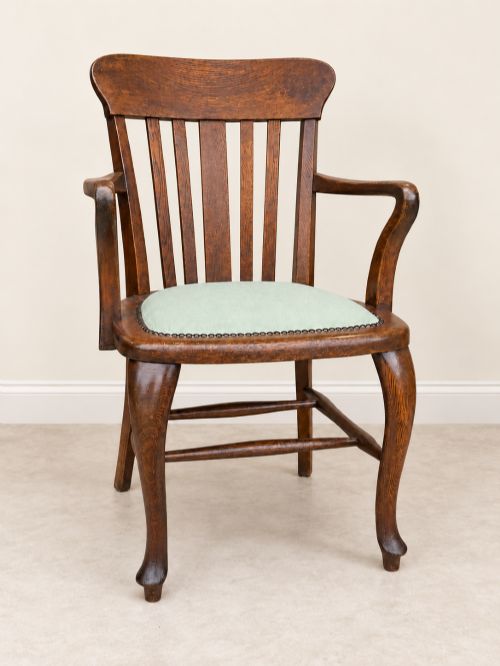
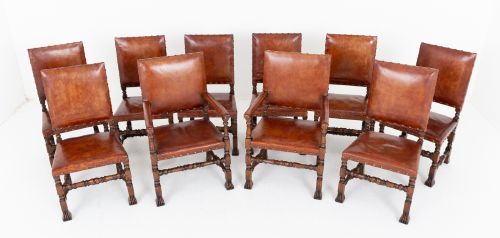
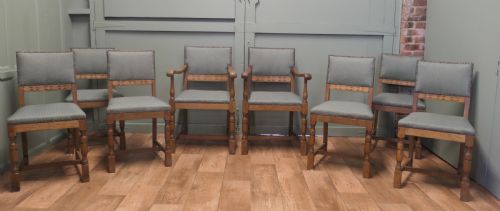
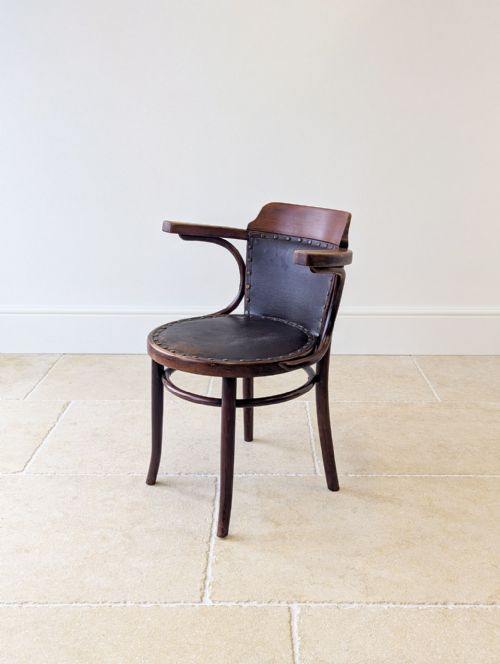
Buyers frequently encounter late nineteenth-century revolving desk chairs and sturdy Edwardian or 1920s oak dining sets fitted with embossed leather pads. Each variant serves a specific domestic or professional function, from fireside reading to study at a partner desk.
Materials and construction methods
Frames rely primarily on dense hardwoods such as mahogany, oak, walnut, and regional fruitwoods, joined through traditional mortise and tenon methods. Turn-of-the-century swivel models incorporate complex iron and steel mechanical undercarriages for height adjustment and tilt.
Upholstery relies on natural hides, including hand-dyed English hide and embossed leather, secured entirely by hand with individual brass studs or nails. These metal tacks are driven in one by one to tension the leather securely over horsehair or coil spring stuffing.
Several Victorian swivel chairs retain the original squeak in their iron spindles, echoing generations of industrious clerical labour.
Judging quality and character
The distinction between standard utility seating and exceptional pieces rests upon timber selection and the crispness of any hand-carved details, such as blind fretwork on mahogany legs. Original leather surfaces that have developed a rich, soft patina through natural wear hold greater appeal than modern replacement upholstery.
The structural integrity of the frame, particularly in revolving desk chairs and heavy wingbacks, determines everyday reliability. Smooth operation in mechanical tilt mechanisms and well-preserved brass studwork without modern replacement heads distinguish superior examples.
The Antique Stud Chair Glossary
- Gainsborough chair
- A wide, open-armed armchair with a padded seat and back, manufactured originally during the eighteenth century for writing desks or drawing rooms.
- Wingback armchair
- An upholstered seat featuring protective side panels designed originally to shield the occupant from drafts by the fireplace.
- Blind carving
- Carved ornamentation applied in low relief along the surface of a chair leg or rail without piercing the wood.
- Bentwood
- Wood softened through steam and bent into curved shapes, utilised extensively in twentieth-century desk chairs.
- Button-back
- An upholstery technique where deep depressions are formed across the backrest by stitching through the stuffing to secure buttons.
Antique Stud Chair: Frequently Asked Questions
How do I care for antique leather?
Maintain the leather by applying appropriate conservation waxes or natural balms sparingly to keep the hide supple and prevent cracking over time. Avoid placing the chair near direct heat sources or strong sunlight, which dries out vintage hides.
Dust the crevices around the brass studs regularly with a soft brush to prevent grit accumulation. Gentle care preserves the natural patina built up over decades of use.
Were these chairs used in offices?
Many examples from the late nineteenth and early twentieth centuries were designed specifically for commercial offices, libraries, and studies. Heavy oak swivel chairs and revolving desk models provided practical seating for clerks and professionals.
These working chairs combine sturdy metal mechanical undercarriages with comfortable leather upholstery. They bring functional historic utility into modern home workspaces.
How do I date a stud chair?
Dating relies on examining the timber species, construction joints, and upholstery style alongside any visible mechanical hardware. Eighteenth-century models feature hand-carved mahogany frames, while late Victorian and Edwardian versions often incorporate cast iron swivel mechanisms or simpler turned oak supports.
The shape of the brass studding and the method of leather attachment also offer clues to the manufacturing era.
Are these chairs comfortable for daily use?
Most variants offer supportive upright seating due to their traditional sprung or stuffed construction. Library armchairs and club chairs provide deeper, more relaxed seating, whereas dining and desk chairs encourage a more upright posture.
Their robust wooden frames and durable leather coverings make them well-suited for everyday living when maintained properly.