

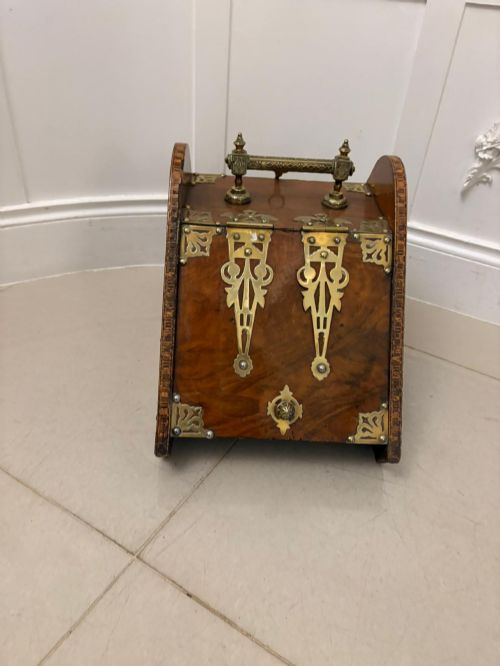


Antique Store Front Box
These antique store front box selections bring period character and practical fireside storage into a room.
Antique Store Front Box
You are most likely to meet Victorian and 19th-century examples fashioned from oak or walnut. These containers often feature drop fronts or sloping lids, sometimes accompanied by matching metal shovels and brass handles for daily use.
The selection also reaches back to the 18th century with Scottish oak bunkers, alongside related storage pieces such as wall cabinets and stationery boxes. Each item reflects the domestic routines of historic British and European households.
How they were made
Cabinetmakers constructed these boxes primarily in solid oak, walnut, and mahogany, frequently applying carved details or figured veneers to the main body. Satinwood and metal also appear in specific iterations.
Functional hardware defines the construction, with heavy brass mounts, hinges, and handles fitted securely to withstand the weight of fuel. Liners of metal or ceramic were often integrated internally to handle coal and ash safely.
Antique Store Front Box Retail Price Guide 2026
Typical asking prices for store front box among the pieces listed under this phrase on Sellingantiques today, from the lower quarter to the upper quarter. They describe what is for sale here now, not the wider market.
Several of these fireside boxes still secretly harbour their original metal shovels, ready for a duty they retired from a century ago.
What varies in quality
The standard of timber selection and carving dictates the distinction between ordinary utility items and finer parlour pieces. Richly figured walnut and deeply carved oak panels elevate the visual weight of the box.
The quality of the brass mountings and the integrity of the internal structure determine longevity. Substantial handles, secure fixings, and well-fitted drop fronts separate superior examples from simpler utilitarian boxes.
The Antique Store Front Box Glossary
- Purdonium
- A specialised Victorian coal box featuring a sloping front door that drops forward to release fuel. It typically contains a metal liner and often includes a compartment for a shovel.
- Coal Scuttle
- A deep container designed for carrying and storing coal by the fireplace. These pieces often incorporate swing handles for ease of transport.
- Bunker
- A heavy wooden storage chest traditionally used for logs or bulk fuel. Georgian examples display robust joinery and unadorned utility.
- Panetière
- A traditional wooden bread store featuring perforated panels for ventilation. This form reflects continental storage traditions distinct from British hearth furniture.
Antique Store Front Box: Frequently Asked Questions
What is a purdonium?
A purdonium is a Victorian coal box with a drop-down front designed to hold fuel neatly by the fireplace. These containers often house an internal metal liner to contain coal dust.
They emerged as household coal usage increased during the nineteenth century, combining practical hearth storage with decorative woodwork suited to the principal rooms.
How do I date an oak coal box?
Dating relies on observing the timber choice, construction methods, and decorative motifs such as Victorian carving or Georgian panel proportions. Hardware style also offers clues to the decade of manufacture.
Items from the eighteenth century typically show hand-cut joinery and simpler lines, whereas Victorian pieces often feature heavier brass mounts and elaborate carved decoration.
Are these boxes meant for holding logs?
Many of these containers served as log bunkers or general fuel stores depending on their internal capacity and construction. Scottish oak bunkers from the Georgian period were frequently built for larger wood pieces.
Smaller Victorian purdoniums were specifically dimensioned for household coal rather than heavy timber logs.
What woods were used for fireside boxes?
Cabinetmakers utilised sturdy hardwoods including oak, walnut, and mahogany to build durable fuel containers. These timbers withstood the heavy wear of daily hearth maintenance.
Figured walnut and carved oak were chosen for prominent rooms, while plainer woods suited utilitarian spaces.