



Antique Storage Bureau
An antique storage bureau offers classic timber construction and deep drawers designed to keep household belongings neatly organised.
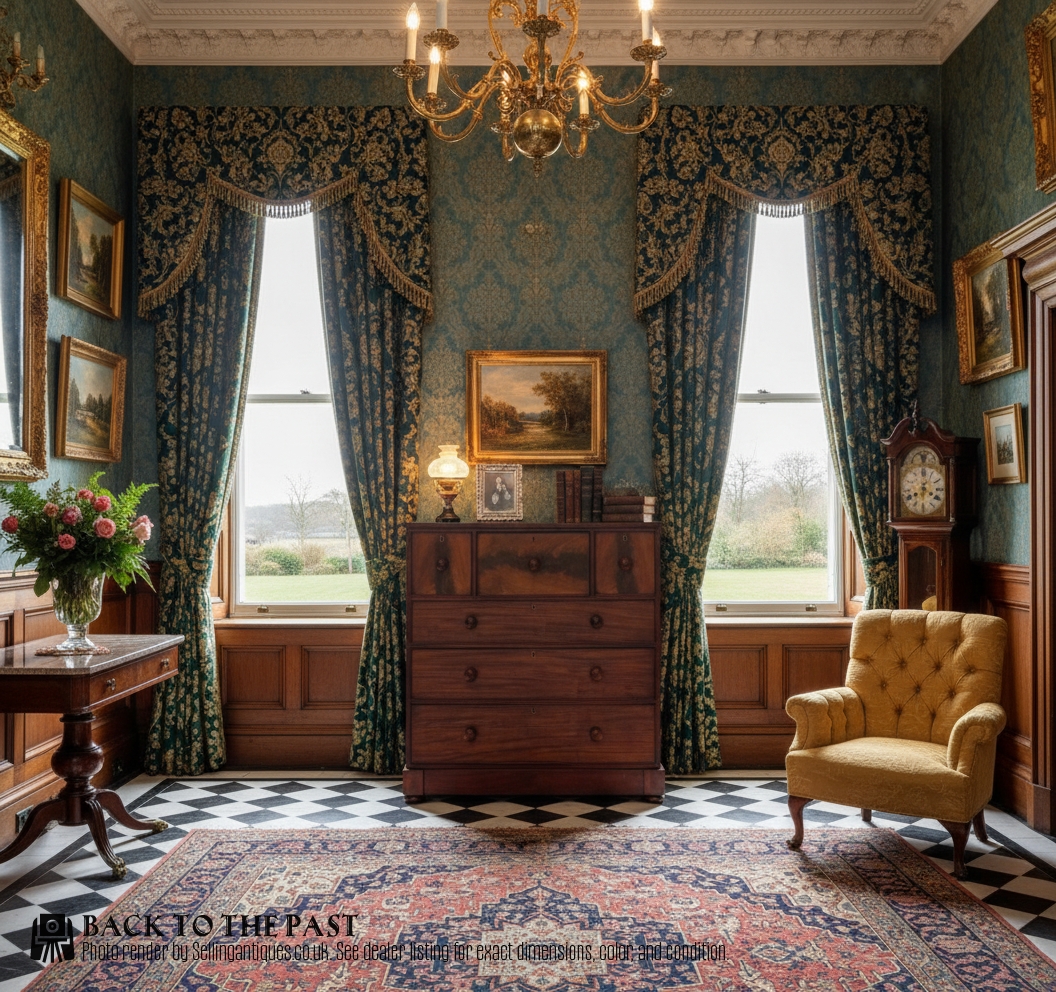
Antique Storage Bureau
When you search for an antique storage bureau, you encounter robust wooden chests designed for holding personal belongings. These pieces originate from periods spanning the late seventeenth century through to the twentieth century.
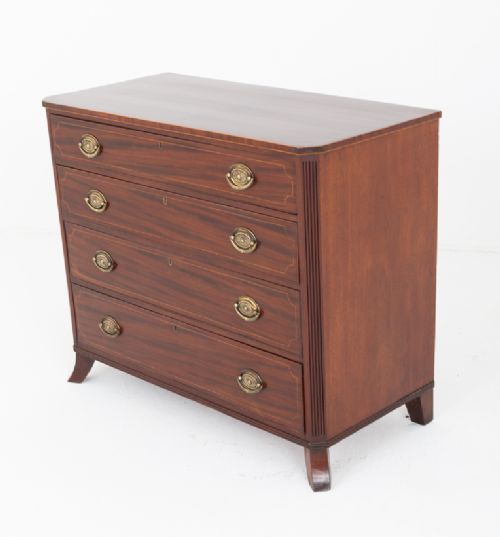
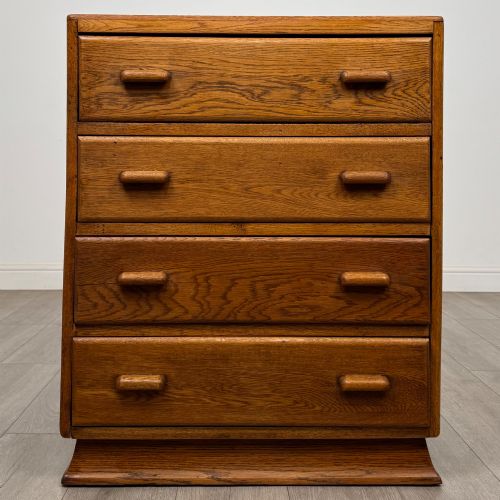
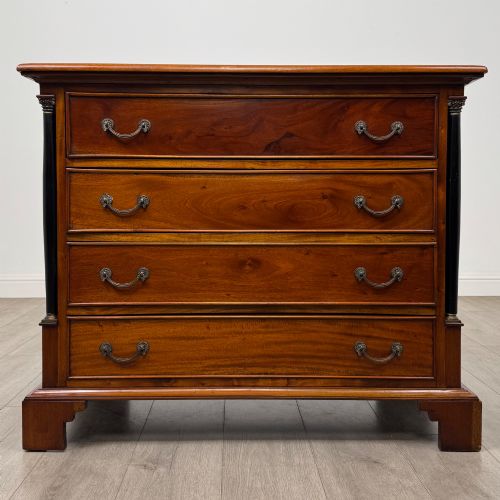
The selections available here consist predominantly of multiple-drawer chests in timbers like mahogany, oak, and walnut. They appear in forms ranging from simple rectangular carcases to bow front and serpentine shapes.
Originating across the Georgian, Regency, Victorian, and Edwardian eras, these storage items reflect the domestic habits of past centuries. They provide practical storage capacity alongside period character.
Materials and Construction
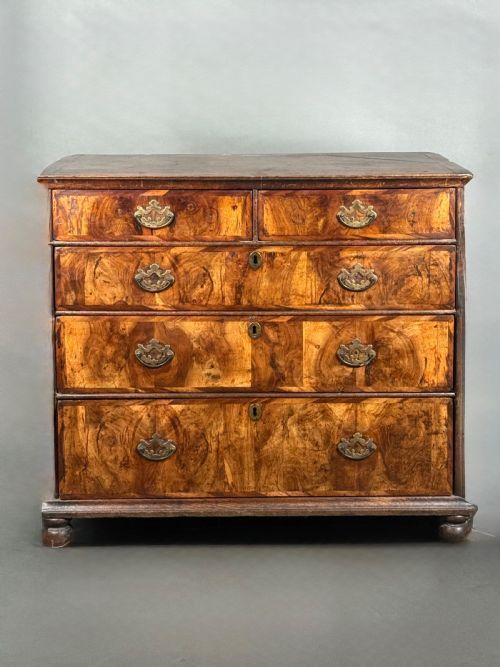
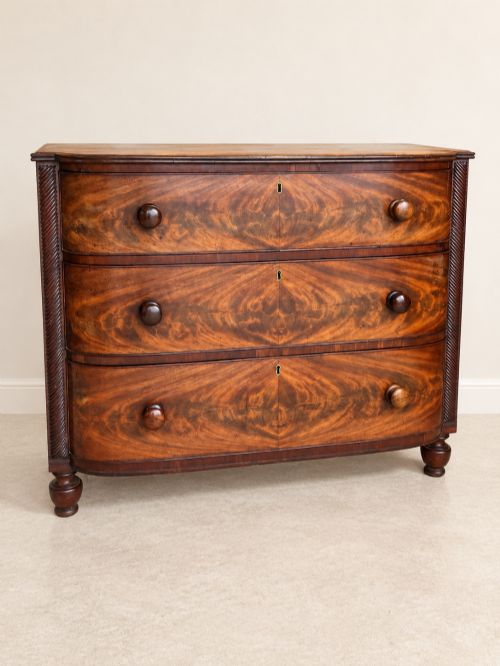
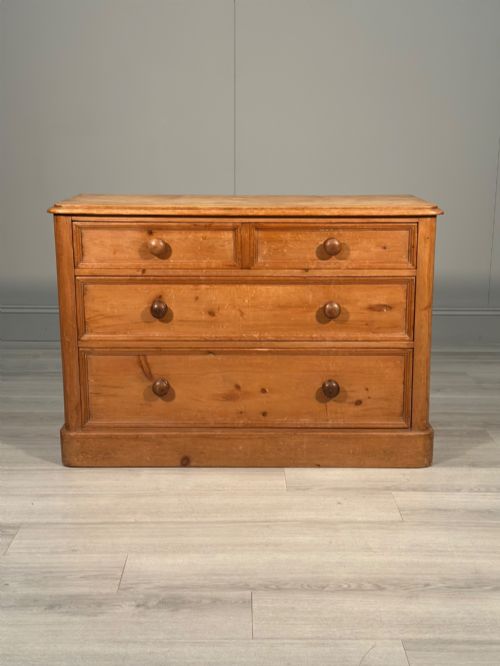
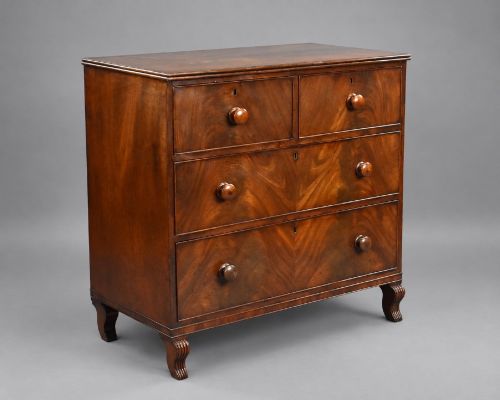
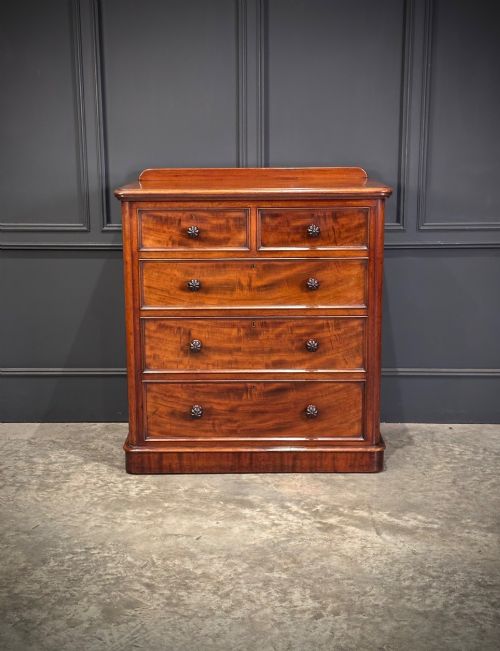
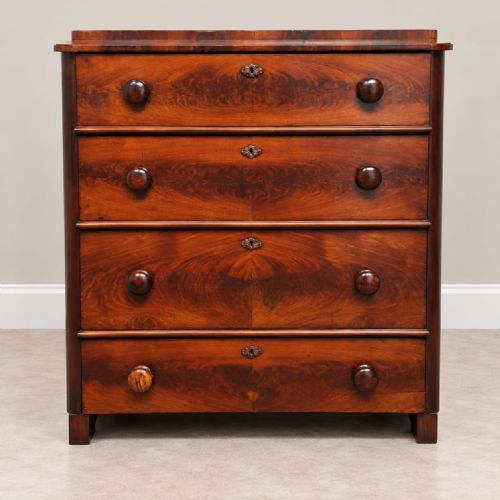
Cabinet makers utilised a range of domestic and imported timbers, selecting mahogany, oak, and pine for structural integrity. Selected pieces feature decorative veneers such as flame mahogany and burr walnut applied to drawer fronts.
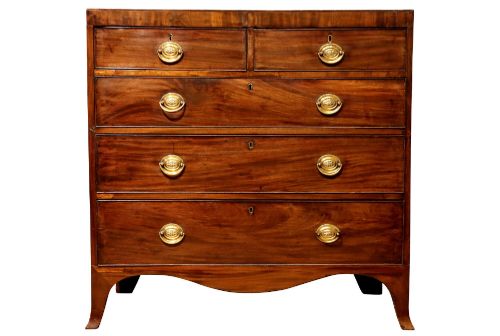
Metal fittings such as brass handles complement the timber construction. Joinery techniques secure the frames and drawer boxes for daily domestic use.
Some chests combine solid structural timbers with decorative veneers, hiding intricate wood patterns behind closed drawers until daily use reveals them.
Markers of Quality
Quality rests in the selection of timber and veneer, where figured grains and matched drawer fronts elevate a piece visually. The choice of solid oak or mahogany indicates superior baseline materials compared to secondary softwoods.
Refinement in the execution of mouldings, drawer construction, and original brass hardware distinguishes finer examples. The handling of serpentine and bow front curves demonstrates higher technical skill in the workshop.
Harris Lebus of Tottenham·Sir Clough Williams-Ellis
The Antique Storage Bureau Glossary
- Bow front
- A cabinet front that curves outward in the centre, creating a convex profile. This style appears frequently on Regency and later mahogany pieces.
- Serpentine
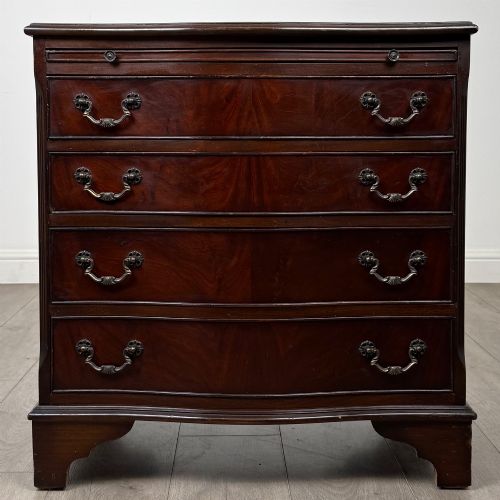
- A front contour characterised by a convex central section flanked by concave curves. This shape requires advanced woodworking skill.
- Flame mahogany
- A veneer cut from the fork of the mahogany tree where the branches meet the trunk. It produces a distinctive flame-like pattern across the wood.
- Burr walnut
- Timber taken from a growth on a walnut tree, yielding intricate swirling patterns. It is typically used for high-status drawer fronts.
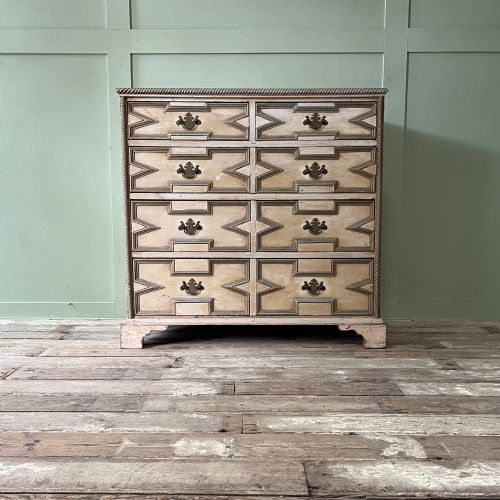
- Geometric moulded
- A decorative treatment on drawer fronts using applied mouldings in geometric patterns. This technique is typical of seventeenth-century oak furniture.
Antique Storage Bureau: Frequently Asked Questions
What periods do these storage pieces cover?
The pieces span from the late seventeenth century through the Georgian, Regency, and Victorian eras into the Edwardian period.
Craftsmen built them across various centuries, incorporating regional styles and changing domestic fashions.
Which woods are most common?
Mahogany and oak appear frequently across the listings, alongside pine, walnut, and specialised veneers like flame mahogany.
Cabinet makers selected these timbers for their durability and appearance in domestic settings.
How were these drawers used?
Households utilised these chests for storing clothing, linens, and personal documents in bedrooms and living spaces.
The multiple drawer configurations allowed owners to sort and organise their belongings efficiently.
What is a serpentine front?
A serpentine front is a shaped cabinet face featuring a convex centre flanked by two concave curves.
This undulating design required precise carpentry and was favoured for finer mahogany and walnut furniture.