

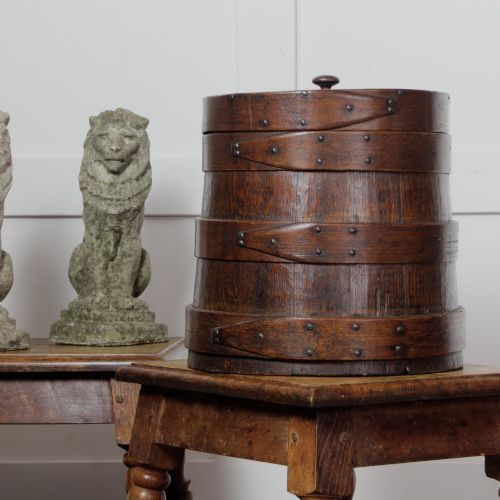
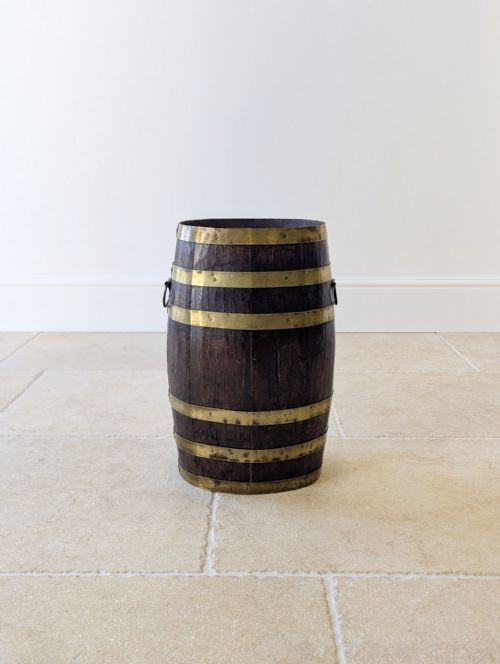
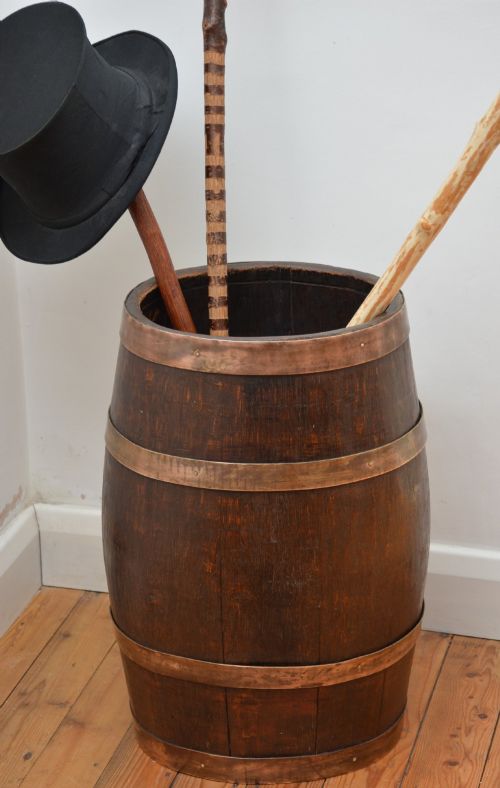


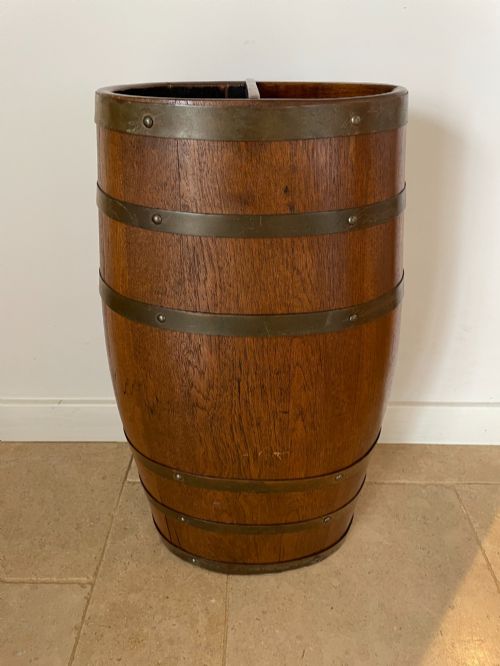
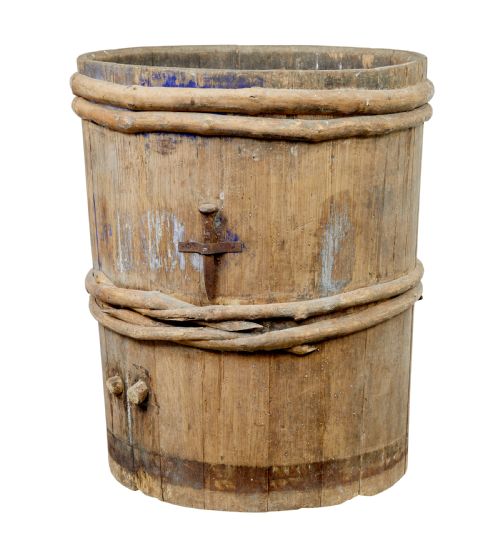


Antique Storage Barrel
When you handle an antique storage barrel, you meet timber staves held by metal hoops that turn simple utility into lasting domestic sculpture.
Antique Storage Barrel
An antique storage barrel encompasses a wide utility group, moving from flour and grain bins to umbrella stands and smaller biscuit vessels. You encounter heavy oak floor bins alongside pine storage vessels from the nineteenth century.
The form stretches across periods from the Georgian era through Victorian and Edwardian iterations into the early twentieth century. Scandinavian country examples appear alongside English coopered pieces and French industrial tins.
Vessels on this page range from domestic hall stands holding walking sticks to large timber drums intended for household provisions. Each piece reflects the functional storage needs of past rural and urban households.
Judgement of quality and manufacture
Quality rests in the tightness of the cooperage and the harmony between timber staves and metal bands. Superior examples maintain structural alignment without excessive shrinkage gaps between the individual wooden pieces.
The integrity of secondary metals dictates overall standard, particularly where brass mounts, copper rivets, or silver-plated fittings meet the wood. Original surface patination elevates a piece far above stripped or over-restored alternatives.
Antique Storage Barrel Retail Price Guide 2026
Typical asking prices for storage barrel among the pieces listed under this phrase on Sellingantiques today, from the lower quarter to the upper quarter. They describe what is for sale here now, not the wider market.
One travel trunk once crossed the Atlantic carrying biscuits while another carried hats.
Elkington and Co·Crown Devon·R.A. Lister·Cunard Line
The Antique Storage Barrel Glossary
- Coopered
- Constructed from curved wooden staves bound together by metal hoops, much like a traditional drinking cask.
- Stave
- One of the narrow shaped strips of wood that form the sides of a barrel or tub.
- Biscuit barrel
- A covered ceramic, glass, or metal container designed to keep dry baked goods fresh on the dining table.
- Coffer
- A heavy wooden chest or box used for holding valuables or household provisions.
- Patina
- The surface sheen and colour developed on wood and metal through age, handling, and use.
Antique Storage Barrel: Frequently Asked Questions
What did they store inside?
These vessels held dry goods such as flour, grain, and biscuits, while larger versions managed wet provisions like water. Domestic households also utilised them in hallways to hold walking sticks and umbrellas.
Industrial and travel variants transported personal belongings or commercial goods across land and sea. Each form dictated the internal space and lining materials used by the maker.
How do I clean the wood?
Dust the timber regularly with a dry cloth to prevent dirt accumulation in the grain and around the metal hoops. Avoid excessive moisture, which damages old timber and corrodes iron or brass bands.
Apply a traditional beeswax polish sparingly to nourish dry oak or pine surfaces. Buff gently to maintain the natural historic sheen without creating an artificial gloss.
Are metal hoops original?
Examine the metal bands for signs of age-appropriate oxidation, secure fixings, and consistent fit against the staves. Hand-forged iron or early brass bands show subtle irregularities that machine-made replacements lack.
Check whether the timber beneath the hoops matches the wear patterns visible on the exposed wood sections. Replacement bands often leave clean timber marks where older rusted hoops previously rested.
How do I date an oak barrel?
Look at the construction methods, such as whether the metal hoops are hand-joined iron or modern extruded steel. Georgian and early nineteenth-century examples often feature heavier hand-cut staves and forged hardware.
Examine the fastener types, tool marks, and overall wear patination across the base and rim. Maker marks or stamps on attached brass plates can also narrow down the manufacturing decade.