


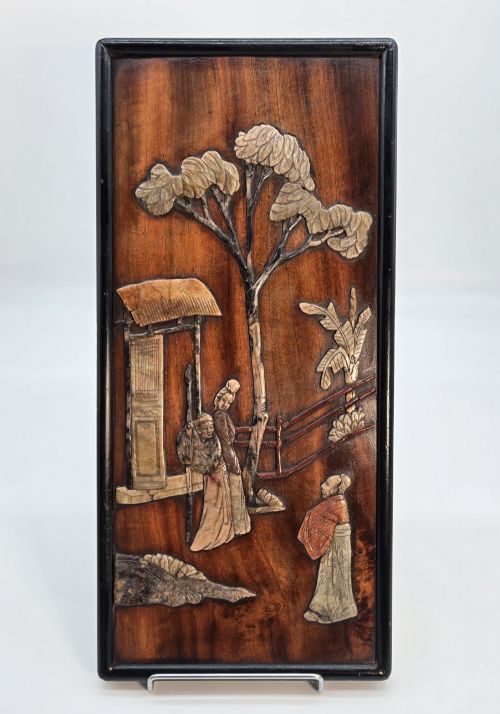


Antique Stone Wall Plaque
An antique stone wall plaque brings architectural weight and classical depth into a room, offering tactile relief sculpture that anchors a gallery wall or chimney breast.
Antique Stone Wall Plaque
An antique stone wall plaque encompasses carved panels, relief sculptures, and architectural fragments fashioned from diverse mineral mediums across the eighteenth, nineteenth, and early twentieth centuries. These pieces range from intimate Italian pietra dura pictures and Grand Tour marble cameos to robust red sandstone keystones and Welsh slate sets.
Buyers most frequently encounter nineteenth-century Italian works, often featuring classical motifs, Roman emperors, or pastoral figures carved in white marble, alongside Victorian Gothic or neoclassical interpretations. Architectural salvage and framed relief sculptures dominate the selection, bridging the gap between decorative art and building fragments.
The origins span British regional workshops and continental European centres, particularly Italy, where artisans produced souvenir plaques and architectural crests. Whether selecting a single memorial panel or a paired set of sculptural reliefs, the form functions primarily as wall art with a distinct three-dimensional presence.
Materials and construction methods
Carvers shaped these pieces predominantly from hard stones such as white marble, Sienna marble, red sandstone, and Welsh slate, utilising chisels, gouges, and abrasives to achieve varying depths of bas-relief. Pietra dura and marble dust compositions introduce alternative surfaces, combining inlaid mineral fragments or moulded aggregates to depict detailed pictorial scenes.
Mounting systems vary according to the period and weight, ranging from structural keystones meant for load-bearing integration to framed panels and wood-backed reliefs designed specifically for interior display. Finishing techniques extend from polished cameo profiles to unpolished, weathered sandstone surfaces that retain the marks of architectural salvage.
Antique Stone Wall Plaque Retail Price Guide 2026
Typical asking prices for stone wall plaque among the pieces listed under this phrase on Sellingantiques today, from the lower quarter to the upper quarter. They describe what is for sale here now, not the wider market.
One listed plaque bears the specific engine number of a steam locomotive alongside a stone merchant's name from nineteen hundred.
Distinctions in execution and material
Depth of carving and anatomical precision separate standard decorative panels from exceptional sculptural works, particularly in facial expressions, drapery folds, and the crispness of lettering or armorial details. Finer examples display meticulous hand-chiselling that captures the underlying musculature of a figure or the subtle strata of coloured marble.
Material selection and historical provenance further define the tier of a piece, with high-grade statuary marble and signed works commanding greater appreciation than generic plaster or composite alternatives. The integrity of the stone, the preservation of sharp edges, and the authenticity of the period mounting complete the measure of quality.
Kasper Hendrik Roskam
The Antique Stone Wall Plaque Glossary
- Bas-relief
- A sculptural technique where the figures project only slightly from the background plane, commonly seen in marble profile portraits.
- Pietra dura
- An artistic technique using cut and fitted polished coloured stones to create geometric or figural pictures, popular in Italian panels.
- Keystone
- The central wedge-shaped stone at the summit of an arch, occasionally salvaged and repurposed as a decorative wall plaque.
- Grand Tour
- A traditional trip through Europe undertaken by upper-class Europeans, resulting in souvenir carvings like classical marble cameos.
- Armorial
- A design featuring heraldic bearings or coats of arms, frequently carved into stone or slate to denote family lineage.
Antique Stone Wall Plaque: Frequently Asked Questions
How heavy are stone wall plaques?
Weight varies considerably depending on the material, ranging from modest slate sets and framed marble dust panels to extremely heavy solid marble and sandstone blocks.
Buyers must assess wall construction and secure appropriate fixings before hanging heavier architectural pieces.
Can these plaques be hung outdoors?
Certain pieces originate as exterior architectural salvage, such as sandstone keystones or stone crests, which withstand weathering.
Interior-focused items like pietra dura panels and fine marble reliefs suit indoor display environments best to prevent moisture damage.
How do I identify a Grand Tour plaque?
Grand Tour souvenirs typically feature classical subjects, such as Roman emperors in profile, carved meticulously from white marble.
These pieces usually date from the eighteenth or nineteenth centuries and reflect the classical education of European travellers.
What is the difference between marble and marble dust?
Solid marble pieces are hand-carved directly from quarried blocks, showing natural crystalline structures and chisel marks.
Marble dust compositions involve moulded aggregates bonded together to form relief sculptures, representing a different manufacturing technique.