
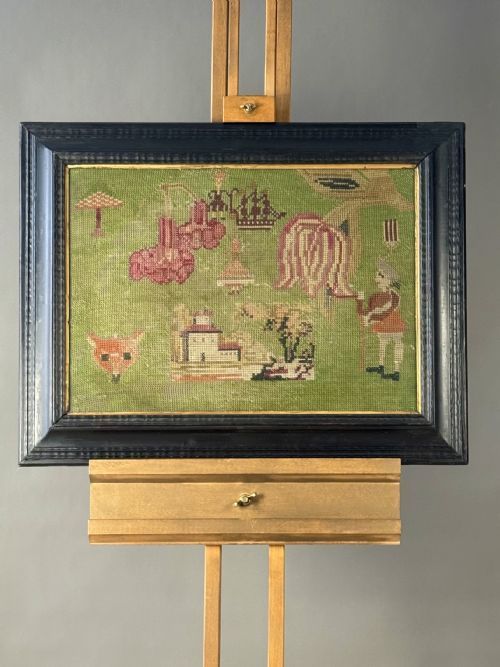
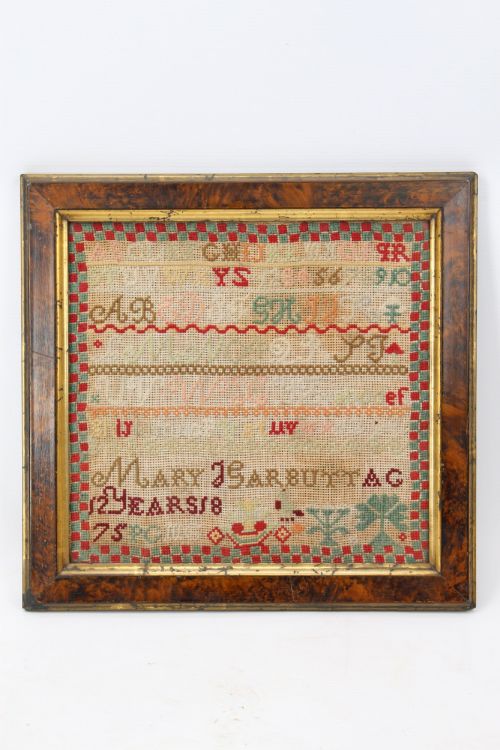
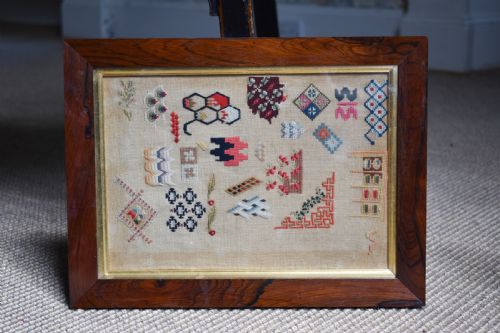
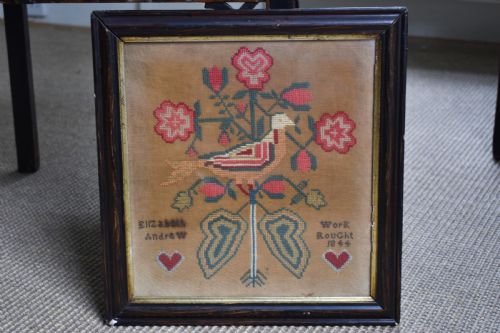



Antique Stitched Sampler
An antique stitched sampler records childhood industry and alphabet practice, offering a framed window into domestic education across Georgian and Victorian parlours.
Antique Stitched Sampler
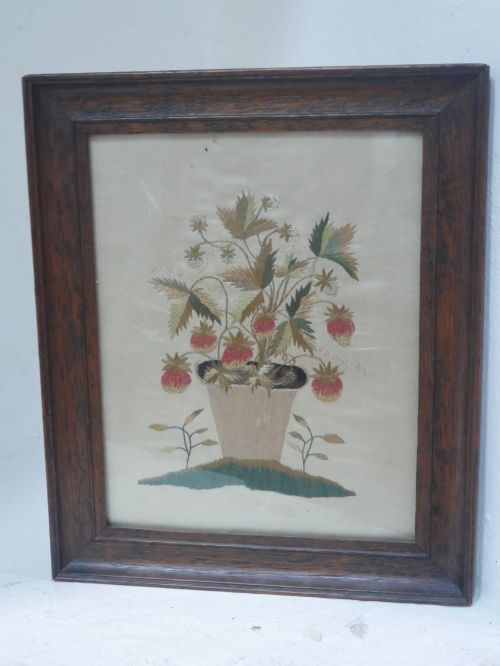
An antique stitched sampler is a needlework panel worked on a fabric ground, recording alphabets, verses, and motifs by young makers. These textiles range from 18th Century alphabet pieces to mid Victorian schoolroom works and later folk art expressions.
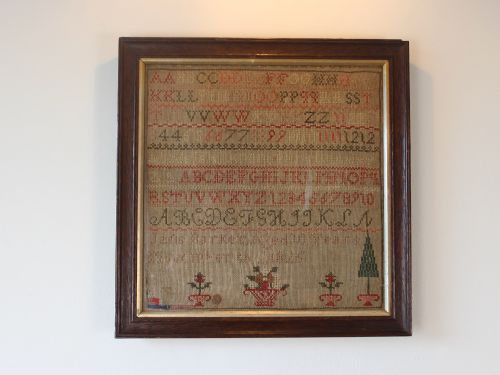
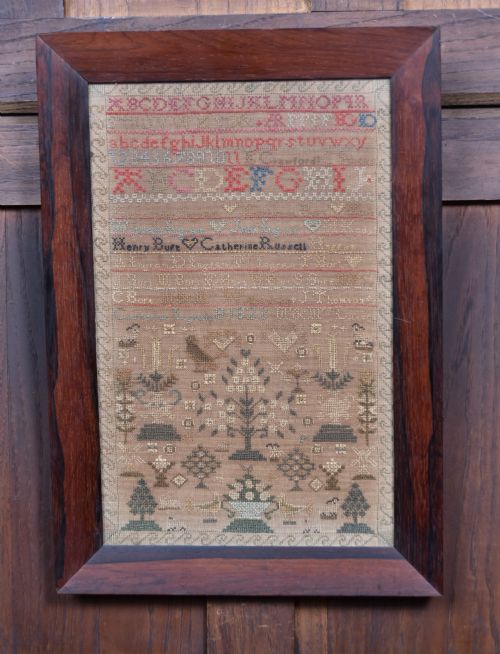
The most common examples on this page date from the 19th Century, often bearing a young maker's name, age, and a specific date. They frequently appear framed behind glass in wood surrounds, ready to hang upon a wall.
Makers utilised linen as a foundational ground for precise thread work, developing competence in lettering, numbers, and pictorial symbols. Subjects extend from simple alphabets to the Lord's Prayer, botanical studies, and educational verses.
Materials and construction
Ground fabrics consist primarily of woven linen, providing an even grid for counting threads and executing precise stitches. Working threads comprise silk, wool, and linen thread in varied colours.
Needlework techniques combine cross stitch, gros point, and petit point to form dense lettering and pictorial motifs. Finished panels are mounted within wood frames, frequently protected behind glass to preserve the delicate fibres.
Stitch errors and youthful misspellings survive in the threads, recording the exact moment a young maker lost count of her alphabet.
Variations in quality
Quality rests upon the regularity of the stitching and the complexity of the composition, distinguishing simple practice pieces from accomplished schoolroom works. Finer examples display meticulous alphabet grids, balanced pictorial borders, and legible verse.
The preservation of the original ground fabric and the vibrancy of the silk or wool threads determine the visual strength of the piece. Contemporary framing and stable linen condition support long-term survival against light and moisture.
The Antique Stitched Sampler Glossary
- Sampler
- A piece of needlework produced by a maker to demonstrate proficiency in various stitches, alphabets, and decorative motifs. These panels served as reference pieces or schoolgirl exercises.
- Alphabet sampler
- A specific form concentrating on capital and lowercase letters alongside numbers. They formed a fundamental stage in domestic education.
- Gros point
- A coarse counted-thread embroidery stitch worked on canvas or linen. It creates durable, textured areas within tapestries and needlework pictures.
- Linen
- A strong textile woven from flax fibres. It provides the traditional smooth ground for needlework samplers.
Antique Stitched Sampler: Frequently Asked Questions
What is an antique stitched sampler?
An antique stitched sampler is a piece of needlework created by a young person to practise stitching, alphabets, and numbers. They preserve names, dates, and verses from past centuries.
Most examples use silk or wool thread on a linen ground, framed for domestic display.
Who made these needlework samplers?
Young makers, often schoolgirls aged ten to fourteen, stitched these panels under instruction at home or in school. Their names and ages frequently appear alongside the date.
Institutional settings like national schools occasionally encouraged collaborative or uniform needlework output.
How should I hang a sampler?
Keep framed textiles away from direct sunlight to prevent silk and wool threads from fading. Stable indoor humidity protects the fragile linen ground from deterioration.
Ensure the frame protects the textile behind glass without pressing directly against the stitches.
How do I tell the periods apart?
Early 18th Century pieces often feature elaborate religious texts and stiff borders, while Georgian examples introduce refined alphabet grids and verse. Victorian samplers frequently incorporate pictorial scenes, botanical motifs, and specific school names.
Lettering style, border designs, and frame types provide additional clues to the date of execution.