



Antique Stitch Sampler
An antique stitch sampler displays the needle skills of young makers from the eighteenth and nineteenth centuries, offering a personal record in thread.
Antique Stitch Sampler
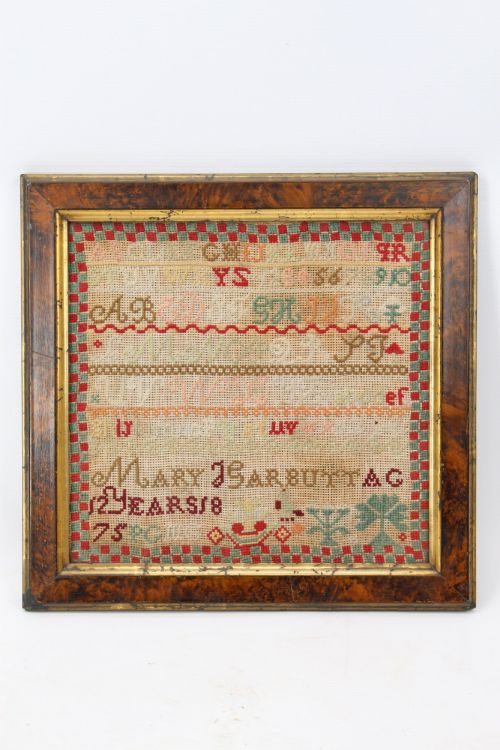
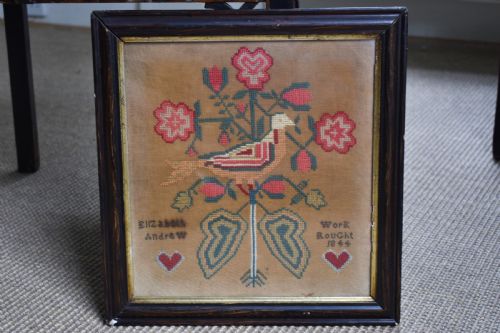
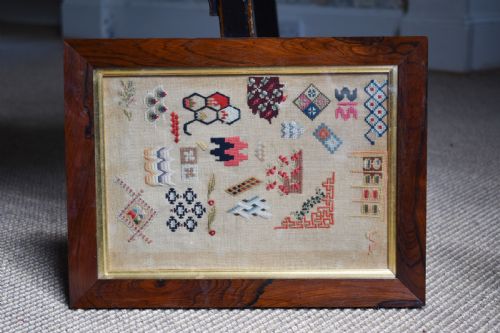
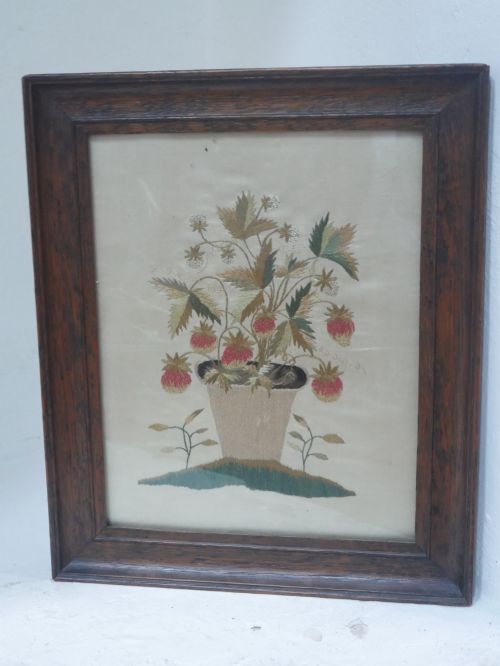
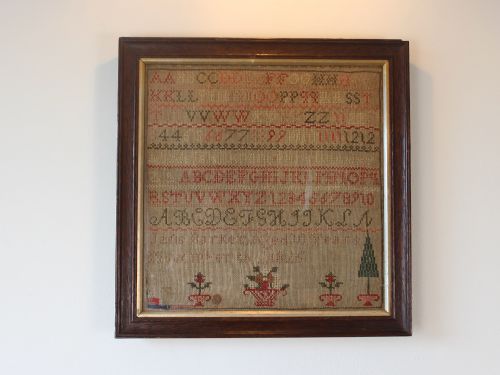
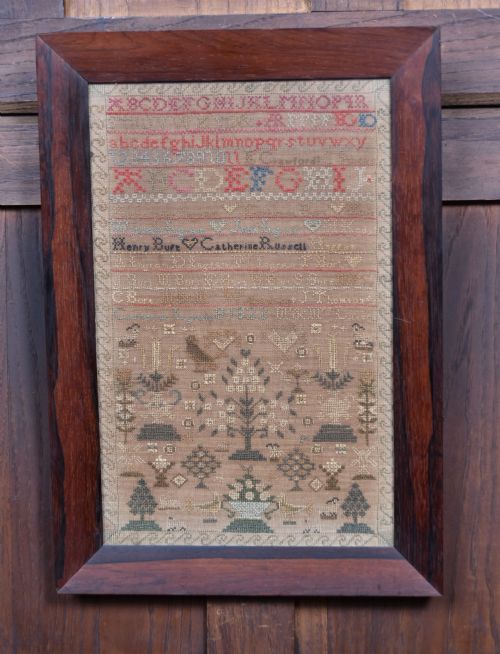
An antique stitch sampler records alphabets, verses, and pictorial motifs worked by hand on a textile ground. These works range from humble alphabet exercises to complex pictorial compositions bearing names, ages, and dates.
The pieces seen here date predominantly from the Georgian and Victorian periods, alongside examples from the eighteenth century. Makers often recorded their name, age, and location, providing a direct link to domestic education of the past.
Forms include framed textile wall art, needlework pictures, and alphabet panels. Many retain their original wooden or glass frames, protecting the delicate linen and wool threads from atmospheric damage.
Materials and Construction
Makers worked primarily on linen grounds, utilising silk thread, wool, and cotton to execute various stitches. The choice of backing fabric and thread type determines the texture and longevity of the surviving textile.
Techniques encompass cross stitch, gros point, and petit point, executed with precise counting of threads. Stitch errors remain visible on certain pieces, recording the genuine hand of a young maker learning the craft.
Antique Stitch Sampler Retail Price Guide 2026
Typical asking prices for stitch sampler among the pieces listed under this phrase on Sellingantiques today, from the lower quarter to the upper quarter. They describe what is for sale here now, not the wider market.
A Scottish schoolgirl recorded a stitch error in thread around 1880, leaving a permanent human correction frozen in wool.
Evaluating Quality and Execution
Quality rests upon the uniformity of the stitches, the complexity of the design, and the clarity of the lettering or motifs. Superior examples display disciplined execution and balanced composition across the textile ground.
The inclusion of detailed pictorial elements, religious texts, or specific family records elevates the significance of a piece. Condition also plays a role, with clean linen and stable, vibrant threads marking the superior end of the range.
The Antique Stitch Sampler Glossary
- Sampler
- A piece of needlework produced as a demonstration or test of skill in various stitches. These textile panels frequently include alphabets, numbers, and decorative motifs.
- Alphabet Sampler
- A needlework panel dedicated primarily to practising letters of the alphabet and numerals. Such pieces served to teach literacy alongside needlecraft.
- Gros Point
- A coarse needlepoint stitch worked on canvas or linen mesh. This technique allows for rapid coverage and sturdy pictorial depiction.
- Petit Point
- A fine needlepoint stitch worked over a single thread of the canvas or linen ground. It permits intricate detail and subtle shading in floral and figural designs.
- Linen
- A textile made from the fibres of the flax plant, providing the traditional woven ground for early needlework. Its durability accounts for the survival of many historic pieces.
Antique Stitch Sampler: Frequently Asked Questions
What do the dates and names on samplers mean?
Dates and names record the individual who worked the piece, often accompanied by their age and school. This information anchors the textile in a specific family history and educational context.
Researching these names reveals census and parish records, connecting the physical object to a documented life from the Georgian or Victorian era.
How were antique samplers originally displayed?
Makers or their families mounted these textiles into wooden frames to protect the delicate threads from dust and handling. Many survive in period frames made of rosewood or simpler timber mouldings.
Displaying them away from direct sunlight preserves the original colours of the silk and wool threads against fading.
Why do some samplers include religious texts?
Moral verses, the Lord's Prayer, and the Commandments formed a core part of education and needlework instruction. Working these texts demonstrated both literacy and moral diligence.
These inclusion types reflect the domestic and religious priorities of schools and households during the eighteenth and nineteenth centuries.
How do I care for an antique textile sampler?
Protection from humidity, dust, and ultraviolet light ensures the longevity of fragile linen and silk materials. Keeping the piece behind UV-filtering glass prevents further degradation of the fibres.
Professional mounting using acid-free conservation materials supports the weight of the fabric and prevents sagging within the frame.