




Antique Sterling Tea Jar
An antique sterling tea jar is a sturdy metal container made to hold dry leaves securely on the dining table.
Antique Sterling Tea Jar
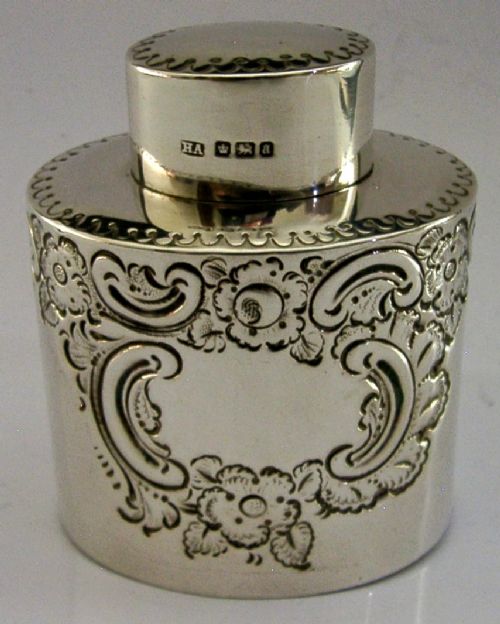
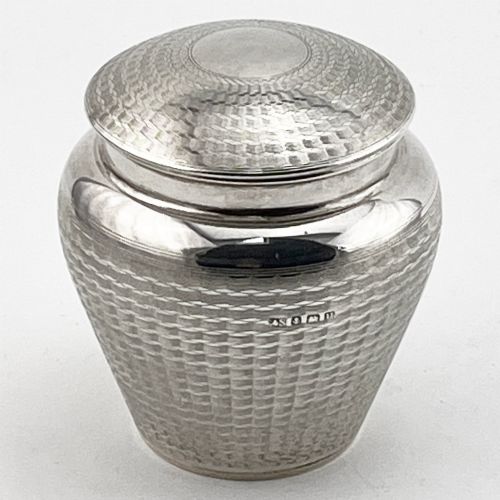
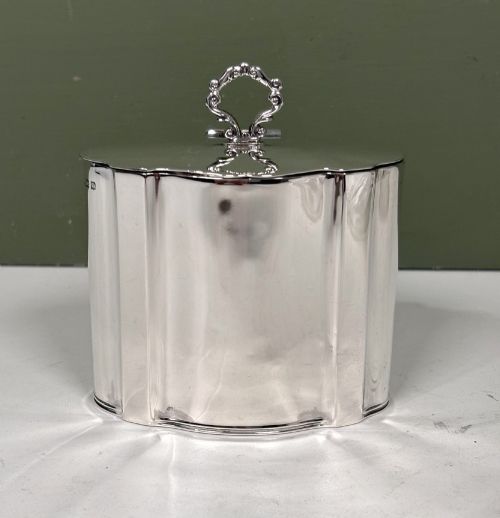
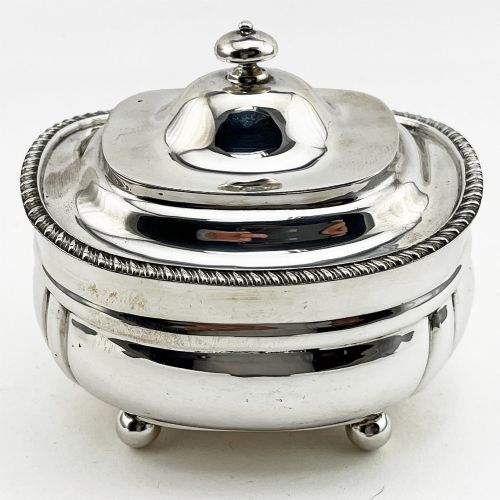
An antique sterling tea jar is most frequently met on this page as a caddy or small box shaped for the tabletop. These vessels emerge across the Victorian, Edwardian, and George V periods, running through the late nineteenth and early twentieth centuries.
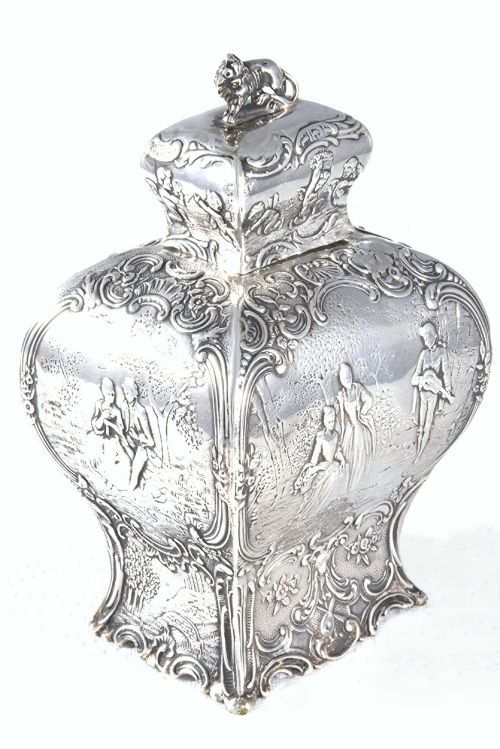
The forms span oval bodies, bombe outlines, and novelty shapes alongside cut crystal variations mounted in solid silver. Makers from London, Birmingham, and Sheffield produced these domestic items in various capacities to suit the formal tea service of the day.
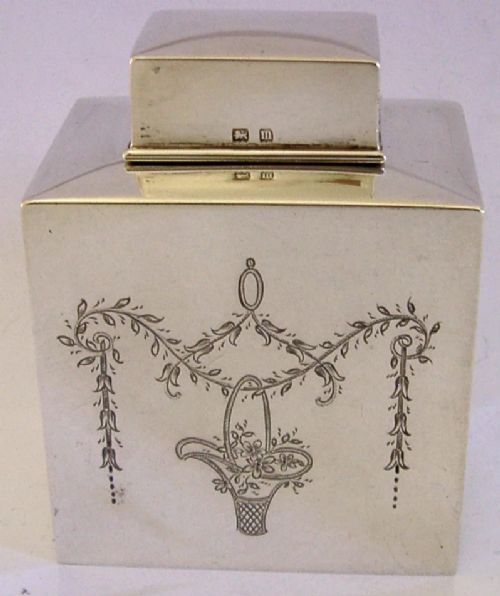
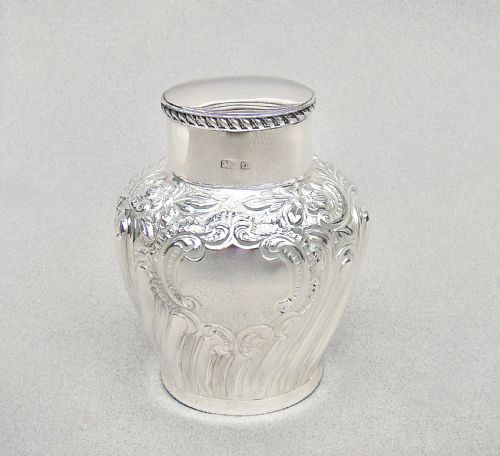
Buyers seeking an antique sterling tea jar encounter pieces ranging from plain polished containers to heavily ornamented boxes displaying period revival motifs.
How they were made
Silversmiths utilised solid sterling silver sheet, hammering and shaping the metal before applying decorative surface treatments such as repoussé work or smooth polished finishes. Many examples incorporate pull-off lids designed to seal tightly against air and moisture.
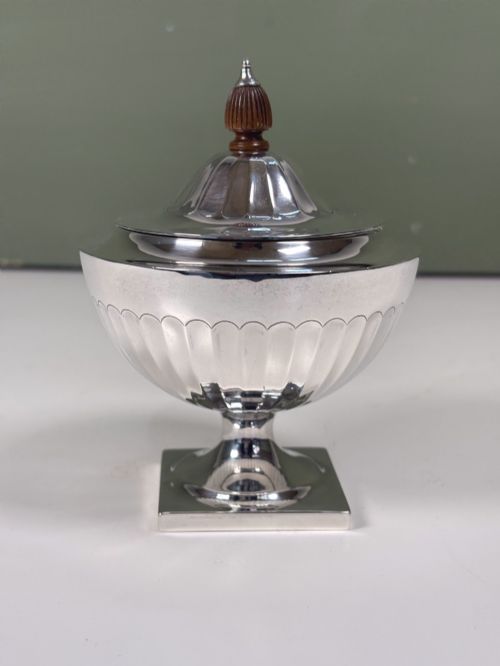
Certain specimens pair sterling silver with cut crystal glass bodies or utilise ebonised wood details to create contrast. Workshops in London, Birmingham, and Sheffield marked these creations with assay office stamps and maker's initials.
Some silversmiths shaped containers to mimic factory paint tins for tabletop amusement.
What varies in quality
The metal gauge dictates the structural substance of the body, distinguishing heavier containers from lighter pressed sheets. Crispness in repoussé decoration and the snug fit of the lid indicate the maker's level of skill.
Attribution to known makers or prominent retailers elevates certain pieces above standard anonymous workshop production.
Charles Edwards·Thomas Hayes·Mappin and Webb·Ernest Druiff and Co·Goldsmiths and Silversmiths Co·Asprey and Co·Atkin Brothers
The Antique Sterling Tea Jar Glossary
- Sterling silver
- A silver alloy containing ninety-two point five percent pure silver by mass, with the remainder consisting of other metals. This standard composition forms the primary material for these vessels.
- Repoussé
- A metalworking technique where the smith pushes the design out from the reverse side by hammering. This creates raised ornamental patterns across the exterior surface.
- Bombe
- A swollen or bulging convex shape used for the body of the container. It offers a rounded profile popular in Victorian designs.
- Pull-off lid
- A removable cover that slides directly onto the neck of the jar without threaded tracks. It relies on a precise fit to stay secure.
- Assay office
- An official body that tests the purity of precious metals and stamps them with hallmarks. Marks identify the city of testing and the year of manufacture.
Antique Sterling Tea Jar: Frequently Asked Questions
What was a tea jar used for?
These vessels served to store loose tea leaves securely away from light and damp air in the parlour or dining room. The metal walls helped preserve the aroma of expensive leaves.
Servants brought the container to the table during tea service so the host could measure out the leaves. They functioned as both practical storage and decorative tabletop objects.
How do I date a silver jar?
Hallmarks stamped onto the silver surface provide the most reliable guide to age. These tiny marks indicate the assay office, the standard of silver, and a specific date letter.
Stylistic clues such as repoussé patterns or geometric Art Deco lines also point to particular manufacturing decades. Comparing the shape to documented period pieces narrows down the origin.
Can I still store tea in it?
These containers hold dry tea leaves safely provided the interior remains clean and free from residue. A tight lid helps maintain the quality of the contents during daily use.
Collectors often prefer to display them empty to preserve the interior finish and historic marks. Gentle washing with mild soap keeps the metal bright without damaging the antique surface.
Why do some have crystal bodies?
Glass cut crystal bodies allowed users to see the remaining volume of tea leaves inside the vessel without removing the lid. Silversmiths added solid silver rims, bases, and covers to protect the fragile glass.
This combination created a heavier, more reflective object for the formal dining table. The contrast between clear cut glass and polished silver was popular during the Edwardian period.