
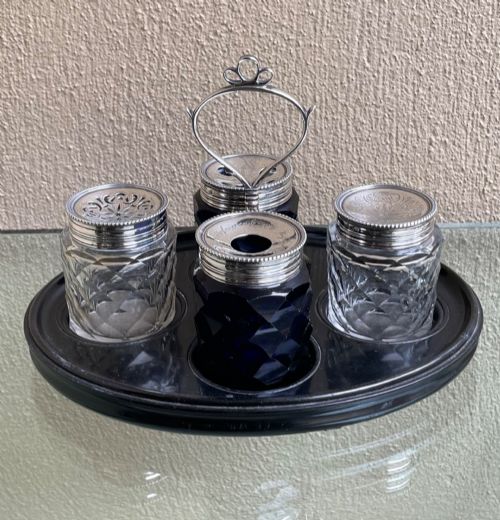


Antique Sterling Inkstand
An antique sterling inkstand anchors the writing desk, combining functional silver with the weight of Georgian, Victorian, and Edwardian correspondence.
Antique Sterling Inkstand
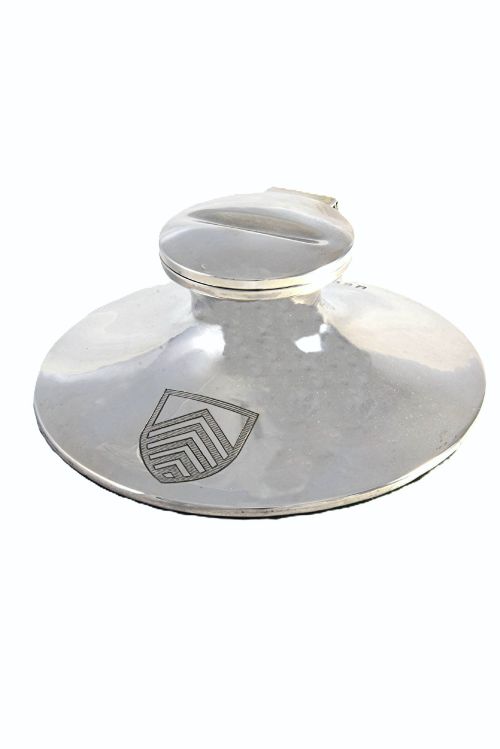
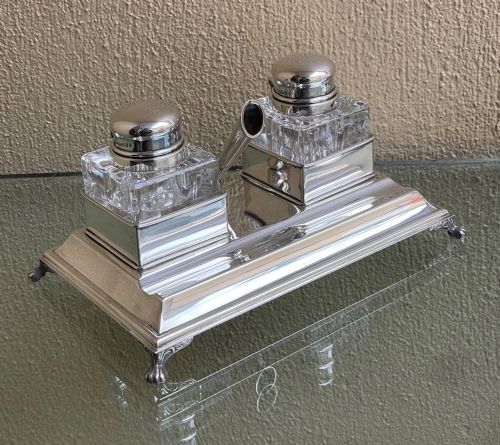
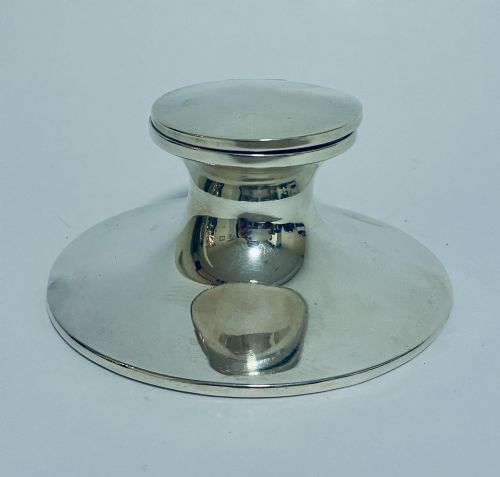
An antique sterling inkstand represents the finest desk accessories of past centuries, designed to hold inkwells, pounce pots, and quill pens upon a unified tray or stand. When searching for an antique sterling inkstand, you will encounter various forms ranging from simple capstan inkwells to large, elaborate stands complete with chambersticks and multiple glass bottles.
The pieces listed here span the Georgian, Victorian, Edwardian, and Art Deco periods, displaying styles from Regency elegance to practical early twentieth-century design. Most examples you meet on this page take the form of heavy silver capstan shapes or substantial desk stands fitted with cut glass components.
Desks of the nineteenth and early twentieth centuries required these portable writing companions to maintain correspondence before the advent of the fountain pen. Today, collectors seek them for their craftsmanship and their ability to bring period character to a working desk or study.
Distinctions in quality
The distinction between ordinary and exceptional pieces lies in the weight of the silver, the crispness of the hallmarks, and the complexity of the desk set. Large multi-piece stands featuring matched cut glass bottles and integrated chambersticks demonstrate higher ambition than single inkwells.
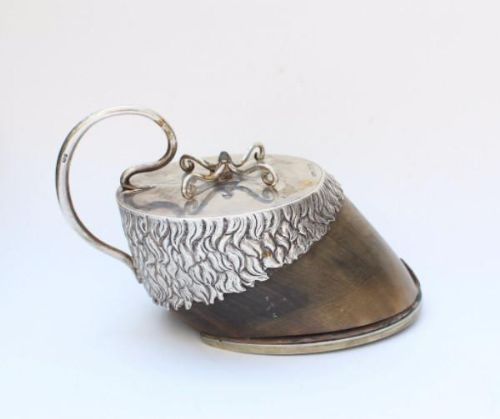
Novelty forms, such as those shaped like horse hooves, bells, or pen nibs, rely on sculptural precision and clever mechanical integration of pocket watches or clocks. The quality of the engraving and the survival of original glass inserts heavily influence the standing of any given piece.
Some Edwardian writers preferred their ink housed safely inside a genuine horse hoof.
Robert Garrard
The Antique Sterling Inkstand Glossary
- Capstan inkwell
- A desk inkwell shaped like a nautical capstan, featuring a wide weighted base tapering upward to a hinged lid.
- Pounce pot
- A small shaker container used to sprinkle powdered resin or cuttlefish bone over wet ink to dry the writing surface.
- Chamberstick
- A small portable candlestick with a pan base and handle, frequently integrated into larger Victorian and Georgian inkstands.
- Guilloche enamel
- Decorative metalwork covered with translucent enamel over an engine-turned geometric pattern, seen on select Edwardian pieces.
- Hallmark
- The official stamp applied to precious metals indicating the standard of silver, the assay office, and the year of manufacture.
Antique Sterling Inkstand: Frequently Asked Questions
What is the difference between an inkstand and an inkwell?
An inkstand is a larger tray or stand that holds one or more inkwells alongside accessories like pounce pots, pen trays, and tapersticks.
An inkwell is simply the individual vessel designed to hold the ink itself, whether used standalone or fitted into a larger desk stand.
How do I date an antique silver inkstand?
Dating relies primarily on the assay office hallmarks stamped into the sterling silver, which include a date letter corresponding to the exact year of production.
Stylistic cues such as Regency proportions, Victorian ornamentation, or Art Deco geometry also help narrow down the period of manufacture.
Were these inkstands used with fountain pens?
These inkstands were designed for dip pens, requiring the writer to submerge a steel nib or quill directly into the open ink reservoir.
Fountain pens with internal ink reservoirs largely superseded these desk accessories by the mid-twentieth century.
How do I care for sterling silver on a desk?
Sterling silver benefits from occasional gentle cleaning with a soft microfibre cloth to remove dust and prevent tarnish accumulation in recessed details.
Harsh abrasive polishes should be avoided, particularly around glass collars, enamel medallions, and organic materials like tortoiseshell or hoof.