
Antique Standing Shelving
Antique standing shelving brings architectural structure to domestic spaces, offering open display and storage through versatile tiers, bookcases, and whatnots.
Antique Standing Shelving
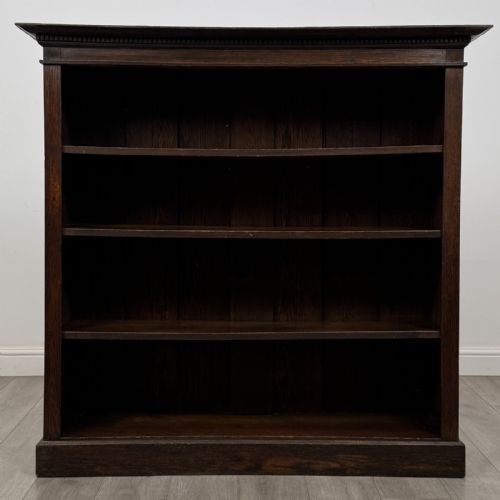
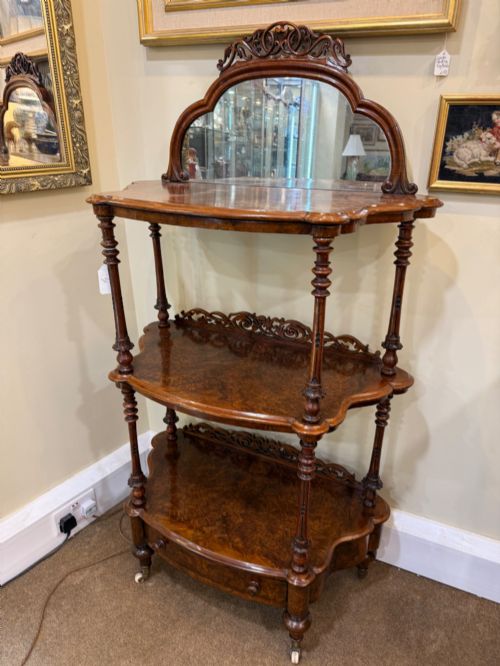
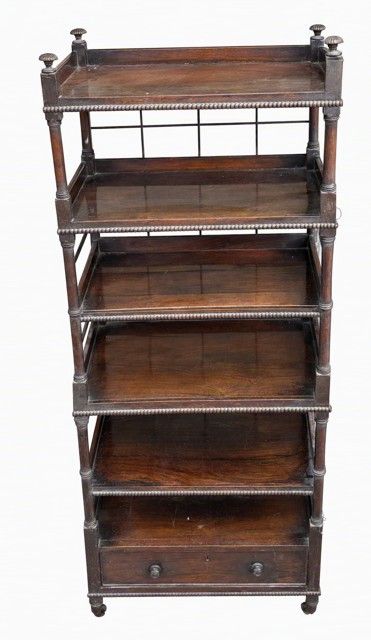
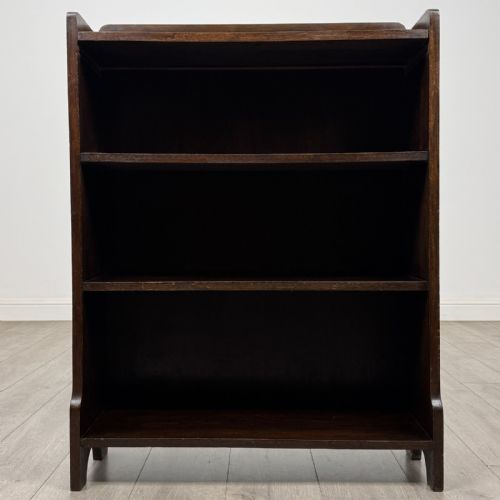
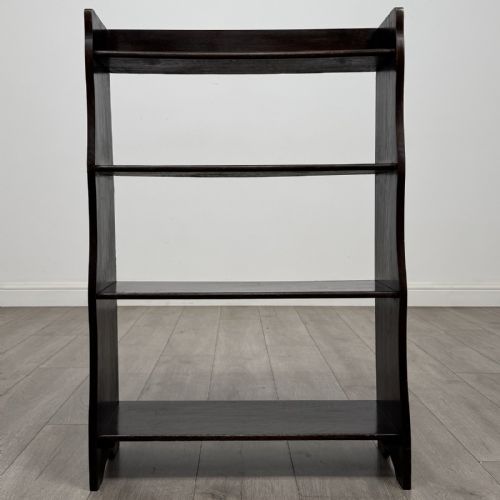
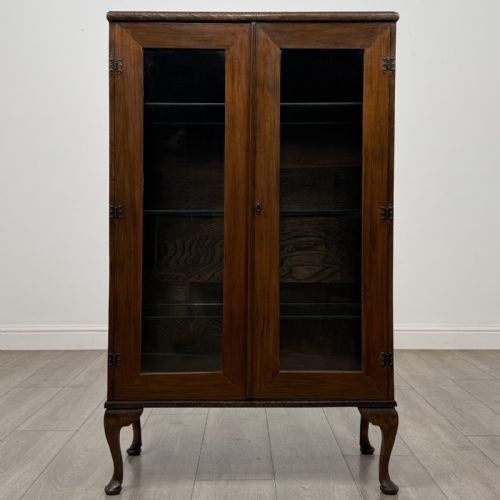
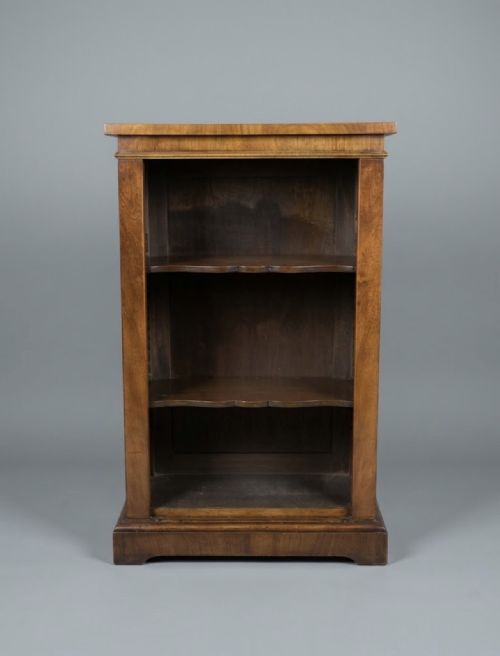
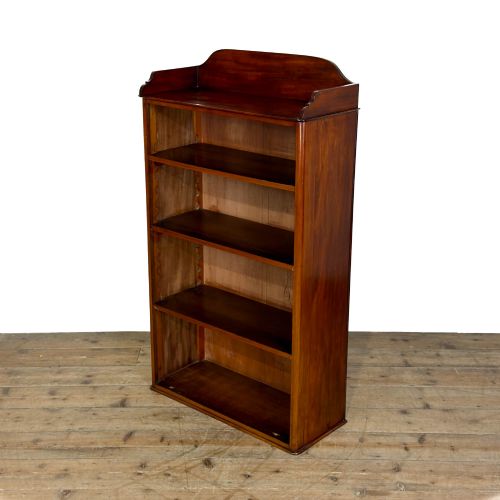
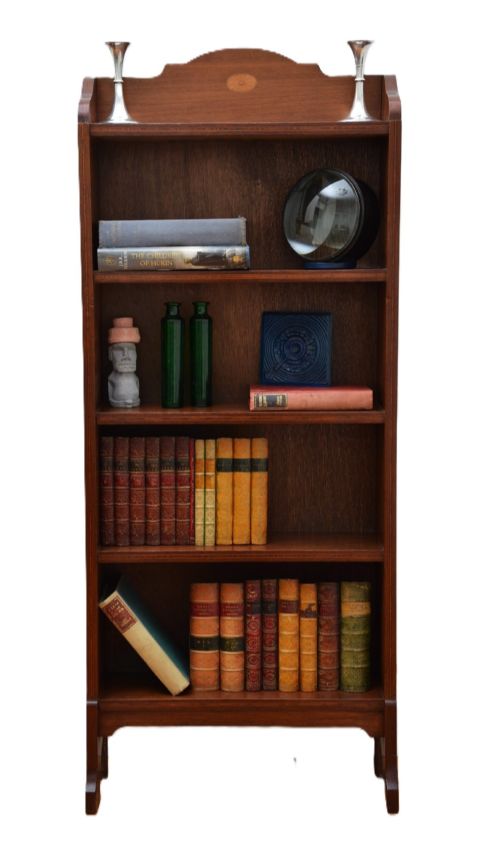
Antique standing shelving encompasses open bookcases, multi-tiered whatnots, etageres, and corner cabinets designed to stand independently against a wall or within a room. The pieces seen on this page span several periods, ranging from Georgian and Regency eras through the Victorian, Edwardian, and early twentieth-century decades.
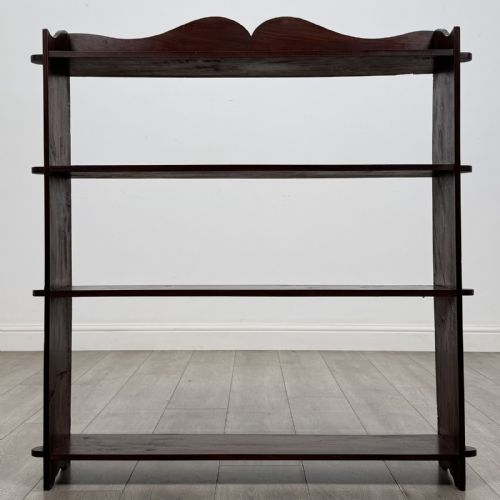
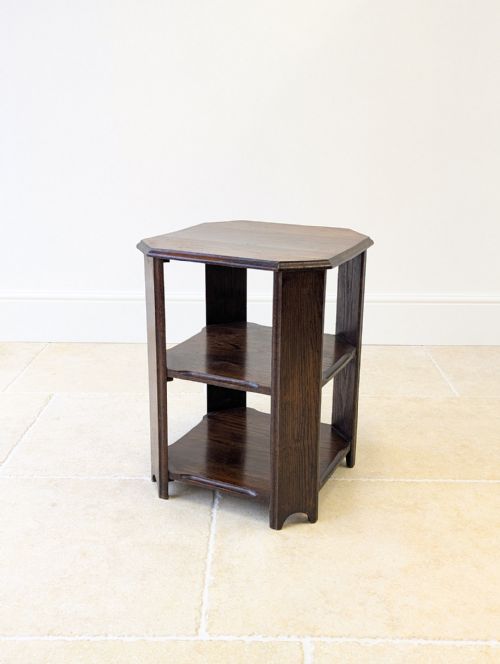
Buyers are most likely to encounter oak and mahogany open bookcases alongside tiered whatnots in walnut, rosewood, and pine. Forms vary from simple rustic pine units to sophisticated George III and Regency pieces featuring graduated tiers, barley twist supports, or brass castors.
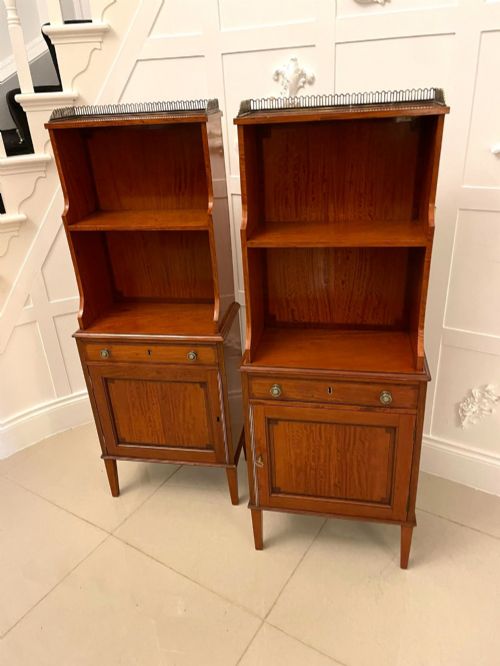
Originating as utilitarian storage for books and ornaments, these freestanding units developed into refined display furniture. Examples include corner configurations, serpentine shapes, and specialised waterfall bookcases that graduate in depth from top to bottom.
Materials and Construction
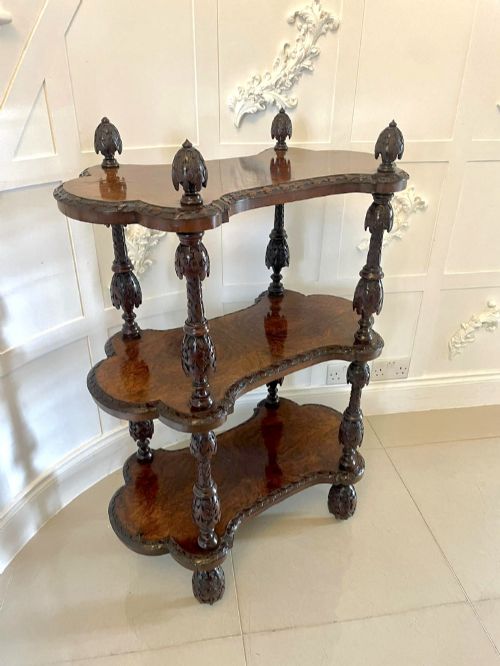
Cabinet makers utilised hardwoods such as mahogany, oak, walnut, burr walnut, and rosewood, alongside softer timbers like pine for internal or simpler carcasses. Grain selection played a central role, particularly in burr walnut and figured mahogany surfaces where natural patterns provided the primary decoration.
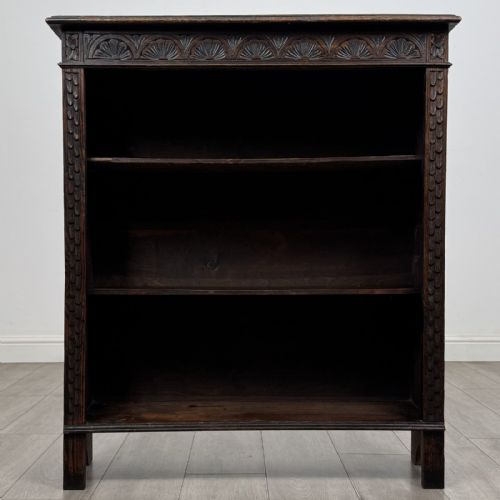
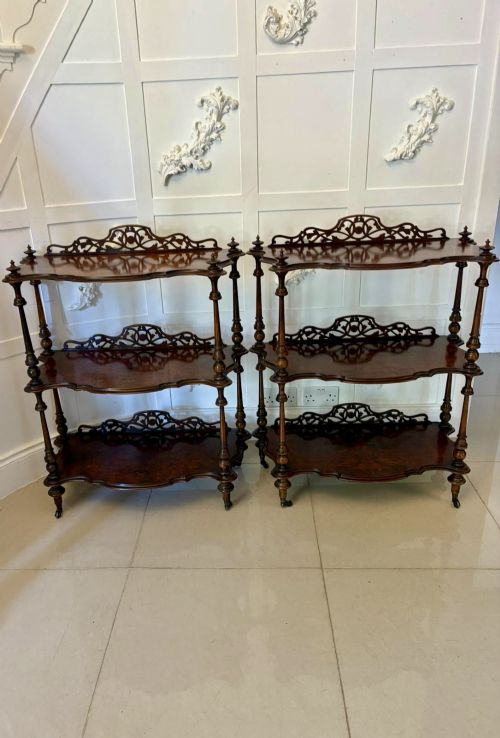
Construction techniques combined traditional joinery with functional hardware, including brass castors on larger tier pieces and adjustable shelf mechanisms in later oak bookcases. Details such as inlaid stringing, carved oak motifs, and open fretwork define the execution of these standing units.
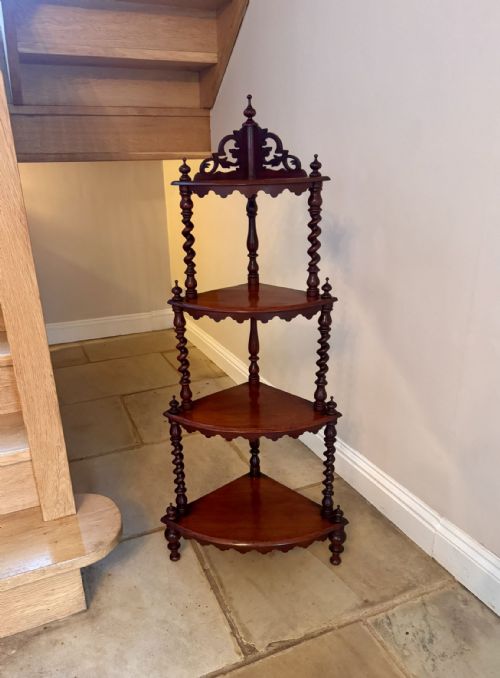
Some nineteenth-century corner whatnots were designed purely to occupy awkward wall angles, turning wasted space into multi-tiered display architecture.
Distinctions in Quality
Quality in antique standing shelving rests upon timber selection and the precision of the joinery rather than mere decorative flourish. Superior examples display carefully matched wood grains, solid construction without excessive structural timber replacement, and well-proportioned tiers that maintain stability.
Refinement of detail separates standard utility pieces from exceptional commissions. Fine items incorporate thoughtful elements like graduated shelving depths, delicate inlay, functional brass castors, and architectural mouldings executed with crisp definition.
The Antique Standing Shelving Glossary
- Whatnot
- A piece of freestanding furniture consisting of several open shelves placed one above the other, used for displaying ornaments or books. They frequently feature turned columns or upright supports.
- Waterfall bookcase
- A standing bookcase whose shelves graduate in depth from top to bottom, following a stepped profile. This form gained popularity during the Regency and Victorian periods.
- Etagere
- A set of open shelves for displaying small objects or bric-a-brac, often light in construction. These pieces typically date from the Victorian and Edwardian eras.
- Barley twist
- A turned wooden furniture leg or support carved in a helical, spiral twist resembling barley sugar. This decorative turning appears frequently on Victorian supports.
Antique Standing Shelving: Frequently Asked Questions
What is an antique whatnot?
An antique whatnot is a multi-tiered freestanding shelving unit designed to display ornaments, small objects, or books. These pieces became popular in domestic interiors during the Georgian, Regency, and Victorian periods.
They often feature turned columns, corner designs, or graduated shelves supported by slender uprights. Many examples include brass castors to allow the stand to be moved easily across a room.
How do I date an open bookcase?
Dating an open bookcase involves examining the timber species, construction methods, and stylistic details present in the piece. Georgian and Regency examples often feature finely figured mahogany and architectural proportions.
Victorian pieces frequently display heavier carved oak or burr walnut veneers, while Edwardian and 1920s standing shelving tends to utilise simpler oak frames, sometimes with adjustable shelf mechanisms.
Are these shelves suitable for heavy books?
Most antique standing shelving is robustly constructed from solid hardwoods like oak or mahogany and safely accommodates standard book collections. However, depth and shelf thickness determine capacity.
While sturdy Edwardian and Victorian oak bookcases handle large volumes easily, lighter etageres and multi-tiered whatnots are better suited to lighter ornaments, display items, or moderate book storage.
What is a waterfall bookcase?
A waterfall bookcase is a standing shelving unit where each successive shelf steps forward from top to bottom, creating a cascading profile. This design originated in the Regency period and remained popular through the Victorian and Edwardian eras.
The graduated depth provides both structural stability at the base and a visually balanced display space for books and decorative objects.