



Antique Stamp Dispenser
These antique stamp dispenser pieces are compact desk accessories from the Victorian and Edwardian eras, combining practical utility with miniature silver craftsmanship.
Antique Stamp Dispenser
An antique stamp dispenser is a small desk accessory or pocket item designed to hold and distribute postage stamps safely. When searching for an antique stamp dispenser, buyers encounter desk boxes, double stamp boxes, sliding cases, and novelty forms.
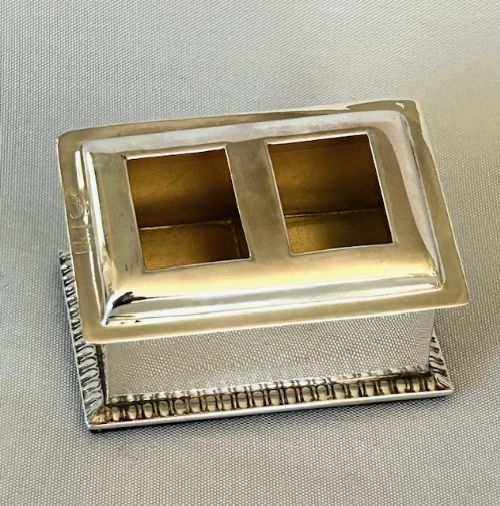
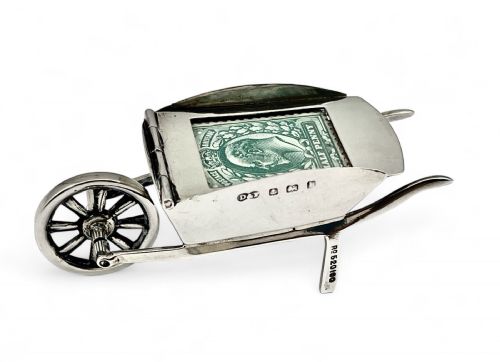
The pieces listed on this page span from the eighteen-seventies through the Edwardian period and the George V era. Common configurations include double stamp boxes, four-section brass holders, and novelty garden items such as wheelbarrows and trugs.
Most items originate from late Victorian and Edwardian workshops, reflecting the Victorian obsession with organised correspondence. Buyers frequently find sterling silver and silver-plated examples alongside brass and leather items.
How they were made
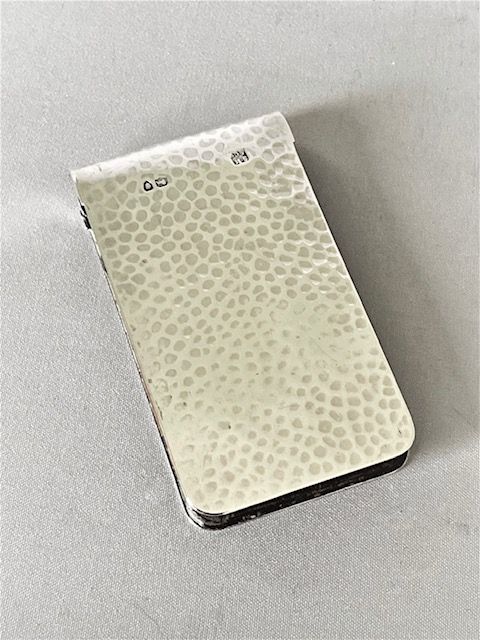
Makers shaped these accessories primarily from sterling silver, silver plate, and brass, often mounting them with glass or pairing them with leather. Silversmiths utilised stamping, hammering, and engraving techniques to create miniature containers with secure hinged lids or sliding mechanisms.
Novelty pieces such as wheelbarrows and garden trugs demanded careful detail work to mimic full-sized objects on a miniature scale. Hallmarking stamps applied in cities like London and Birmingham provide verifiable records of metal purity and date.
Antique Stamp Dispenser Retail Price Guide 2026
Typical asking prices for stamp dispenser among the pieces listed under this phrase on Sellingantiques today, from the lower quarter to the upper quarter. They describe what is for sale here now, not the wider market.
Arts and Crafts and George V styles appear alongside standard Victorian designs.
What varies in quality
Quality in these items rests upon the crispness of the casting and the precision of the mechanical parts. Top-tier pieces maintain tight hinge tolerances and clear hallmarks, whereas lesser items show worn engraving and loose closures.
Novelty forms command attention through imaginative design and accurate miniature proportions. Standard rectangular boxes achieve distinction through heavy gauge silver and well-fitted interior partitions.
Sampson Morden
The Antique Stamp Dispenser Glossary
- Stamp box
- A small container designed to store postage stamps on a desk or table. These often feature internal divisions for different stamp denominations.
- Hallmark
- An official stamp applied to precious metals indicating standard of purity and place of assay. British pieces typically show maker marks, date letters, and city symbols.
- Sterling silver
- An alloy consisting of ninety-two point five percent silver and seven point five percent other metals, mostly copper. This standard dominates high-end desk accessories from the Victorian period.
- Novelty
- An object made in an amusing or unusual shape rather than a standard geometric form. Garden items like wheelbarrows represent this whimsical category.
- Slide opening
- A mechanism where the lid or body opens by sliding laterally rather than lifting on a hinge. This design kept stamps secure in pockets.
Antique Stamp Dispenser: Frequently Asked Questions
How were stamp boxes used?
Users placed gummed postage stamps inside the internal compartments, protecting them from moisture and humidity on the desk. Double boxes held different stamp values for local and foreign mail.
Some specialised versions included dampening pads or cutting edges to separate stamps easily. Pocket cases allowed travellers to carry a small supply while away from home.
How do I date an antique stamp box?
Dating relies heavily on official hallmarks stamped into the metal by assay offices. These include symbols for the city of origin and specific letters corresponding to the year of manufacture.
Stylistic cues also help determine age, such as the naturalistic foliage typical of Arts and Crafts pieces or the clean lines associated with Edwardian design.
What materials were used for stamp cases?
Sterling silver and silver plate appear most frequently in surviving examples, often combined with glass or fitted leather interiors. Brass served as a durable alternative for utilitarian or multi-section holders.
Makers occasionally incorporated wood, ceramics, or semi-precious stones into the design of desk accessories. Novelty items relied entirely on cast metal to achieve realistic sculptural shapes.
Are novelty stamp dispensers rare?
Novelty items shaped like everyday objects, such as wheelbarrows or garden trugs, were produced in smaller quantities than standard rectangular boxes. Their whimsical nature made them popular gifts during the Edwardian era.
Collectors prize these figurative pieces for their clever engineering and detailed miniature craftsmanship. They represent a playful departure from strict formal deskware.