



Antique Stable Scene
An antique stable scene captures the quiet dignity of horses and cattle within their stalls through detailed Victorian and Edwardian oil paintings.
Antique Stable Scene
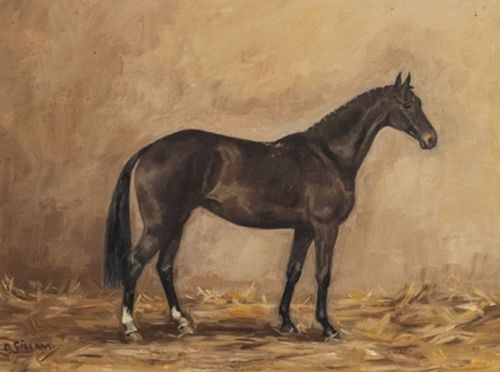
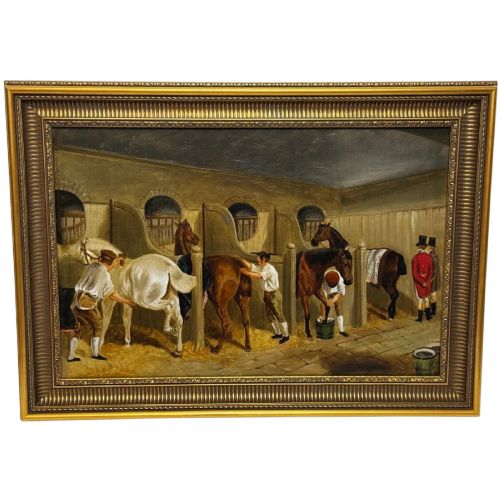
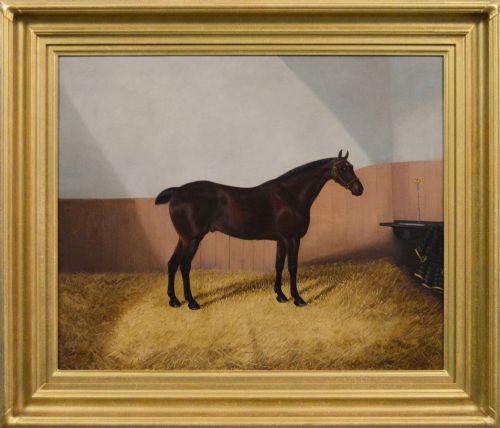
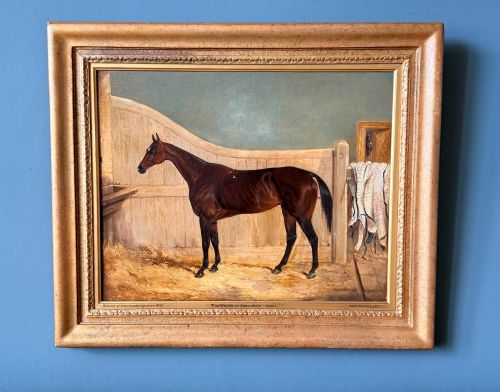
An antique stable scene represents a specialised branch of equine and sporting art that focuses on horses and cattle housed within their stalls or yards. These works typically depict named hunters, broodmares, or prize studs rather than generic animals, reflecting the deep affection owners held for their livestock. Buyers searching for an antique stable scene will most frequently encounter nineteenth century and early twentieth century works executed in oil on canvas.
The compositions vary from intimate depictions of a single bay or chestnut horse accompanied by a terrier to wider views of hunting stables and stud farms. Victorian and Edwardian artists recorded the distinct conformation of hunters and carriage horses with remarkable accuracy, often framing them in heavy giltwood surrounds. These paintings served as prized possessions for country houses and rural estates, documenting the lineage of prized animals.
The materials and styles seen on this page range from sophisticated Victorian fine art and sporting canvases to charming English folk art depictions of cattle. Artists such as Albert Clark, Thomas Walker Bretland, Samuel Spode, and Edwin Frederic Holt contributed to this tradition, utilising oil paint to capture the rich coats of horses and the gloom of timber stalls. Each piece offers a direct window into the equestrian culture of the nineteenth century.
How they were made
These works were created using oil paint applied to stretched canvas, allowing artists to build up the glossy sheen of a horse's coat through careful glazing. The canvas is typically supported by a wooden stretcher frame and housed within a decorative gilt wood or giltwood frame that enhances the depth of the painting. Plaster mouldings within the frames often feature detailed ornamentation typical of the Victorian and Edwardian periods.
The technique relies on a mastery of light, directing illumination onto the flanks of the animal while casting the background of the stable in shadow to create a sense of three-dimensional space. Painters built up texture in the straw bedding and wooden partitions using heavier brushwork, contrasting sharply with the smooth, blended layers of the animal's hide. This deliberate variation in application directs the viewer's attention straight to the focal point of the composition.
Antique Stable Scene Retail Price Guide 2026
Typical asking prices for stable scene among the pieces listed under this phrase on Sellingantiques today, from the lower quarter to the upper quarter. They describe what is for sale here now, not the wider market.
Frames include both original gilt wood mouldings and later replacements, incorporating materials such as plaster and giltwood.
What varies in quality
Quality in these works rests primarily upon the artist's command of equine anatomy and the psychological presence of the animal. Finer examples display precise rendering of muscle structure, bone, and expression, whereas more naive interpretations rely on simpler forms and flatter perspective. The distinction lies in the ability to portray the specific character of a hunter or stud rather than a generic silhouette.
The handling of the surrounding stable interior also marks the difference between standard production and superior artistry. Master painters integrated the animal seamlessly into its environment, using ambient light to define the textures of timber, leather tack, and straw. Furthermore, the originality and condition of the accompanying gilt wood frame contribute substantially to the overall integrity of the piece.
Albert Clark·Thomas Walker Bretland·George E Sharpe·Samuel Spode·Edwin Frederic Holt·Alfred Moginie Bryant
The Antique Stable Scene Glossary
- Bay
- A coat colour of horses characterised by a reddish-brown body with a black mane, tail, and lower legs. This is one of the most frequently recorded coat colours in nineteenth century equine art.
- Roan
- An equidae coat colour pattern featuring an even mixture of white hairs with red, brown, or black hairs. Strawberry roan specifically denotes a chestnut base mixed with white.
- Stretcher
- The wooden frame that holds the canvas taut beneath the painted surface. Antique stretchers often show wedge keys in the corners used to adjust tension.
- Giltwood
- Wood carved and covered with a thin layer of gold leaf or metal gilt. It formed the standard framing material for fine Victorian paintings.
- Sporting Art
- A genre of art depicting blood sports, racing, hunting, and portraits of prized animals. It reached a peak of popularity during the Victorian era.
Antique Stable Scene: Frequently Asked Questions
What is an antique stable scene?
An antique stable scene is an oil painting from the nineteenth or early twentieth century depicting horses or cattle inside a stable or farmyard environment. These works often served as portraits of specific hunters, studs, or prize livestock.
Created during the Victorian and Edwardian periods, these paintings celebrate the central role of horses in rural and sporting life. They range from sophisticated academic works to naive folk art representations.
Who painted antique stable scenes?
Many works were produced by specialist equine and sporting artists who documented the prized animals of country squires and hunting establishments. Painters such as Thomas Walker Bretland, Samuel Spode, and Edwin Frederic Holt captured the distinct conformation of hunters.
Other works are attributed to regional or naive painters who recorded farm animals with charming simplicity. These artists utilised oil on canvas to immortalise the livestock of the era.
How do I date a stable scene?
Dating relies heavily on the style of the painting, the clothing or tack depicted, and the construction of the canvas and frame. Nineteenth century and Edwardian works often bear signatures, dates, or inscriptions on the reverse naming the horse or the hunt.
Framing materials also offer clues, as Victorian gilt wood frames differ in profile and construction from later Edwardian examples. Examining the stretcher frame and canvas weave helps narrow down the period.
How were these paintings displayed?
Historically, these paintings hung in the reception rooms, libraries, and halls of country houses and sporting estates. They functioned as visual records of pedigree and achievement in hunting and breeding.
Today, they suit traditional country house interiors, studies, and rustic living spaces. Their dark tones and warm gilt frames complement wood panelled walls and period furnishings.