


Antique Spirit Measure Set
An antique spirit measure set brings heavy metal and glass barware from the tavern and sideboard directly to the modern table.
Antique Spirit Measure Set
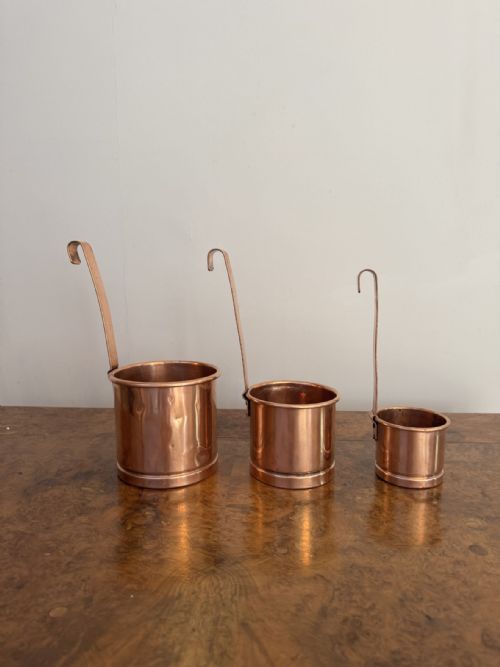
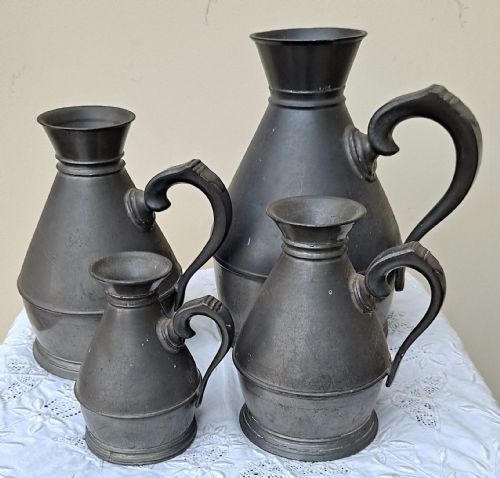
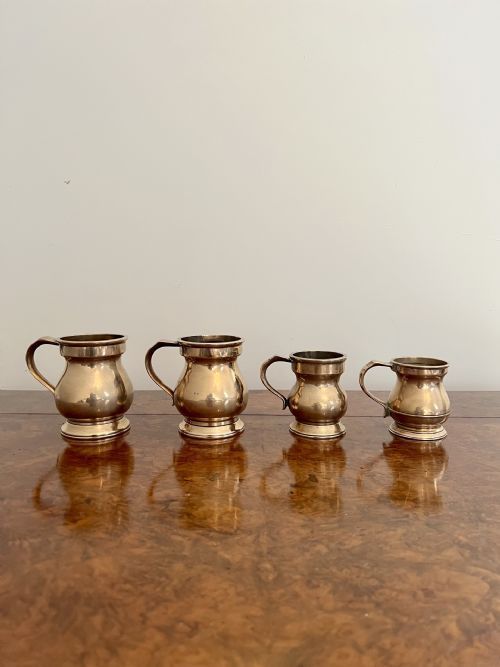
When you search for an antique spirit measure set, you encounter graduated groupings of barware, tavern measures, and measuring jugs designed for pouring and portioning alcohol. These gatherings range from graduated copper jugs and pewter haystack measures to bell-shaped tankards and cocktail shakers with beakers.
The versions you meet most frequently on this page date from the Victorian and Georgian periods, alongside occasional later twentieth-century additions. They appear in sets of three, four, or seven pieces, often showing the marks of their former tavern or domestic service.
Materials and construction
Metals dominate these groupings, with copper, pewter, and brass forming the sturdy bodies of nineteenth-century jugs and tankards. Makers shaped copper and pewter into graduated forms, sometimes incorporating lead, bone, or silver plate.
Scientific instruments and cocktail sets introduce specialised components like glass and fitted wooden boxes, as seen in mahogany-housed hydrometer sets. Craftsmanship relies on heavy casting, hammering, and precise graduation to ensure accurate liquid measurement.
Some tavern measures still bear the scars of nineteenth-century government inspectors who hammered verification marks directly into the metal.
What separates the best sets
Quality rests upon the completeness of the graduation and the uniformity of the set, where matching makers or foundry stamps elevate a group above a cobbled-together assortment. Original markings, such as Victoria Regina verification stamps, add historical weight.
The crispness of the metal shaping and the survival of matching components determine desirability. Sets that retain their original fitted cases or uniform patination outclass those with mismatched wear or replaced parts.
Maison Barra
The Antique Spirit Measure Set Glossary
- Haystack measure
- An Irish pewter measuring vessel characterised by its bulging belly and tall neck, resembling a traditional stack of hay. These typically appear in graduated sets.
- Sikes hydrometer
- A specific floating instrument used to determine the strength of spirits by measuring specific gravity. It is housed in fitted wooden boxes with companion weights.
- Bell-shaped tankard
- A drinking vessel or measure featuring a flared, bell-like profile widening toward the base. They were utilised in taverns for serving ale and spirits.
- VR mark
- The royal cypher of Queen Victoria stamped onto metal measures to signify official government verification of capacity. It guarantees period authenticity.
- Graduated set
- A series of vessels in matching styles that scale down proportionally in size. They nest or line up together by volume.
Antique Spirit Measure Set: Frequently Asked Questions
What are antique spirit measures made of?
These sets are constructed primarily from metals such as copper, pewter, and brass, shaped into jugs, tankards, and measures. Some later or specialised sets incorporate silver plate, glass, bone, and mahogany.
The choice of material reflects the utilitarian origins of the pieces, designed to withstand heavy daily use in nineteenth-century taverns and homes.
How were spirit measure sets used?
They were utilised in pubs, inns, and domestic settings to measure and pour precise quantities of alcohol for patrons. Graduated sets allowed bartenders to serve accurate volumes from the largest jug down to the smallest measure.
Over time, many migrated from commercial bars into private dining rooms and country houses as functional display pieces.
How do I date a copper or pewter measure?
Dating relies on stylistic clues like the bell shape or haystack profile, alongside manufacturing techniques and stamped royal cyphers. Nineteenth-century examples often bear specific monarchical verification stamps like VR.
Georgian pieces tend to show heavier hand-beating and simpler, utilitarian forms compared to later Victorian iterations.
How do I clean antique metal barware?
Cleaning should be minimal to preserve the aged patination that collectors prize on copper and pewter surfaces. Gentle washing with warm water and mild soap removes dust without stripping the historic finish.
Avoid harsh chemical polishes that erase centuries of handling marks and soften crisp maker stamps.