


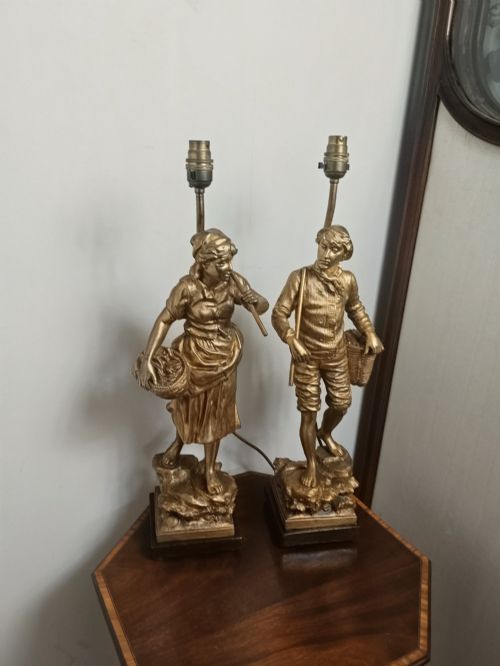





Antique Spelter Figure Lamp
These antique spelter figure lamps combine sculptural metal figures with integrated lighting, offering distinct period character for collectors.
Antique Spelter Figure Lamp
When you search for an antique spelter figure lamp, you encounter table lamps and sculptural night lights shaped by decorative figures. The selection includes works from the Victorian, Edwardian, 1890, 1900, 1920, and 1930 periods.
Stylistically, these pieces span Art Deco, Art Nouveau, Neoclassical, and French Belle Epoque designs. Figures take the form of ladies, musketeers, and pierrots holding torchere shades or integrated glass elements.
Most entries originate from French workshops or American importers, combining metal casting with functional illumination.
Materials and construction methods
The primary structural medium is spelter, a zinc alloy cast into detailed human and allegorical figures. Makers frequently patinated, silvered, or gilded the metal surface to emulate bronze.
Figures are mounted onto heavy bases made of marble or onyx to provide stability for the upright lamp structure. Glass, brass, and fabric components complete the shade assemblies and electrical fittings.
Antique Spelter Figure Lamp Retail Price Guide 2026
Typical asking prices for spelter figure lamp among the pieces listed under this phrase on Sellingantiques today, from the lower quarter to the upper quarter. They describe what is for sale here now, not the wider market.
A cheerful pierrot playing an accordion brings musical whimsy to the lineup in a painted night light.
Assessing the grade and execution
Quality rests in the crispness of the metal casting and the depth of the surface finish, whether patinated, silvered, or gilded. Finer examples retain intricate facial expressions and drapery folds on the figures.
The choice of base material also marks the tier of the piece, with solid marble or onyx plummets supporting the heavier sculptural compositions.
E Rousseau·L & F Moreau·P.Sega·Auguste Moreau
The Antique Spelter Figure Lamp Glossary
- Spelter
- A zinc alloy commonly utilised as a less expensive alternative to bronze for ornamental figures and statues. It takes patination and metallic finishes readily.
- Patinated metal
- Metal treated with chemicals or heat to produce a coloured surface finish, often simulating aged bronze.
- Torchere shade
- An upward-pointing light shade held by a figural element in floor or table lighting.
- Art Nouveau
- A decorative style characterised by fluid, organic lines and floral motifs, prominent around the turn of the twentieth century.
Antique Spelter Figure Lamp: Frequently Asked Questions
What is an antique spelter figure lamp?
An antique spelter figure lamp is a table lighting fixture featuring a cast zinc-alloy figure integrated with a lamp holder and shade. These pieces draw on Art Deco, Art Nouveau, and Neoclassical styles.
They combine sculptural art with functional illumination, frequently mounted on marble or onyx bases.
How do I identify the period of a lamp?
Dating relies on stylistic cues and materials, ranging from 1890s French designs to 1930s Art Deco geometric forms. Edwardian and 1920s examples often display distinct costuming on the figural subjects.
Maker signatures inscribed on the metal base also help establish the exact period of manufacture.
How were these lamps used historically?
They served as decorative table lamps and night lights in period interiors, providing ambient illumination in parlours and bedrooms. The sculptural figures acted as focal points of interior decoration.
Many incorporated torchere shades or glass elements to diffuse the electric or gas light source.
What is spelter metal?
Spelter is a zinc-based alloy that was cast into intricate decorative figures during the nineteenth and twentieth centuries. It was prized for its ability to accept detailed mouldings and surface patination.
Makers often finished spelter to resemble more expensive bronze or silver.
How do I care for a spelter lamp?
Keep the metal and stone components clean with a dry, soft cloth, avoiding abrasive polishes that damage patination. Protect the delicate surface finishes from moisture and direct heat.
Ensure that internal electrical fittings are checked by a professional for safe modern usage.