





Antique Spaniel Art
Antique spaniel art captures the enduring devotion of the sporting dog through centuries of fine painting, drawing and needlework.
Antique Spaniel Art
Antique spaniel art spans portraiture and sporting scenes, recording the relationship between humans and their dogs from the seventeenth century into the mid-twentieth century.
The nineteenth century dominates the selection, bringing oil paintings on canvas and panel alongside watercolours, pencil drawings and original etchings.
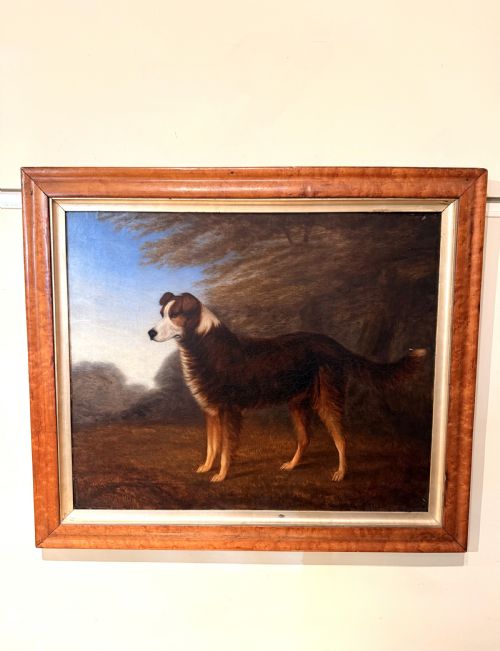
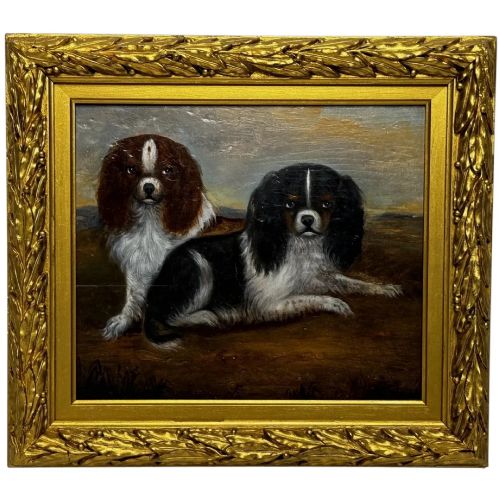
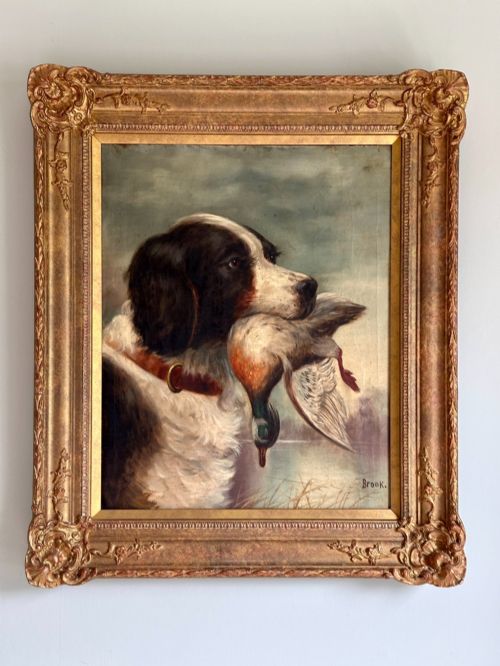
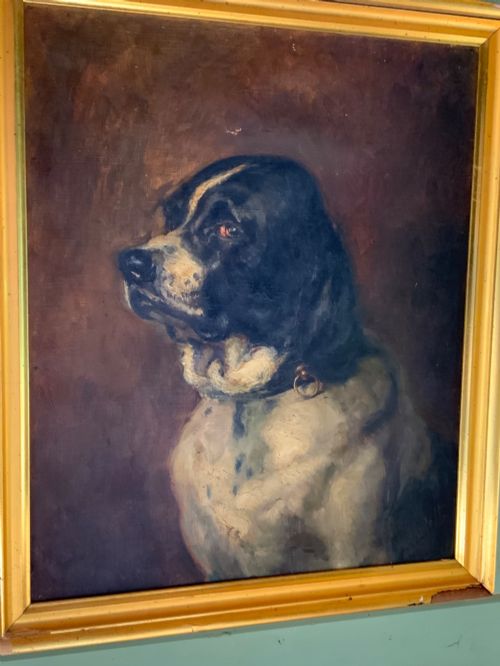
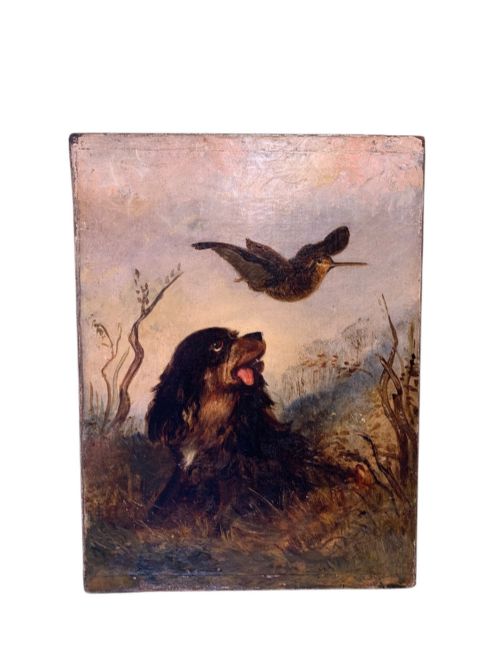
Subjects range from solitary spaniels in landscapes and interiors to working gundogs retrieving game alongside sportsmen in wooded clearings.
Materials and technique
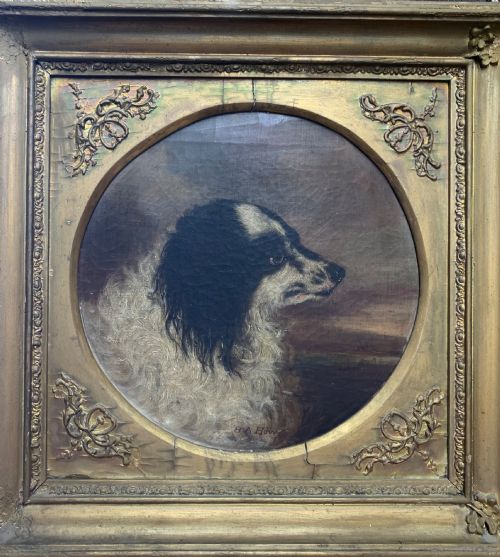
Painters utilised oil paint on canvas or wooden panel to build rich tones, often framing works in period gilded wood or burr maple moulding.
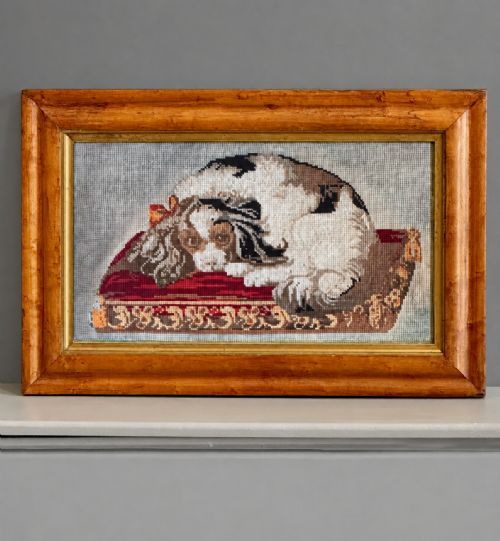
Artists also employed watercolour, pencil and ink on paper, alongside detailed Berlin work needlework executed with fine wool threads.
Printmakers created original etchings on paper, capturing the fine textures of spaniel coats through precise linear marks.
Antique Spaniel Art Retail Price Guide 2026
Typical asking prices for spaniel art among the pieces listed under this phrase on Sellingantiques today, from the lower quarter to the upper quarter. They describe what is for sale here now, not the wider market.
Materials range from oil on canvas and panel to pencil drawings, watercolours, etchings and Berlin work needlework.
Judging quality
Anatomy and expression set superior portraits apart, as master painters captured the characteristic intelligent eye and silky ear feathering of the breed.
The handling of light and background atmosphere distinguishes accomplished academic work from standard decorative pieces, particularly in landscape and interior settings.
Herbert Dicksee·William Barraud·Mabel Gear·Charles Bilger Spalding·Samuel John Carter·Dean Wolstenholme
The Antique Spaniel Art Glossary
- Berlin work
- A style of nineteenth-century needlework stitched on canvas from coloured charted designs, often depicting pets within domestic or garden settings.
- Giltwood
- Wood carved and coated with gold leaf or gold paint, frequently used for traditional picture frames during the Georgian and Victorian eras.
- Gundog
- A type of hunting dog trained to find and retrieve game, commonly shown in sporting art alongside mallards, woodcocks and pheasants.
- Oil on panel
- A painting executed on a prepared wooden board rather than stretched canvas, common in earlier European portraiture.
Antique Spaniel Art: Frequently Asked Questions
How do I care for antique oil paintings?
Keep paintings away from direct sunlight and sudden temperature shifts to protect the canvas and oil paint from cracking over time.
Dust gently with a soft, dry brush and avoid using water or chemical cleaners on the painted surface.
What is the difference between sporting art and portraiture?
Sporting art focuses on dogs working in the field alongside sportsmen, capturing shooting scenes and gundogs in natural landscapes.
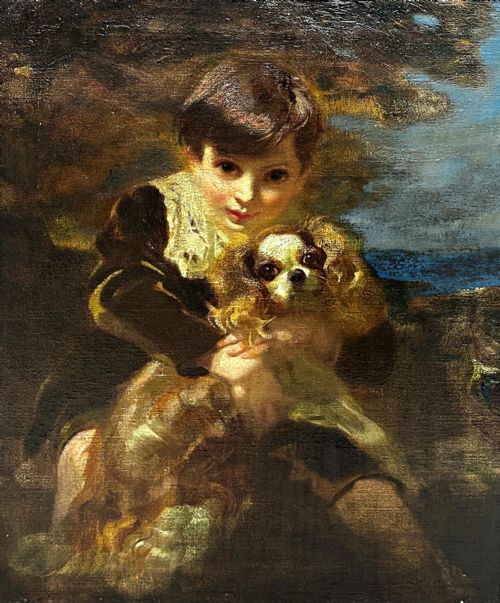
Portraiture isolates the spaniel as a cherished companion, often placing the animal inside a domestic interior or beside its owner.
How can I tell the period of a framed piece?
Examine the construction of the frame, noting whether it uses period materials like burr maple or hand-carved gilded wood.
Backings, stretcher bars and paper labels also offer clues to the age of both the artwork and its mounting.
Where should I hang needlework pieces?
Needlework benefits from placement on interior walls sheltered from direct sunlight to prevent the coloured wool threads from fading.
Ensure the room maintains stable humidity levels to protect both the textile and its original wooden frame.