

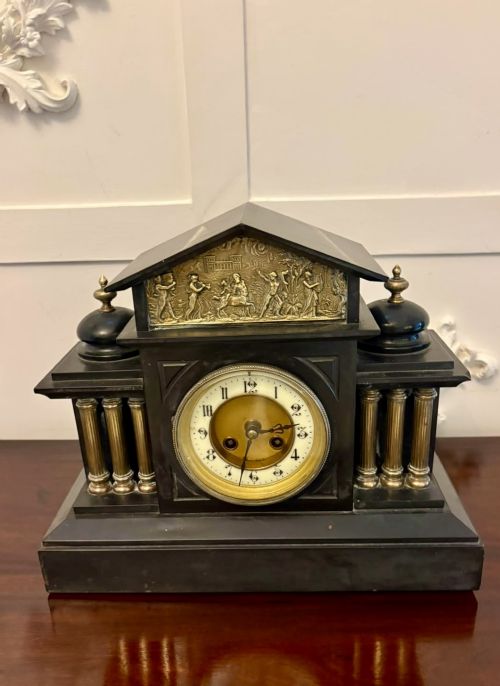


Antique Slate Column
These antique slate column pieces offer architectural presence and heavy structural gravity, bringing period weight and nineteenth-century design to a mantelpiece.
Antique Slate Column
When you search for an antique slate column, you encounter architectural mantel clocks, clock garnitures, and sculptural folk art works. These items date from the Victorian period, specifically around eighteen-sixty and eighteen-eighty.
The most common forms on this page are substantial Victorian mantel clocks housing eight-day movements. Alongside these, you find Welsh folk art slate columns and French architectural designs utilising dark stone.
Makers such as Philippes Paris and retailers like Baby and Jannings appear in the evidence, alongside regional folk art pieces. Buyers seek these objects for their solid proportions and classic architectural revival styling.
How they were made
The construction relies heavily on slate, black marble, and faux marble, often combined with cast brass, gilt brass, and enamel dials. Artisans shaped dense stone into columns, pediments, and architectural facades to mimic classical buildings.
Mechanical components include eight-day movements fitted into heavy stone housings. Surface detailing involves marble inlay work, applied gilt brass ornaments, and painted enamel dials behind glass bezels.
Antique Slate Column Retail Price Guide 2026
Typical asking prices for slate column among the pieces listed under this phrase on Sellingantiques today, from the lower quarter to the upper quarter. They describe what is for sale here now, not the wider market.
A Welsh folk art slate column stands among the French architectural clocks.
What varies in quality
Quality reveals itself in the architectural ambition of the case and the crispness of the stone cutting. Pieces featuring complex marble inlay, gilt brass mounts, and named maker signatures sit at the top of the range.
Simpler regional items, such as Welsh folk art slate columns, derive their appeal from rustic execution rather than classical precision. The sophistication of the movement and the integration of flanking columns define the upper tier.
Philippes Paris·Baby and Jannings
The Antique Slate Column Glossary
- Garniture
- A set consisting of a central clock and matching side ornaments designed to sit together on a mantelpiece.
- Architectural revival
- A nineteenth-century design style that borrows heavily from classical Greek and Roman building forms.
- Eight-day movement
- A mechanical clockwork system that requires winding approximately once a week.
- Faux marble
- A surface finish painted or treated on slate to imitate the variegated look of natural stone.
Antique Slate Column: Frequently Asked Questions
What is an antique slate column?
These items are nineteenth-century mantel clocks and decorative sculptures built from slate and marble. They often incorporate classical architectural elements like columns and pediments.
Most examples date from the Victorian era and reflect revival styles popular during that period.
How do I identify a Victorian marble clock?
Victorian marble and slate clocks typically feature heavy stone cases enclosing mechanical eight-day movements. They frequently display architectural details such as gilt brass mounts and enamel dials.
Dates cluster around eighteen-sixty and eighteen-eighty, often bearing maker signatures or retailer marks on the dial.
Where were these clocks made?
The evidence shows items originating from French workshops and British makers, including Welsh folk art pieces. French examples often feature architectural marble and gilt brass.
Regional British items include carved slate columns demonstrating local folk art traditions.
How should I display a slate mantel clock?
Due to their substantial weight, these heavy stone clocks require a sturdy surface like a mantelpiece or strong shelf. Ensure the placement is level to keep the pendulum swinging evenly.
Pairing a clock with matching side ornaments creates a complete garniture display.