


Antique Single Strand
These antique single strand necklaces and related pieces offer classic elegance, combining pearls and amber with precious metal clasps.
Antique Single Strand
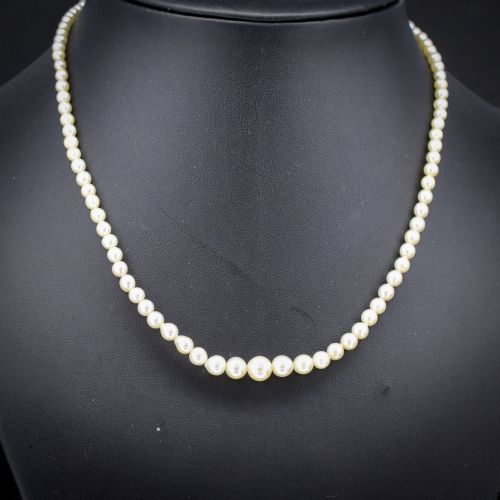
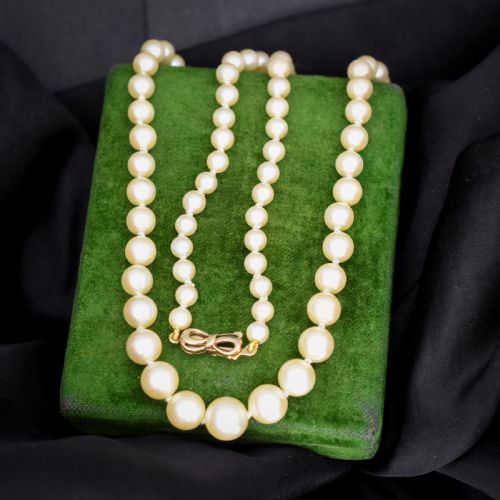
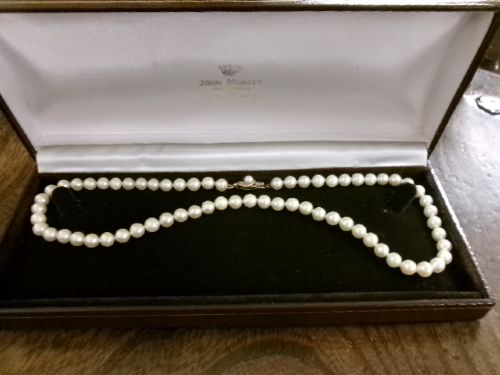
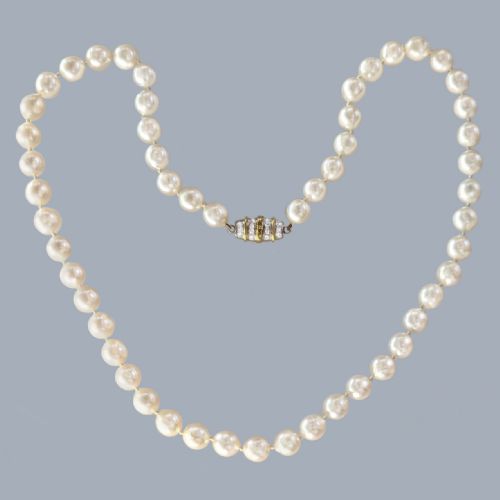
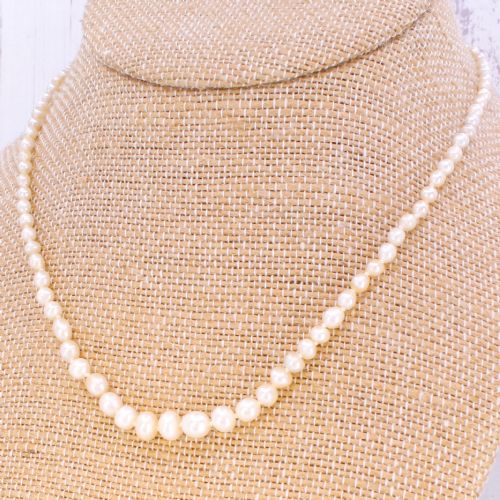
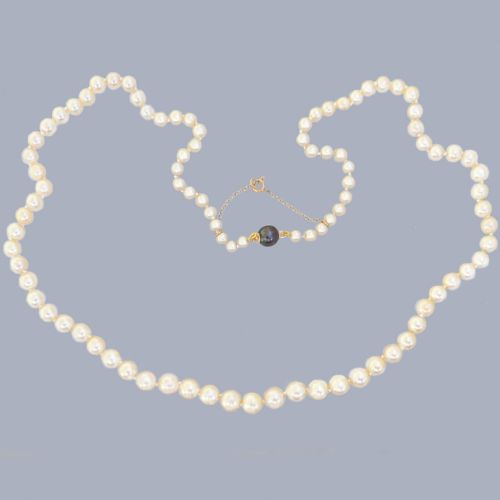
When you search for an antique single strand, you encounter necklaces formed of one continuous line of beads, most frequently pearls accompanied by precious metal clasps. The pieces span periods from the Georgian era through the Edwardian years and the 1920s, 1930s, 1940s, 1950s, and 1960s.
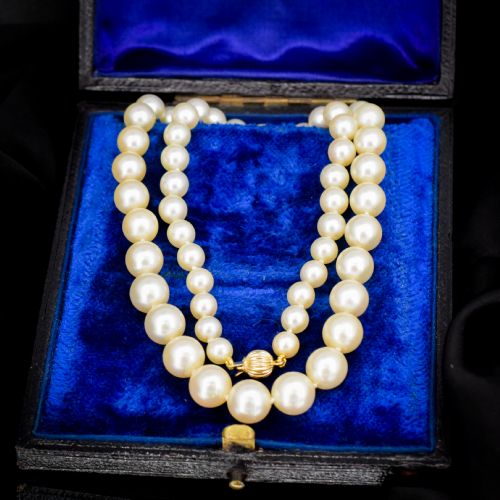
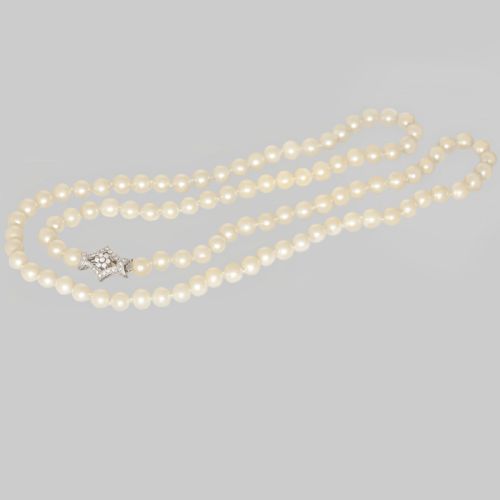
Pearls dominate the selection, appearing as cultured, natural saltwater, or graduated forms, threaded alongside alternative materials such as salmon coral, rose quartz, and Baltic amber. Lengths vary from shorter 16 inch necklets to long rope necklaces exceeding 50 inches.
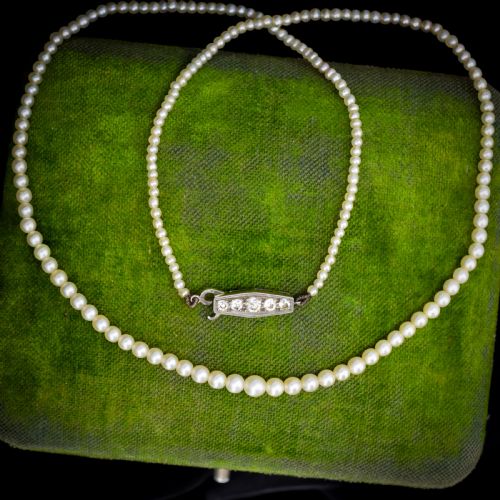
Clasps serve as integral design elements, often featuring diamond, sapphire, ruby, or emerald settings in yellow gold, white gold, platinum, or silver. A small number of alternative objects, such as a brass library clock bearing a street address, also appear within the wider inventory.
Materials and construction
Gemstones including old cut diamonds, sapphires, emeralds, rubies, and paste stones are mounted into the precious metal clasps using traditional setting methods. Pearls are selected for uniformity or deliberate graduation in size along the strand.
Listings feature pearls, amber, gold, platinum, and diamonds across periods from Georgian times to the 1960s.
Quality factors
Excellence in these pieces rests upon the origin and lustre of the pearls, distinguishing natural saltwater specimens from cultured alternatives. The complexity and gemstone weight of the clasp further elevate the standing of a piece.
Condition of the threading and the precision of bead graduation dictate the overall finish. Pieces accompanied by gem laboratory certificates carry documented provenance that influences their standing among collectors.
The Antique Single Strand Glossary
- Graduated
- Refers to beads that increase in size progressively toward the centre of the strand. This traditional layout places the largest elements at the focal point.
- Clasp
- The mechanical closure securing the ends of the necklace. In finer examples, this component acts as a decorative jewel set with diamonds or coloured stones.
- Saltwater Pearl
- Pearls formed naturally in marine oysters without human intervention. These organic gems are particularly prized in Edwardian and Georgian pieces.
- Cultured Pearl
- Pearls created with human assistance by introducing an irritant into an oyster or mollusc. They appear widely across mid-century designs.
- Old Cut
- A historic diamond cutting style characterised by a smaller table and higher crown. This facet arrangement is typical of Edwardian and 1920s jewellery.
Antique Single Strand: Frequently Asked Questions
How do I wear a single strand necklace?
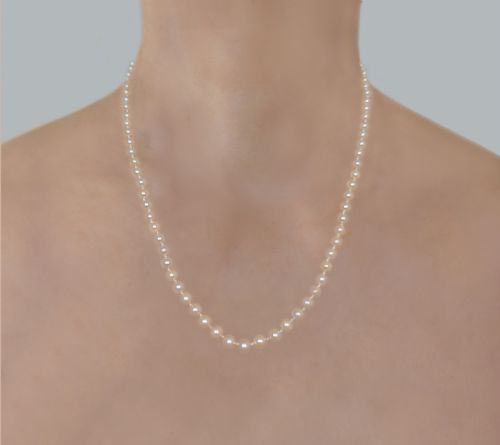
Shorter lengths sit close to the collarbone to complement tailored necklines and evening wear.
Longer rope versions allow for doubling or knotting depending on the desired silhouette.
What materials make up these necklaces?
Pearls form the primary material, encompassing natural saltwater and cultured varieties.
Alternative beads include Baltic amber, salmon coral, and rose quartz, secured with gold, silver, or platinum clasps.
How are the clasps designed?
Clasps function as secure fasteners while incorporating decorative elements.
Many feature diamonds, sapphires, or emeralds set within floral or geometric metalwork.
How do I care for pearl necklaces?
Pearls require gentle cleaning with a soft cloth to preserve their lustre.
Periodic restringing prevents thread degradation over decades of use.
What periods do these pieces represent?
The selection includes Georgian, Edwardian, and Victorian items alongside 1920s Art Deco creations.
Mid-century pieces from the 1930s through to the 1960s also feature prominently.