



Antique Silver Salad Spoon
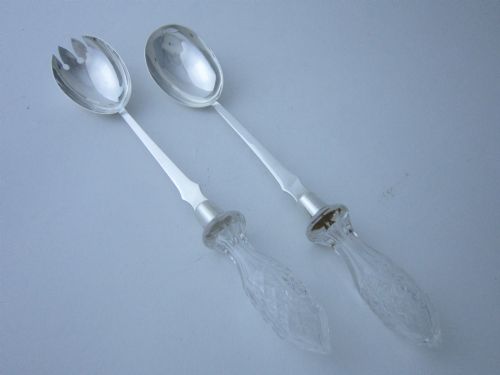
These antique silver salad spoon options combine sterling silver bowls with materials like cut glass and horn.
Antique Silver Salad Spoon
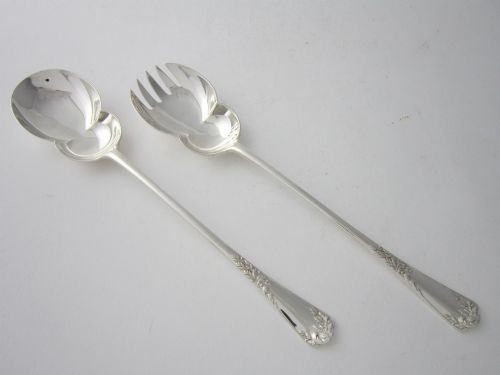
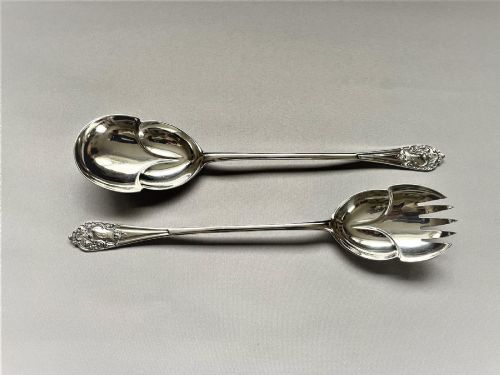
An antique silver salad spoon forms part of serving cutlery ranges designed for the dining table, often appearing alongside matching forks or within fitted cases. These items emerge from periods including the Victorian, Edwardian, and George III eras, reflecting the formal dining habits of the nineteenth and early twentieth centuries.
Buyers encountering this search phrase find single serving spoons, paired servers, and complete sets intended for use with greens and vegetables. The physical forms range from traditional sterling silver bowls to combinations involving glass, horn, and crystal.
How they were made
Silversmiths constructed these implements using sterling silver and standard silver, frequently integrating natural horn or cut crystal into the handles and bowls. Workshops applied techniques such as rat tail strengthening to the reverse of bowls to ensure durability during service.
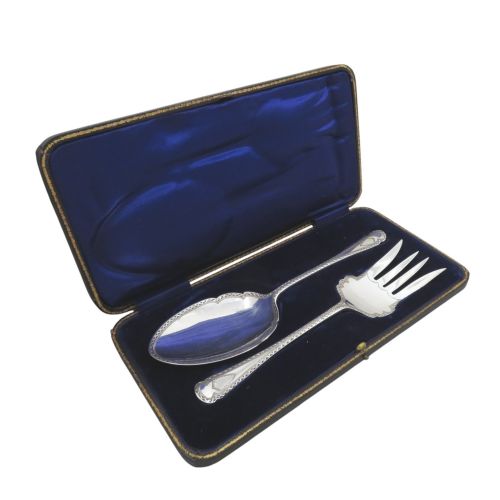
Some examples utilise fitted leatherette and velvet presentation cases lined with silk to house the spoon and fork sets securely. French makers also incorporated organic horn alongside silver elements during the late nineteenth century.
Antique Silver Salad Spoon Retail Price Guide 2026
Typical asking prices for silver salad spoon among the pieces listed under this phrase on Sellingantiques today, from the lower quarter to the upper quarter. They describe what is for sale here now, not the wider market.
Some spoons wear velvet and silk inside their cases, resting in quiet luxury until the next salad arrives.
What varies in quality
Quality differences depend upon the crispness of the silver work, the thickness of the metal gauge, and the integration of secondary materials like cut crystal. Pieces featuring robust rat tail joints or complete fitted presentation cases represent higher tiers of craftsmanship.
The distinction between standard serving spoons and bespoke paired sets also influences the overall character of the piece. Maker attribution, such as work associated with Georg Jensen, adds another layer of distinction in design execution.
Georg Jensen
The Antique Silver Salad Spoon Glossary
- Sterling silver
- A silver alloy containing 92.5 percent pure silver by mass, standard for quality British tableware. This material provides the primary structural substance for most pieces on this page.
- Rat tail
- A traditional strengthening tongue on the reverse of a spoon bowl where it joins the stem. This feature appears on early twentieth-century examples.
- Serving cutlery
- Utensils specifically proportioned for transferring food from a communal dish to an individual plate. This category encompasses salad servers, spoons, and forks.
- Cut crystal
- High-clarity glass shaped with faceted cuts, utilised for the bowls or bodies of specific serving implements. It pairs with silver mounts.
- Leatherette
- A simulated leather material used to cover presentation cases for protection and display. It often houses velvet and silk interiors.
Antique Silver Salad Spoon: Frequently Asked Questions
What periods do these pieces date from?
The listings span the George III period, the Victorian era, the Edwardian period, and the 1930s. Each era brings distinct decorative characteristics to the silver and accompanying materials.
Buyers encounter nineteenth-century French pieces alongside early twentieth-century British items. These dates reflect the active periods of manufacture represented in the current selection.
Are these sold as single spoons or pairs?
The inventory includes both individual serving spoons and paired sets designed specifically for salad service. Pairs frequently comprise a spoon and a matching fork.
Complete sets sometimes arrive in original presentation cases lined with silk and velvet. Buyers select the configuration that suits their dining requirements.
What materials are combined with the silver?
Makers combined sterling silver with cut glass, cut crystal, and natural horn. These mixed-media designs added textural variety to formal dining tables.
Leatherette and velvet also appear in the construction of fitted storage cases for the cutlery. The primary metal remains sterling silver or standard silver throughout.
How do I identify a rat tail feature?
A rat tail is a tapering ridge extending from the handle down the reverse centre of the spoon bowl. This traditional detail reinforces the joint between the bowl and the stem.
Examples featuring this construction technique indicate specific manufacturing standards from the early twentieth century. It serves as a marker for traditional silversmithing methods.