
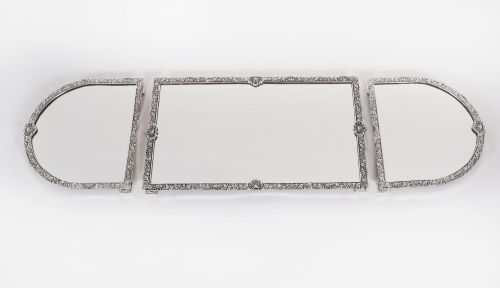
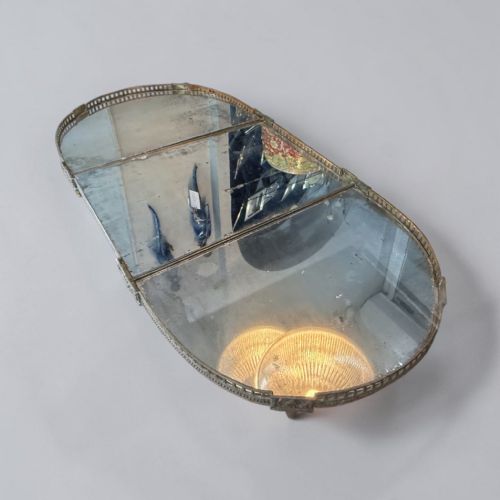


Antique Silver Plateau
An antique silver plateau anchors a dining table or sideboard with polished reflection, bringing Victorian and Edwardian weight to glassware and candlelight.
Antique Silver Plateau
When you search for an antique silver plateau, you are looking at mirrored table bases designed to display centrepieces, silver, or glassware. These items elevate the surface of a dining table or sideboard, reflecting light through rooms.
The pieces you meet on this page span the Victorian, Edwardian, and Art Deco periods, alongside French Napoleon III designs. They arrive in forms ranging from round table plateaux and mirror trays to mirrored silver-plated table stands.
Most examples employ silver plate, EPNS, or silvered metal frames around mirrored glass, wood, or mercury glass inserts. They appear as single table plateaux, pairs of plateau mirrors, and side pieces like cake stands and wine trays.
How they were made
Silversmiths and metalworkers built these pieces using silver plate, EPNS, and silvered metal frames to house heavy mirrored glass and mercury glass panels. Wooden bases frequently provided structural support beneath the metal mounts.
Decoration relied on casting, plating, and etching techniques applied directly to the metal rims or the glass surfaces. Makers such as Mappin and Webb and Elkington stamped their work into the metal during manufacturing.
Listings feature silver plate, EPNS, and silvered metal alongside mirrored glass and wood across the Victorian, Edwardian, and Art Deco periods.
What varies in quality
Quality rests in the weight of the metal frame and the clarity of the mirrored glass inset. Thick silver plating and substantial wooden or metal foundations separate robust pieces from lighter constructions.
The crispness of etching on the glass and the precision of the frame joints dictate the standard of the piece. Well-preserved mercury glass and deep, even silver plate command greater attention from collectors.
Mappin and Webb·Elkington
The Antique Silver Plateau Glossary
- EPNS
- Electroplated nickel silver. This forms the base metal core beneath a thin coat of silver on many Victorian and Edwardian plateaux.
- Mercury glass
- Blown double-walled glass coated with a silvering liquid inside. It creates a cloudy, reflective depth seen on older plateau mirrors.
- Surtout de table
- A large ornamental plateau placed in the centre of a dining table. French makers produced these to hold candelabras and garnitures.
- Plateau
- A flat, raised tray or stand. These items sit upon dining tables to protect wood surfaces and display decorative objects.
- Tazza
- A small shallow cup or platter raised on a stem. These occasional stands appear alongside plateaux in silver-plated dining wares.
Antique Silver Plateau: Frequently Asked Questions
What is a silver plateau used for?
These pieces serve as decorative table bases for displaying silver items, crystal decanters, or floral arrangements. Placing them centrally reflects candlelight and glassware across the room.
They also function on sideboards as wine trays or mirrored display surfaces. Dining rooms utilised them to protect polished timber tables from heat and moisture.
How do I clean antique silver plate?
Use a soft cloth and a specialist silver polish designed for plated items. Avoid harsh abrasives that wear away the thin silver layer over the base metal.
Keep moisture away from the wooden backs and mirror edges during cleaning. Gentle handling preserves the original plating and the integrity of the glass.
How do I date an antique plateau?
Examine the style of the metal mount and the construction of the wooden base. Victorian and Edwardian examples show heavier cast ornamentation, while Art Deco pieces display geometric lines.
Maker marks, registration numbers, and the type of glass insert offer further chronological clues. Mercury glass typically points to nineteenth-century production.
Are plateau mirrors French or English?
Both origins appear frequently in this category, alongside general European production. Nineteenth-century French pieces often carry the description surtout de table and feature ornate metalwork.
English makers from Sheffield and Birmingham produced substantial silver-plated stands during the Victorian and Edwardian eras. Stylistic details in the casting usually distinguish between the two traditions.