



Antique Silver Dinner Set
An antique silver dinner set brings traditional craftsmanship and historic materials directly to the modern table.
Antique Silver Dinner Set
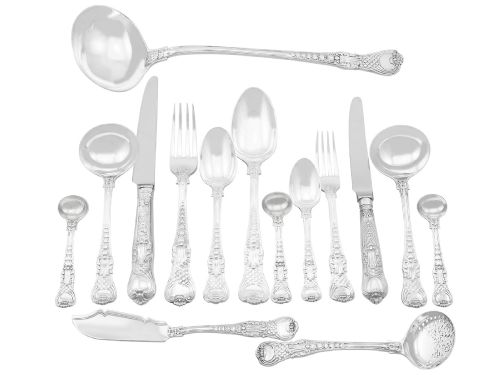
An antique silver dinner set encompasses a variety of dining accessories, from cutlery sets and canteens to charger plates, napkin rings, and menu holders. Pieces span multiple periods including Georgian, Victorian, Edwardian, and Art Deco, reflecting the changing tastes of dining over centuries.
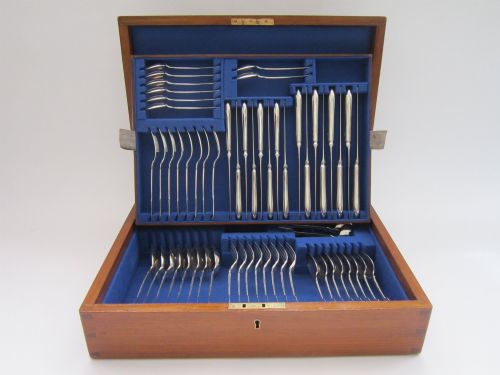
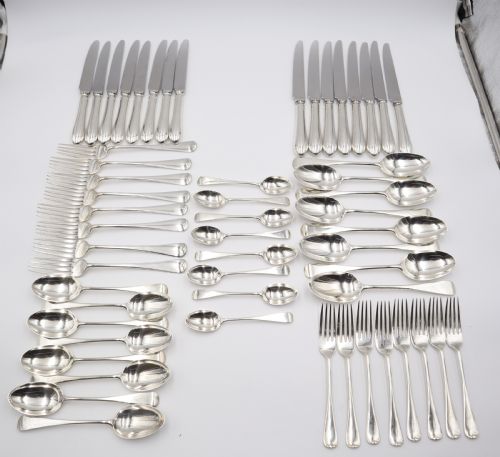
Buyers frequently encounter cutlery sets, napkin rings, and specialised serving items like tantalus sets and menu holders rather than complete uniform services from a single date. Materials range from solid sterling silver and silver gilt to silver plate, often accompanied by fitted presentation cases of oak, velvet, silk, or leatherette.
Origins vary across British, American, and continental workshops, with traditional styles alongside Rococo Revival, Arts and Crafts, and Celtic Revival motifs. These gatherings of dining pieces allow collectors to assemble practical tablescapes rooted in historical design.
Materials and construction methods
Construction relies heavily on sterling silver and silver plate over base metals, shaped through traditional smithing and casting techniques. Formats like Hanoverian pattern forks demonstrate established historical silhouettes produced by period workshops.
Fitted containers and presentation boxes utilise timber such as oak, lined with velvet, silk, or leatherette to protect the metal surfaces. Metal components incorporate steel where functional strength is required, particularly in knives and cutting edges.
Antique Silver Dinner Set Retail Price Guide 2026
Typical asking prices for silver dinner set among the pieces listed under this phrase on Sellingantiques today, from the lower quarter to the upper quarter. They describe what is for sale here now, not the wider market.
Materials recorded across the inventory include sterling silver, silver plate, steel, velvet, silk, leatherette, and oak.
Markers of distinction in dining silver
Quality rests in the weight of the silver, the crispness of chased or engraved decorative details, and the integrity of any associated fitted cases. Pieces retaining clear hallmarks and original gilding or polish demonstrate superior preservation.
The cohesion of a matched set compared to assembled collections influences the character of the service. Superior examples show careful pairing of patterns, such as matching sets of table forks or uniform napkin rings.
International Silver Co·Liberty
The Antique Silver Dinner Set Glossary
- Sterling silver
- A silver alloy consisting of 92.5 percent silver by mass, with other metals usually copper added for durability. This standard is fundamental to British hallmarked dining wares.
- Silver plate
- A layer of silver applied to a base metal core, such as copper or nickel silver. This technique offered a more accessible option for large dining services and decorative accessories.
- Silver gilt
- Silver that has been coated with a thin layer of gold on its surface. This finish appears frequently on high-status Georgian dining plates and flatware.
- Tantalus
- A locked cabinet holding decanters that displays the contents while preventing unauthorized access. These are typically mounted in timber frames such as oak.
- Charger plate
- A large decorative base plate placed beneath the dining service during formal meals. They are often produced in silver plate or solid silver.
Antique Silver Dinner Set: Frequently Asked Questions
Are these sets made of solid silver?
Materials vary across the available pieces, encompassing both solid sterling silver and silver plate over base metals. Some items also incorporate gold gilt finishes or functional steel components.
Examination of hallmarks and maker marks generally clarifies the specific metal composition used in each component of the service.
What items are included in a dinner service?
Sets commonly feature cutlery such as table forks and knives, alongside table accessories like napkin rings, menu holders, and charger plates. Larger containers like after-dinner tantalus cabinets also appear.
Most listings offer curated groupings or canteens rather than full unified services from a single workshop.
How should antique silver be stored?
Silver pieces benefit from storage in dry environments, often within fitted boxes lined with materials like velvet, silk, or leatherette. Proper enclosures help minimise tarnishing caused by exposure to atmospheric sulfur.
Regular handling and appropriate maintenance preserve the polished finish and structural integrity of the metal over time.