



Antique Silk Chairs
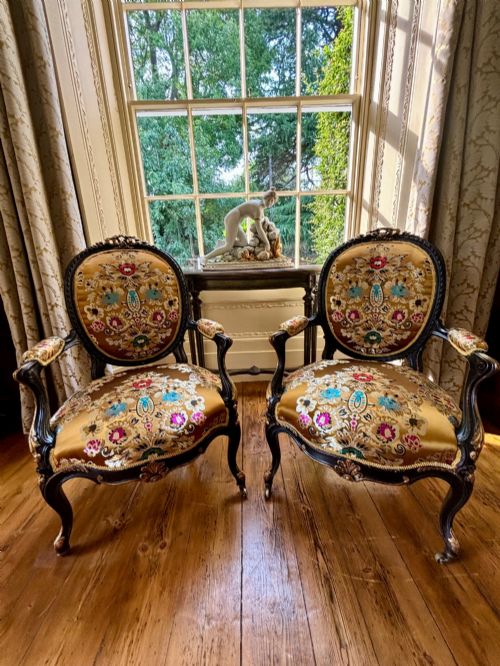
These antique silk chairs combine period frames with woven textiles to bring texture and historic character into a room.
Antique Silk Chairs
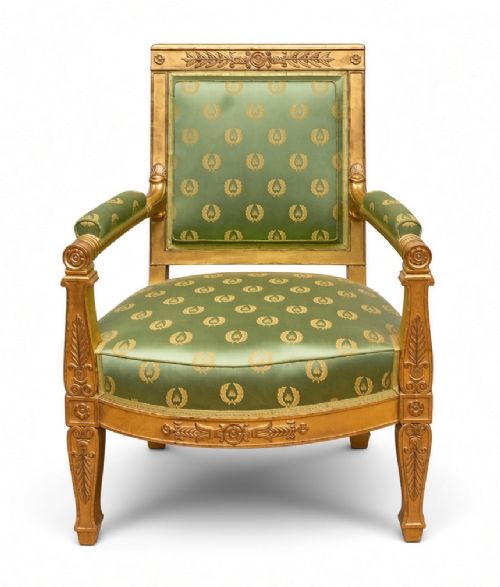
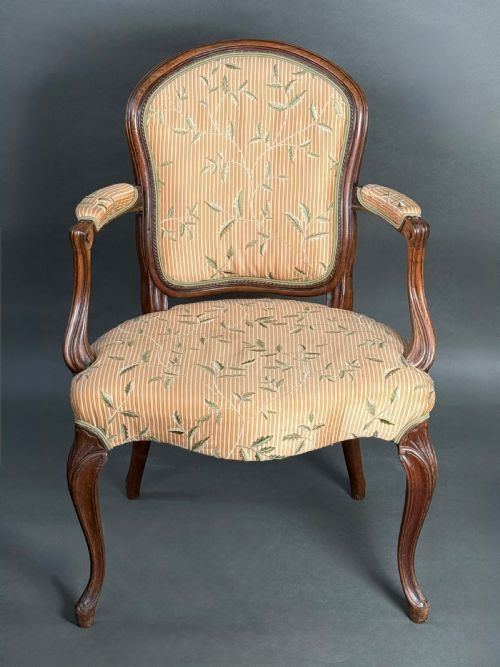
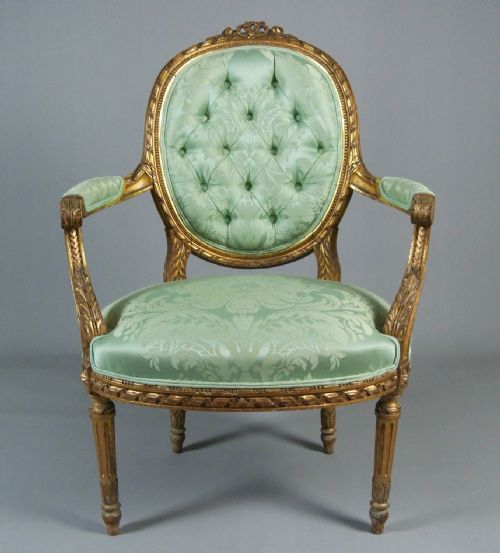
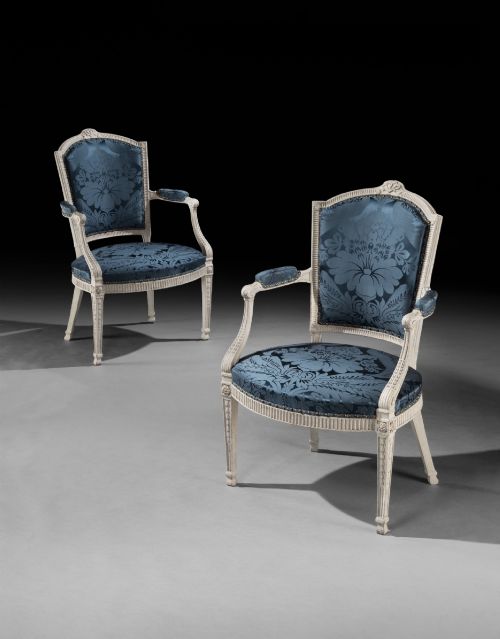
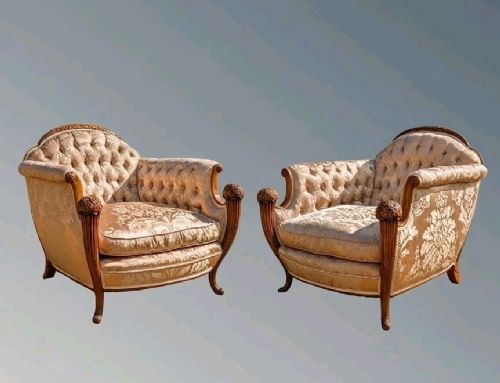
When you search for antique silk chairs, you encounter seating built across the eighteenth and nineteenth centuries, alongside revival pieces from the early twentieth century. These include armchairs, side chairs, dining chairs, and slipper chairs originating from French and English workshops.
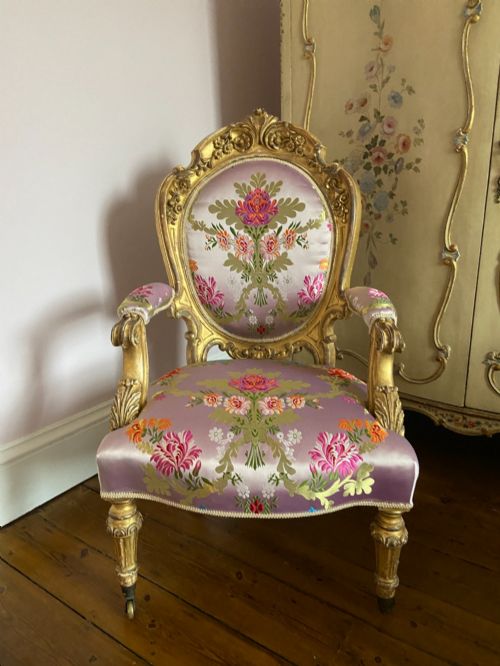
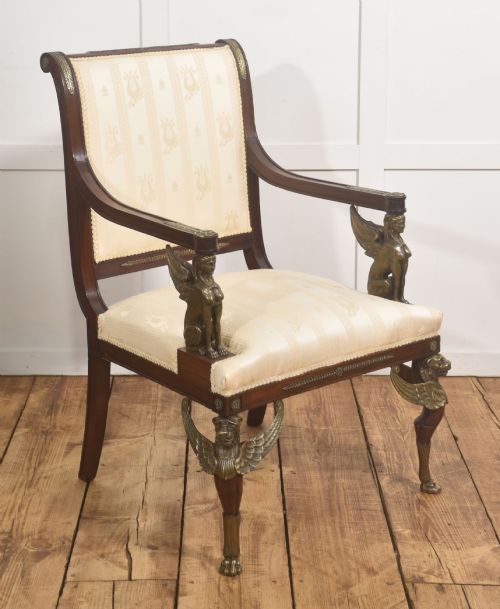
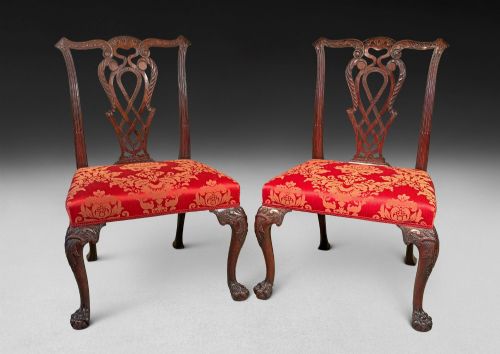
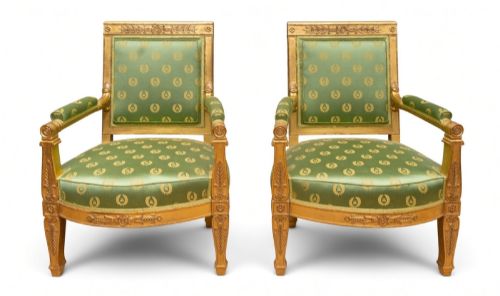
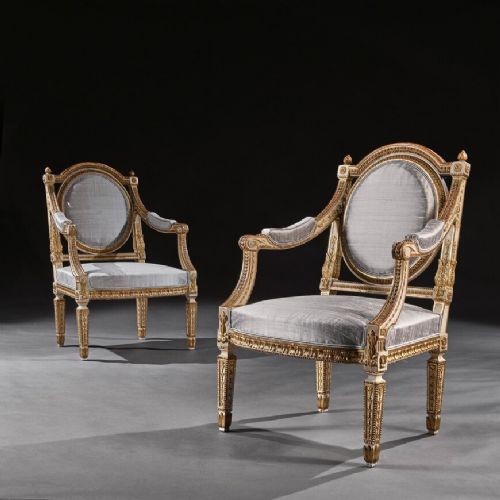
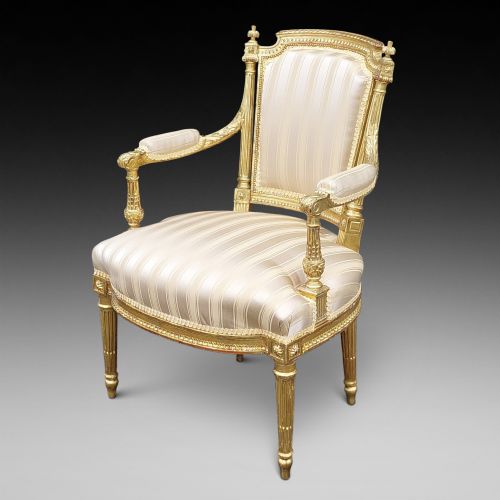
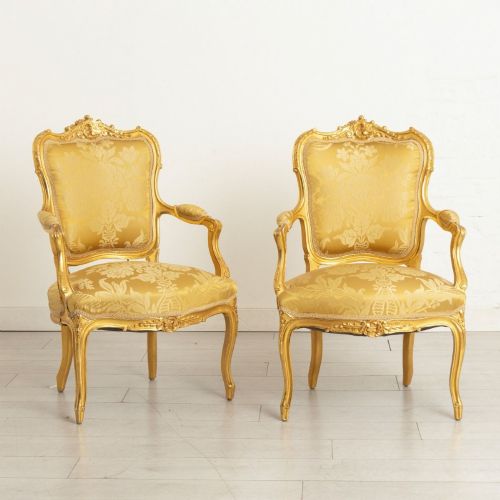
The most common examples on this page are nineteenth-century French armchairs and giltwood fauteuils upholstered in silk or silk damask. You also find walnut and mahogany frames adhering to Louis XVI, Georgian, and Rococo styles.
Beyond standard seating, the selections extend to specialised forms such as boudoir stools, chaise longues, and nursing chairs. Each piece pairs a traditional timber frame with a textile covering chosen for interior display.
Materials and construction methods
Frame makers relied on hardwoods like walnut, mahogany, padauk, and fruitwood, often shaping them through carving and turning. Giltwood and painted finishes frequently coated these timbers to echo formal interior schemes.
Upholstery combined traditional stuffing techniques with woven textiles, predominantly silk and silk damask. These fabrics were secured to the frames using methods appropriate to the period of manufacture.
Antique Silk Chairs Retail Price Guide 2026
Typical asking prices for silk chairs among the pieces listed under this phrase on Sellingantiques today, from the lower quarter to the upper quarter. They describe what is for sale here now, not the wider market.
Listings feature wood types including walnut, mahogany, rosewood, and bleached fruitwood.
Assessing quality in period seating
Quality rests upon the crispness of the timber carving and the structural integrity of the frame joints. Hand-carved giltwood and walnut frames with refined proportions represent the upper tier of production.
The grade and weave of the silk upholstery influence the overall character, with dense silk damasks offering greater visual weight than lighter fabrics. Original maker attributions or firm stamps further elevate a piece.
Jacob-Desmalter·Thomas Chippendale·Miles & Edwards
The Antique Silk Chairs Glossary
- Fauteuil
- An open-arm armchair with upholstered back and armrests, originating in France. These chairs typically feature exposed wood frames carved in styles such as Louis XV or Louis XVI.
- Giltwood
- Timber coated with a thin layer of gold leaf. This finish was applied extensively to formal European seating during the eighteenth and nineteenth centuries.
- Silk Damask
- A reversible figured fabric woven on a jacquard loom, featuring patterns formed by contrasting warp and weft threads. It is frequently chosen for period upholstery.
- Bergere
- A closed-arm upholstered armchair with wooden framing and a solid or padded seat. The sides are commonly enclosed with upholstery or cane.
- Rococo Revival
- A nineteenth-century design movement drawing inspiration from the curved lines and asymmetry of the mid-eighteenth-century Rococo style.
Antique Silk Chairs: Frequently Asked Questions
How do I identify French styles?
French styles like Louis XV display curved cabriole legs and asymmetric ornamentation, while Louis XVI pieces introduce straight fluted legs and neoclassical symmetry.
Examining the carved wooden frames reveals the distinct aesthetic priorities of each French reign and revival period.
Were these chairs used daily?
Most antique armchairs and salon chairs served in formal drawing rooms, parlours, or boudoirs rather than heavy daily use.
Their delicate giltwood frames and fine silk coverings meant they functioned primarily as decorative seating for guests.
How should I care for silk upholstery?
Silk requires protection from direct sunlight to prevent fading and fibre degradation over time. Gentle vacuuming with a soft attachment helps remove dust without straining the weave.
Professional textile cleaning is recommended for addressing any staining on historic or modern silk covers.
Can I mix different periods together?
Pairing eighteenth-century frames with nineteenth-century revival chairs adds visual depth and historical layers to an interior scheme. Maintaining a consistent wood tone or fabric palette helps anchor diverse seating styles within the same room.