


Antique Side Table Magazine Holder
These antique side table magazine holder pieces combine display surfaces with dedicated storage, offering functional elegance for any traditional interior.
Antique Side Table Magazine Holder
Buyers seeking an antique side table magazine holder encounter pieces primarily categorised as canterburys, magazine racks, and occasional tables across this selection. These items function as dual-purpose furniture, providing a flat surface for lamps or cups alongside compartments for periodicals and papers.
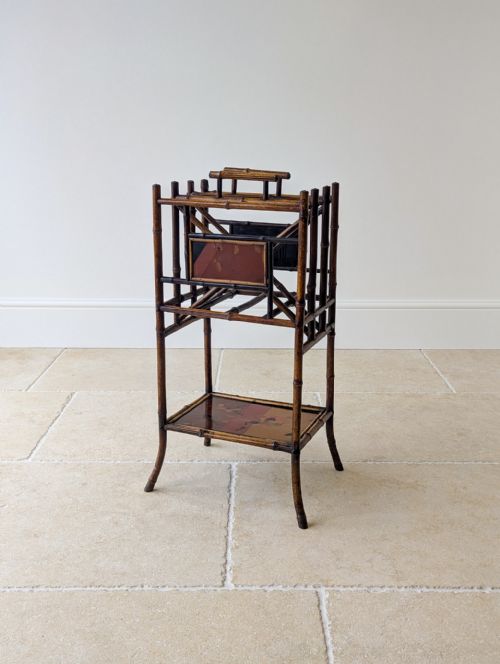
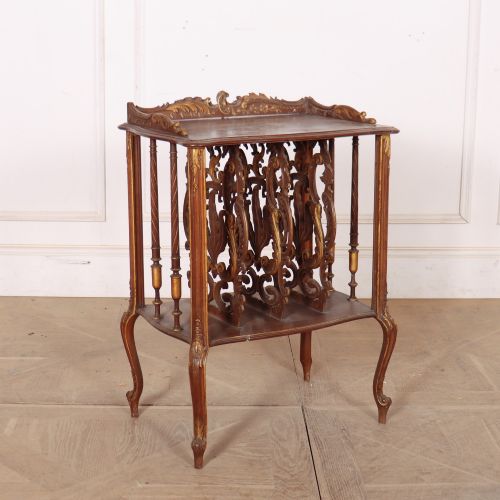
The specimens present on this page span several distinct periods including the Victorian era, Regency period, and the nineteenth century. Formats range from bamboo aesthetic movement pieces to French rococo revival stands and mahogany Georgian designs.
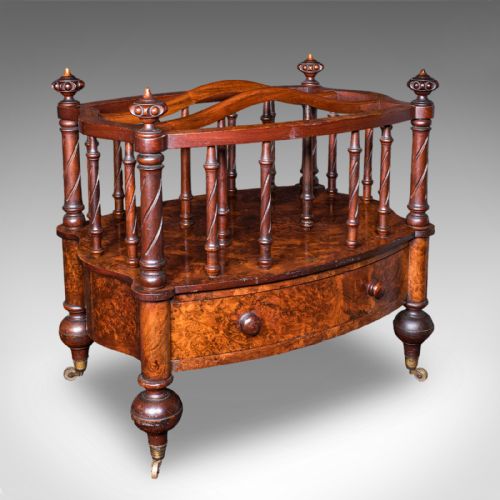
Commonly meeting the eye are canterburys featuring slatted wooden partitions for newspapers, sheet music, and magazines. Many incorporate lower drawers or shelf tiers, bridging the gap between side tables and dedicated tidies.
Materials and construction methods
Cabinetmakers utilised dense hardwoods such as mahogany, walnut, burr walnut, and rosewood to build these stands, often highlighting rich natural grain patterns. Alternative examples employ bamboo and lacquered finishes, reflecting changing aesthetic tastes during the nineteenth century.
Joinery techniques involved delicate turned columns, carved fretwork partitions, and brass fittings such as castors and handles. Ebonised highlights and French carved details frequently embellish the structural framework of Victorian and French models.
Distinctions in quality
Excellence in these pieces rests upon the crispness of the carving, the selection of figured veneers such as burr walnut, and the integrity of the structural timber. Finer examples display meticulous attention to internal partitions and coordinated lower drawer construction.
The integration of secondary functions, such as incorporated work tops, adjustable music stands, or tier levels like whatnot shelving, elevates the sophistication of the design. Heavy brass castors and original hardware further distinguish superior workshops from simpler utility pieces.
The Antique Side Table Magazine Holder Glossary
- Canterbury
- A low stand fitted with divisions for holding sheet music, newspapers, or magazines, often featuring a small drawer below. This form originated in the late eighteenth century and persisted through the Victorian period.
- Whatnot
- An open set of multi-tiered shelves used for displaying ornaments, books, or small objects. When combined with a canterbury, it provides both surface display and slot storage.
- Regency
- A British design style spanning the early nineteenth century, characterised by classical motifs, elegant proportions, and exotic timbers like rosewood. Pieces from this era often exhibit restrained elegance.
- Aesthetic Movement
- A late nineteenth-century design approach that rejected heavy Victorian ornamentation in favour of artistic simplicity, occasionally incorporating Japanese-inspired bamboo and lacquer.
- Ebonised
- Wood treated with a dark finish to imitate ebony, frequently utilised on Victorian furnishings to create high-contrast decorative details.
Antique Side Table Magazine Holder: Frequently Asked Questions
What is a canterbury stand?
A canterbury is a low furniture piece designed with vertical partitions specifically for organising sheet music, newspapers, and periodicals.
Many examples also incorporate a small drawer at the base or function simultaneously as an occasional side table.
How were these tables used originally?
These stands sat beside armchairs and sofas in drawing rooms to keep reading materials tidy and close at hand.
The flat top surface additionally served as a convenient spot for holding candles, small lamps, or teacups during evening leisure hours.
What woods are commonly found?
Cabinetmakers primarily constructed these pieces using dark hardwoods like mahogany, walnut, burr walnut, and rosewood.
Alternative materials include bamboo and ebonised wood, particularly in items reflecting Victorian aesthetic or French nineteenth-century revival styles.
How do I date a piece?
Dating relies on identifying characteristic design traits, such as Regency classical lines, heavy Victorian carving, or aesthetic movement bamboo construction.
Timber selection and hardware details, including brass castors and drawer dovetailing, offer further clues regarding the period of manufacture.