
Antique Showcase
An antique showcase frames treasured possessions behind glass, bringing period elegance and craftsmanship into modern rooms.
Antique Showcase
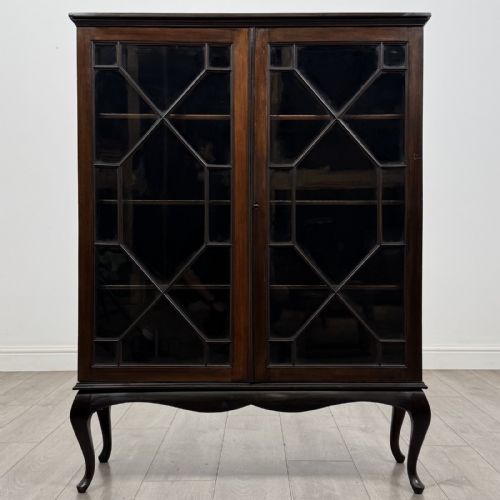
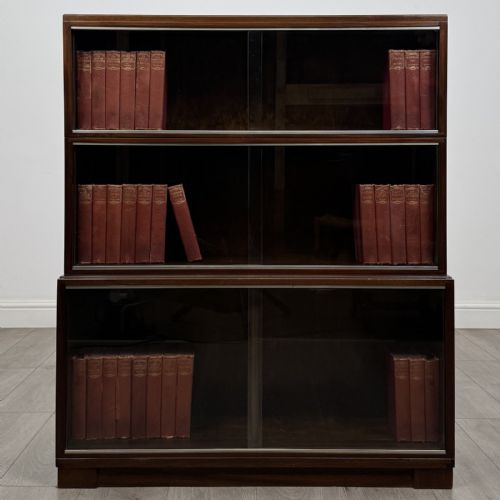
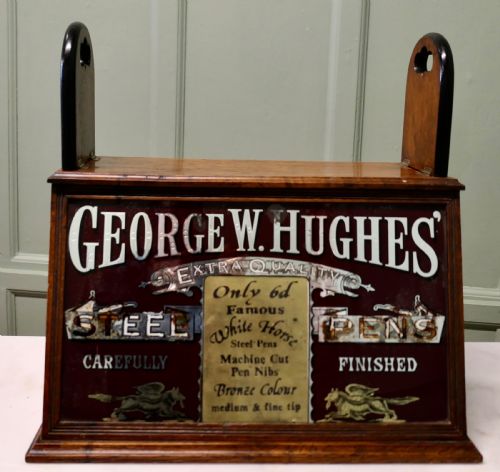
When searching for an antique showcase, buyers encounter diverse forms ranging from refined freestanding vitrines and wall cabinets to commercial shop counters and countertop display cases. These pieces originate from domestic and retail settings across the eighteenth, nineteenth, and early twentieth centuries.
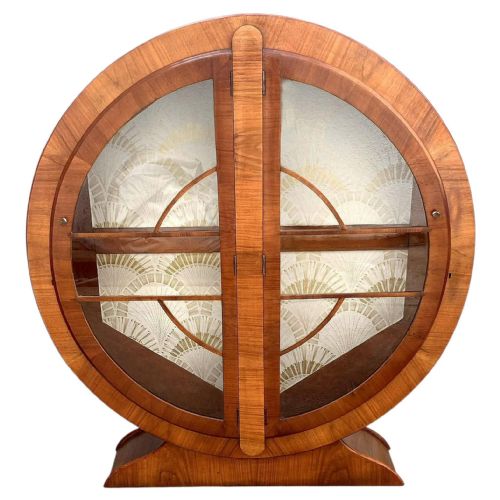
The selection on this page leans heavily towards Edwardian and Victorian specimens alongside Art Deco walnut designs and French revival pieces. Buyers find everything from intimate tabletop display domes to substantial mahogany shop display cabinets.
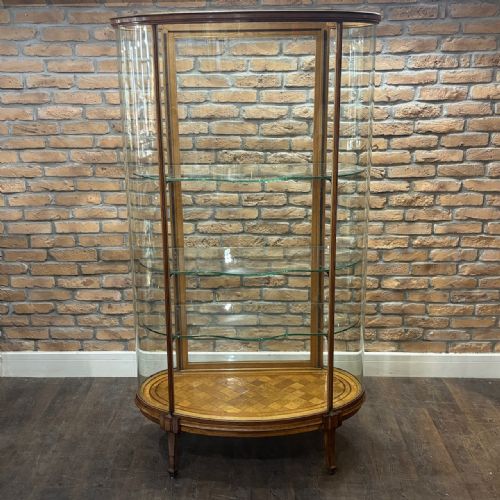
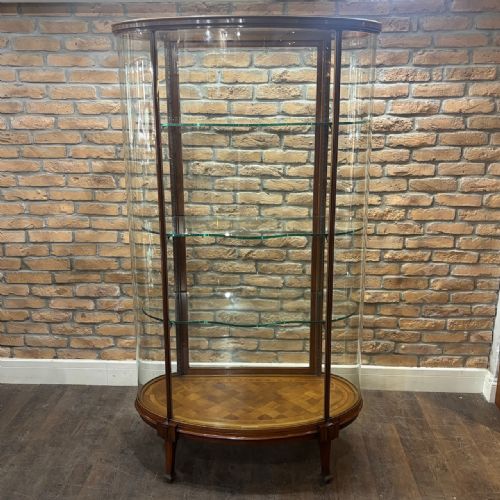
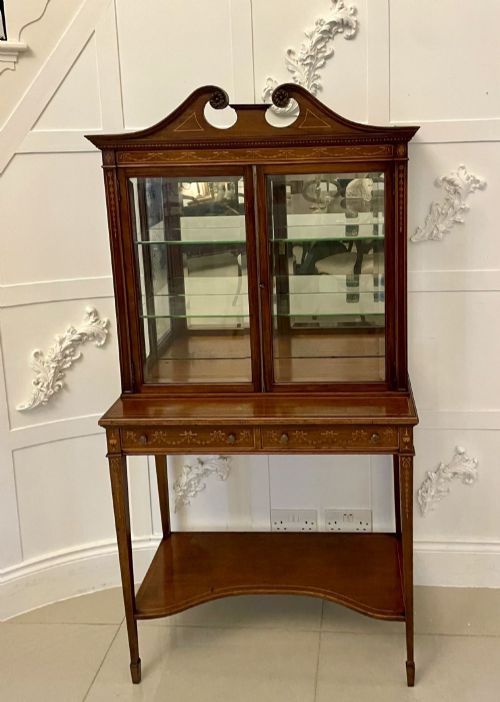
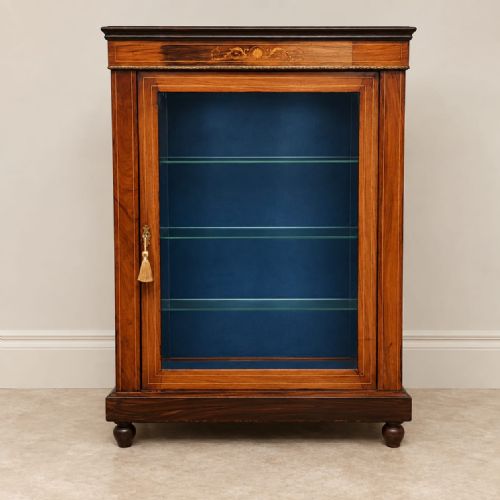
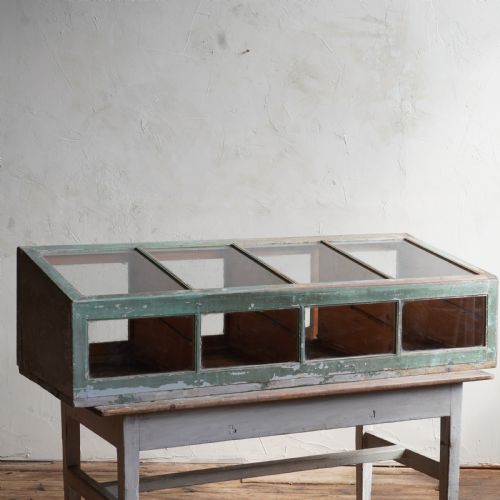
Domestic iterations frequently feature satinwood, walnut, or mahogany timbers with inlaid marquetry, whilst commercial examples utilise sturdy oak and glass designed to exhibit merchandise effectively.
How they were made
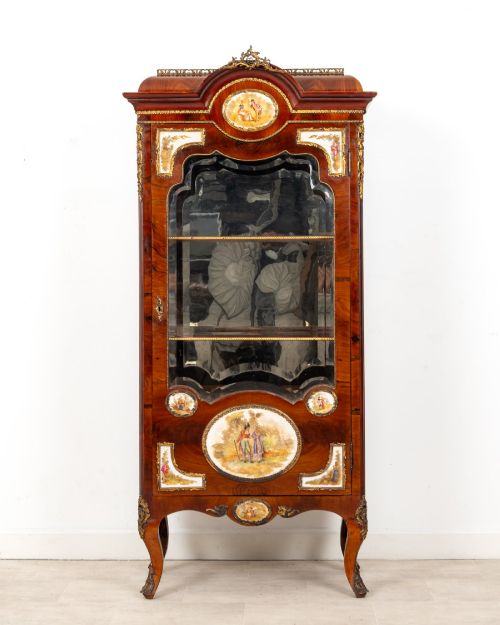
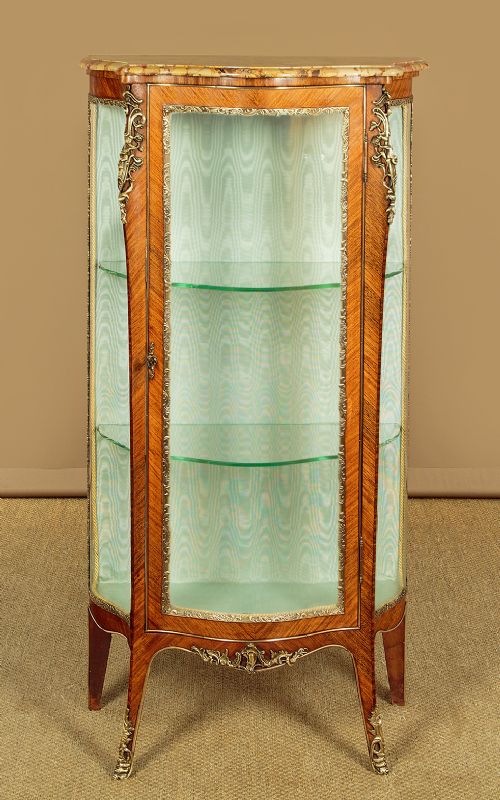
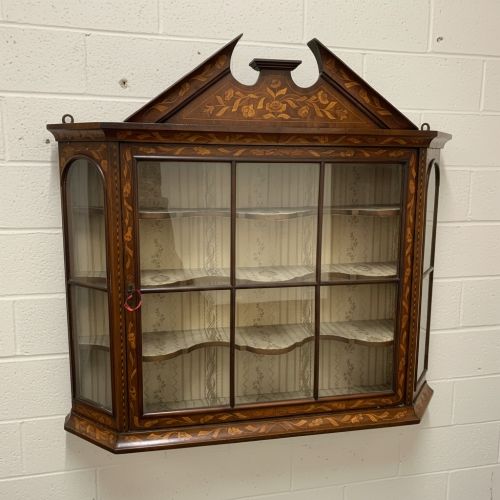
Cabinet makers constructed these frameworks using solid timbers like mahogany, walnut, and oak, often applying decorative veneers such as satinwood, kingwood, and amboyna to primary surfaces. Marquetry inlay, hand-painted floral motifs, and Vernis Martin lacquer techniques decorated the finest French and English case furniture.
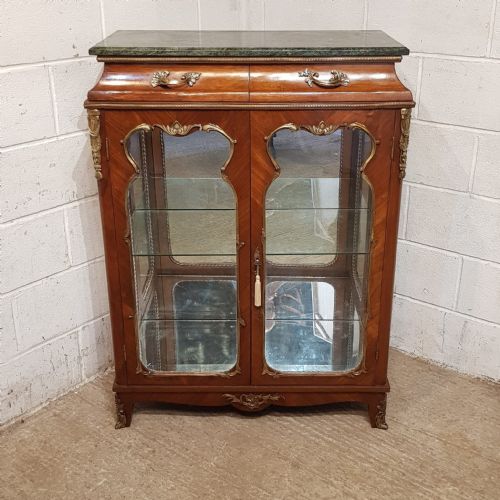
Structural embellishments relied on cast brass, ormolu mounts, and gilt metal details to frame glazed doors and marble tops. Interior glazing utilised leaded or clear glass panes supported by adjustable glass shelves within mirrored or fabric-lined backs.
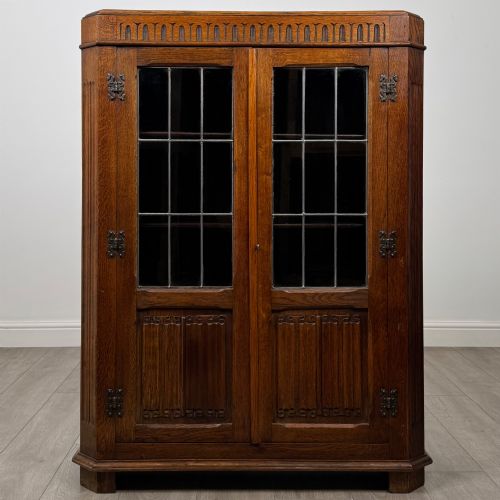
A sturdy nineteenth-century gun cabinet now peacefully guards collections of delicate porcelain teacups instead of sporting rifles.
What varies in quality
Quality in an antique showcase rests upon the crispness of cabinetmaking joinery, the selection of timber grains, and the sophistication of decorative enrichment. Pieces featuring finely executed marquetry, hand-cast ormolu mounts, and complex serpentine or bow-front shapes demonstrate superior workshop execution.
Commercial variants built by established firms display robust construction tailored for heavy retail use, whereas domestic salon vitrines prioritise delicate proportions and refined aesthetic details.
F. Sage & Co·Dudley & Co·James Hicks·Rurka
The Antique Showcase Glossary
- Vitrine
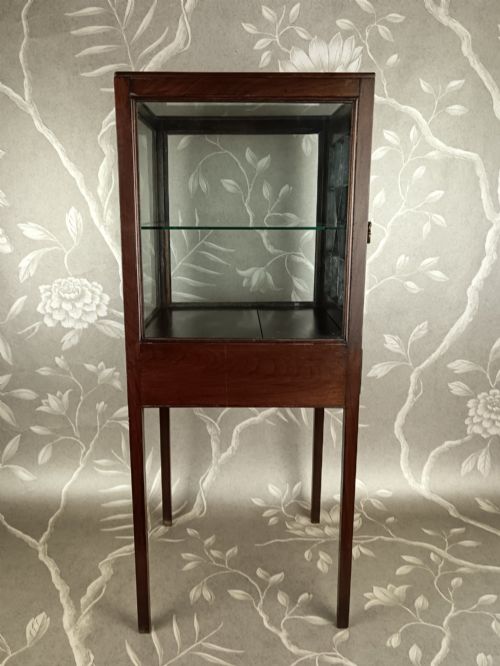
- A glass-fronted cabinet designed for displaying fine porcelain, curiosities, or small objects of art. These pieces typically feature glazed sides to maximise light penetration.
- Marquetry
- Decorative patterns formed by fitting together thin veneers of wood, ivory, or shell onto a structural carcass. This technique creates elaborate floral or geometric pictorial designs.
- Ormolu
- Gilded bronze mounts applied to furniture as decorative hardware and architectural accents. Makers cast and chased these metal elements by hand.
- Vernis Martin
- A simulated Japanese lacquer technique developed in eighteenth-century France, known for its translucent metallic sheen and painted pastoral scenes.
- Pier cabinet
- A low cabinet designed specifically to stand against the wall space between windows. These frequently incorporate mirrored backs and inlaid walnut timbers.
Antique Showcase: Frequently Asked Questions
How do I style an antique showcase?
Balance collections of ceramics, glassware, or small sculptures by varying heights and grouping items in odd numbers. Leave adequate negative space around objects to maintain visual clarity through the glass panels.
Incorporate subtle interior lighting if the cabinet lacks original mirror backs or integrated illumination. Keep heavy or large pieces on lower shelves to preserve structural stability.
Where should I place a vitrine?
Position freestanding vitrines away from direct sunlight and radiators to protect delicate wood veneers and historic adhesives. Interior humidity fluctuations can cause timber to warp and split.
Select a location with ambient room light that enhances the glass panels without causing excessive glare. Corner cabinets make efficient use of smaller rooms whilst framing displays effectively.
How do I clean wooden display cases?
Dust surfaces regularly with a soft, dry cloth to prevent particulate buildup on polished mahogany, walnut, or satinwood. Avoid silicone-based polishes that leave residues and attract grime.
Treat timber periodically with traditional beeswax to nourish old finishes. Clean glass panels using mild vinegar solutions applied directly to cloths rather than spraying near wood.
What is a haberdashery counter?
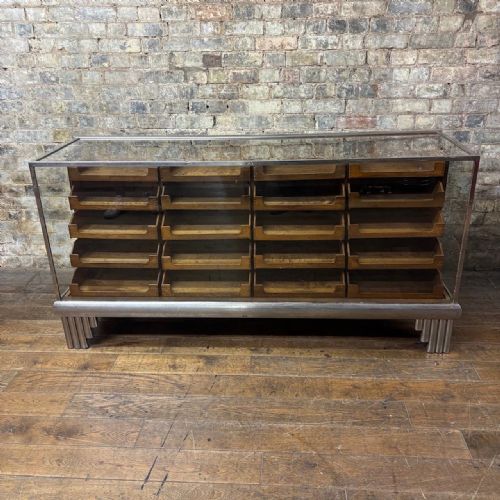
Haberdashery counters are commercial display units originally utilised in nineteenth and twentieth-century shops to organise textiles, ribbons, and small garments. They feature multiple shallow glass-fronted drawers and glazed display surfaces.
These robust oak or mahogany pieces transition into domestic interiors as kitchen islands or statement sideboards. Their compartmentalised drawers offer practical storage for modern collections.