



Antique Shop Balance
These antique shop balance scales bring working history to a kitchen or counter, offering the robust utility of Victorian and Edwardian commerce.
Antique Shop Balance
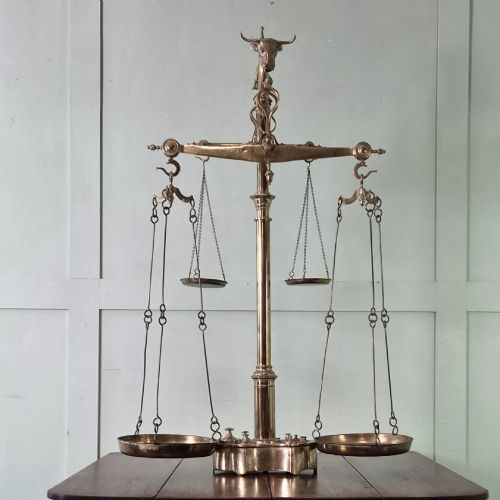
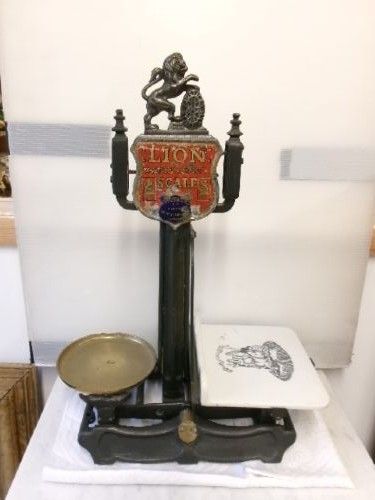
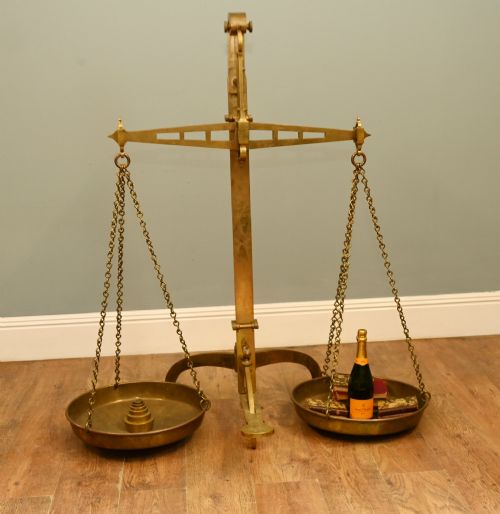
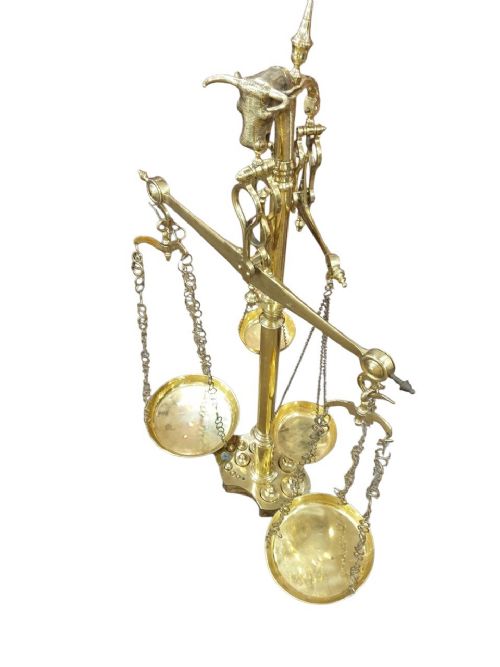
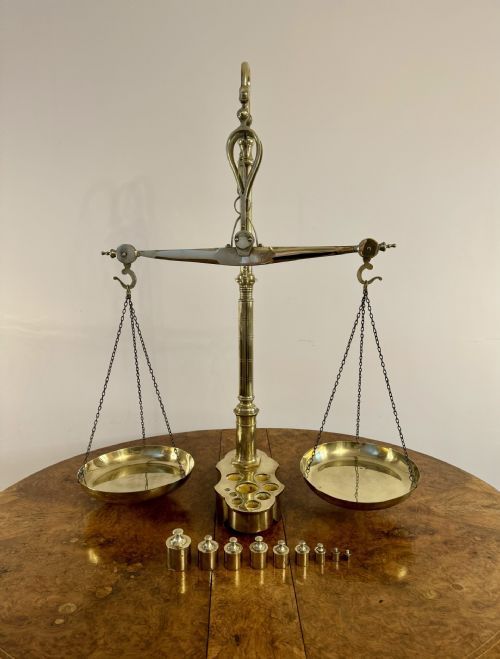
When you search for an antique shop balance, you are looking at heavy-duty weighing instruments designed for trade, grocers, and butchers across the Victorian and Edwardian eras. The versions you are most likely to meet on this page include brass beam scales, cast iron grocers scales, and copper pans mounted on sturdy iron bases.
These mechanical tools served a daily purpose in shops, Co-ops, and markets, measuring everything from loose produce to cuts of meat. Surviving examples range from small countertop balance scales with ceramic pans to monumental floor-standing butcher scales.
The aesthetic bridges utilitarian workshop hardware and period interior decoration, featuring maker names stamped into metal beams or advertising script painted onto ceramic components.
How they were made
Construction relies on the marriage of durable metals like cast iron, brass, and copper, designed to withstand the daily rigours of commercial trade. Heavy iron bases provide stability, while polished brass beams and copper pans offer the necessary precision and resistance to corrosion.
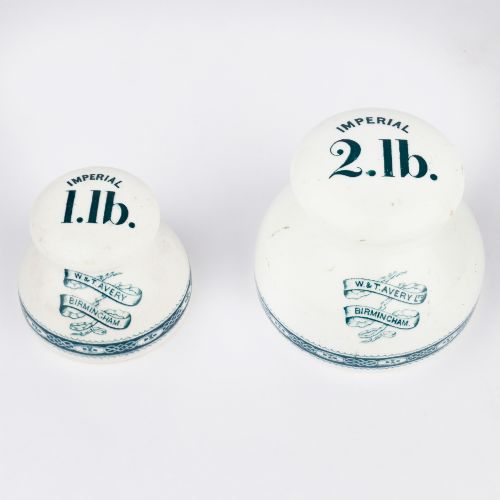
Many designs incorporate fitted ceramic weights and glazed earthenware scale pans, often produced by specialist manufacturers for hygienic food handling. Mahogany wooden components occasionally feature in the bases, adding a domestic warmth to the industrial metalwork.
Antique Shop Balance Retail Price Guide 2026
Typical asking prices for shop balance among the pieces listed under this phrase on Sellingantiques today, from the lower quarter to the upper quarter. They describe what is for sale here now, not the wider market.
Listings feature 19th Century, Victorian, and Edwardian periods, utilising brass, cast iron, copper, and glazed ceramic materials.
What varies in quality
Quality in these commercial scales rests on the integrity of the original materials and the presence of signed maker details on the metalwork or ceramic pans. Finer examples retain their matching original weights, unpolished patination, and functional mechanical action.
Substantial scale assemblies from established makers such as Herbert & Sons or W & T Avery demonstrate superior foundry work and casting precision compared to unmarked utilitarian items.
Herbert & Sons London·W & T Avery·Parnall & Sons of Bristol
The Antique Shop Balance Glossary
- Beam scale
- A weighing device utilising a central fulcrum and two suspended pans to compare an unknown mass against known weights. This mechanical arrangement represents the traditional form of shop balance.
- Counterpan
- A dish or tray, frequently glazed ceramic or copper, mounted to the balance to hold goods being weighed. These pans are often removable for cleaning.
- Quick action scale
- A commercial weighing mechanism engineered for rapid movement and swift return to equilibrium during busy retail service. Such designs expedited transactions in Victorian grocery shops.
Antique Shop Balance: Frequently Asked Questions
How do balance scales work?
A balance scale operates on the principle of lever equilibrium, where objects placed in one pan are measured by adding standardised weights to the opposite side until the central beam levels. The pivoting fulcrum at the exact centre ensures an accurate comparison of mass.
In retail settings, the grocer adjusted the sliding indicators or added small weights until the pointer rested at the dead centre of the scale arc.
Can I still use these scales for cooking?
While many antique scales remain mechanically sound, most are sold primarily as decorative or historical objects rather than certified kitchen instruments. Brass and iron components require careful cleaning and calibration if utilised for modern food preparation.
Many collectors prefer to display them with period ceramic weights rather than subject delicate antique mechanisms to daily culinary use.
How do I date an antique shop balance?
Dating relies on stylistic clues, materials, and stamped maker marks or Victorian registry stamps cast into the iron and brass components. Pieces from the nineteenth century often feature heavier cast iron bases and hand-painted ceramic advertising elements.
Edwardian and later twentieth-century models frequently display more standardised manufacturing techniques and distinct commercial branding from known trading cooperatives.
How should I clean copper and brass pans?
Preserving the original patination is standard practice among collectors, so heavy chemical polishing is generally discouraged in favour of gentle dusting and mild soap. Copper and brass naturally darken over decades, which adds to the historical character of shop hardware.
If cleaning is necessary, use non-abrasive cloths designed for soft metals to avoid scrubbing away maker stamps or surface wear.