




Antique Shaving Table
An antique shaving table brings focused morning routine utility and rich period cabinet-making directly to the modern dressing room.
Antique Shaving Table
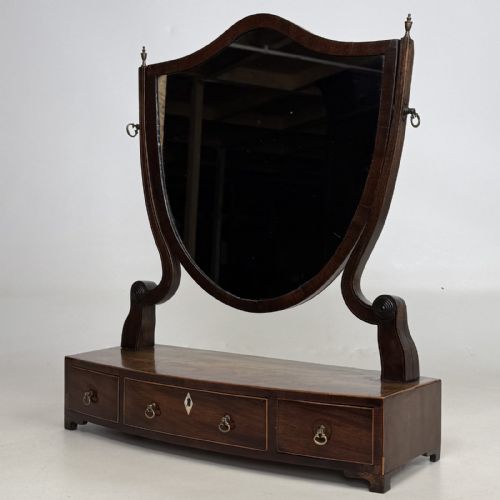
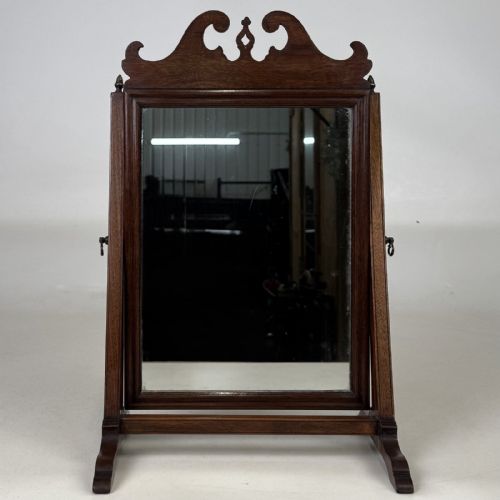
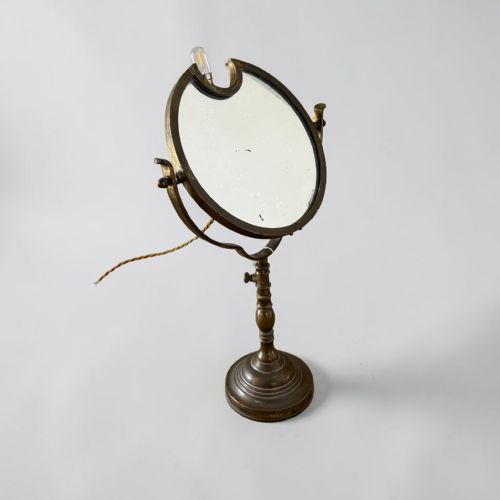
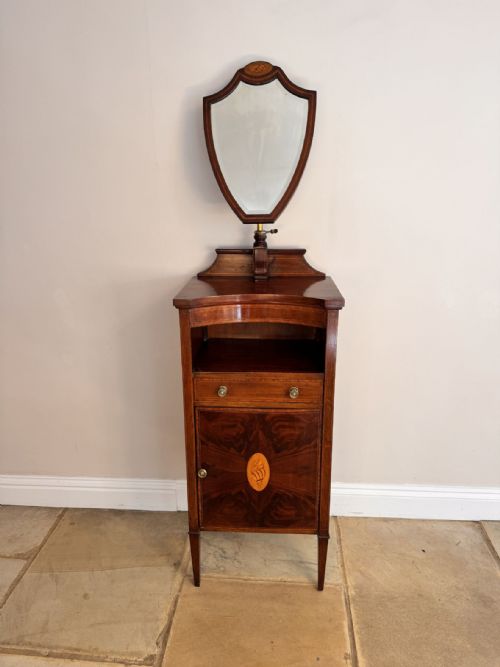
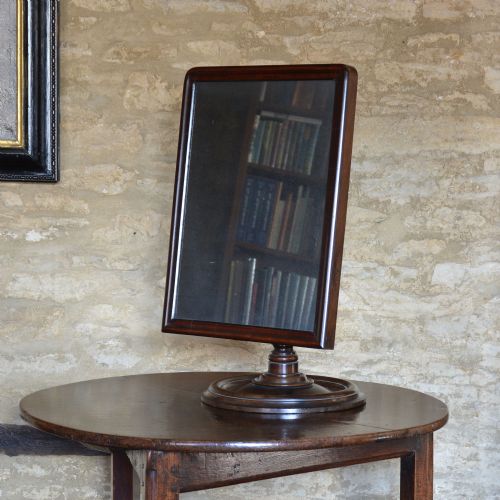
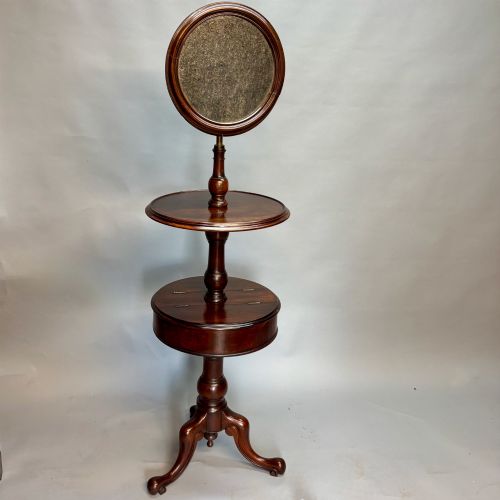
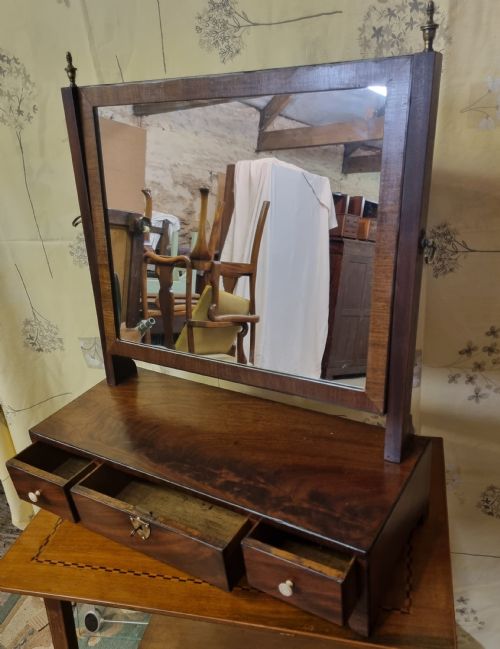
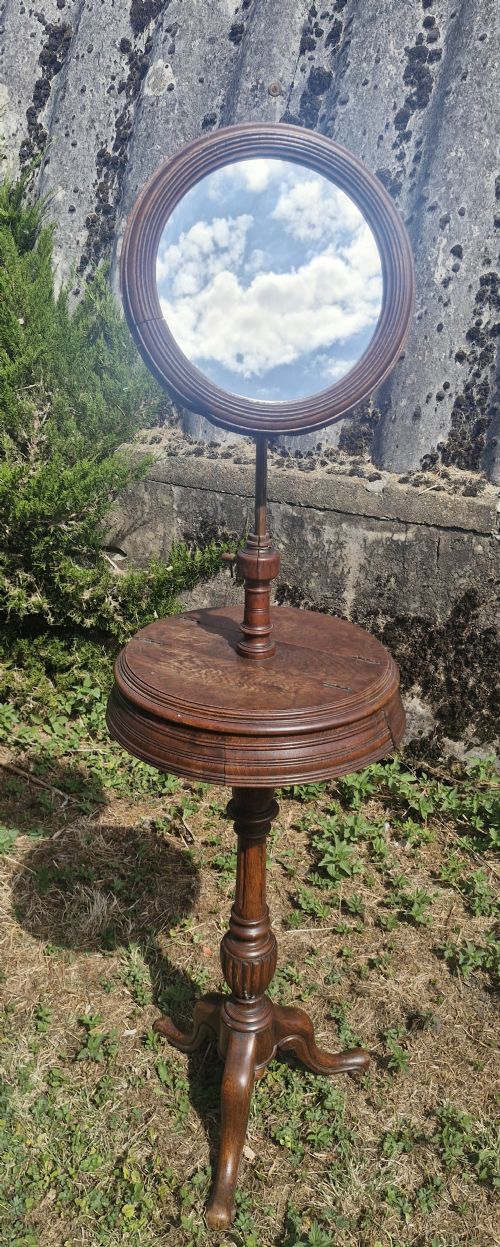
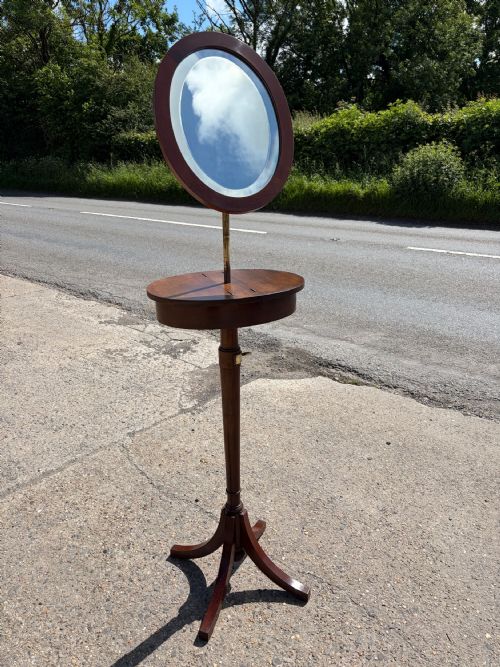
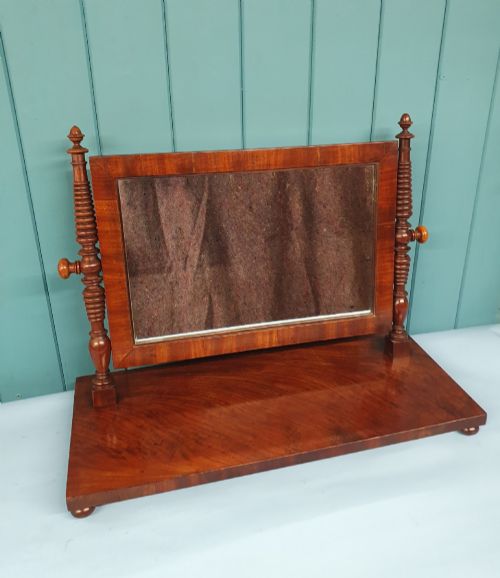
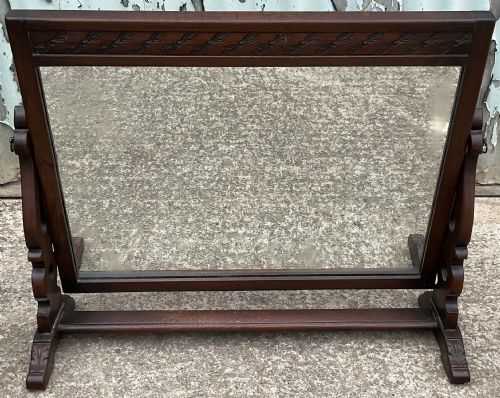
An antique shaving table encompasses specialised stands, adjustable mirrors and compact toilet glasses designed for personal grooming. When exploring this selection, buyers encounter diverse forms ranging from floor-standing telescopic stands on tripod bases to tabletop swing mirrors housed in box bases.
The pieces span multiple periods from the 18th century through the Georgian and Victorian eras into the Edwardian years and early 20th century. Mahogany, walnut and oak dominate the corpus, frequently paired with adjustable brass fittings and mirror glass.
Makers and designers of these utilitarian objects adapted forms to the daily habits of gentlemen across successive generations. Surviving examples demonstrate how practical furniture evolved to include shaving cupboards, vanity stands and scientific optical apparatus.
Materials and construction methods
Cabinet-makers utilised dense hardwoods including mahogany, walnut, oak and ash to construct stable frames and supportive bases. Marquetry inlay, boxwood stringing and polished surfaces decorate many surviving examples from the Georgian and Edwardian periods.
Functional metal components such as brass brackets, cast iron weights and telescopic shafts allow users to adjust height and angle. Mirror glass and bone elements complete the assembly of these intricate grooming stations.
Antique Shaving Table Retail Price Guide 2026
Typical asking prices for shaving table among the pieces listed under this phrase on Sellingantiques today, from the lower quarter to the upper quarter. They describe what is for sale here now, not the wider market.
One scientific optical mirror bears the signature of Thomas Rubergall of London, bringing precision optics to the morning shave.
Evaluating craftsmanship and condition
Superior examples demonstrate precision in the movement of telescopic brass mechanisms and the stability of tripod or box bases. The integration of adjustable joints and the clarity of the original mirror glass distinguish high-grade pieces from standard utility items.
Finer furniture displays careful selection of timber grain, particularly in mahogany and walnut veneers, alongside intact marquetry and boxwood details. Construction integrity in the drawers and stands separates master cabinet work from simpler workshop production.
Thomas Rubergall of London·James Shoolbred
The Antique Shaving Table Glossary
- Telescopic
- A construction design featuring concentric sliding tubes that allow the height of the mirror to adjust smoothly. This mechanism often relies on brass friction collars.
- Toilet mirror
- A smaller looking glass designed to sit upon a chest of drawers or a dedicated dressing table. These often feature box bases fitted with small storage drawers.
- Cheval mirror
- A full-length swing mirror suspended within a standing floor frame. It permits the user to view their entire reflection.
- Marquetry
- Decorative veneer work arranged in intricate patterns using various coloured woods. Craftsmen applied this technique to enrich the surfaces of dressing tables and mirror frames.
- Box base
- A small plinth or chest fitted beneath a tabletop mirror frame. It typically incorporates one or more small drawers for personal items.
Antique Shaving Table: Frequently Asked Questions
What is an antique shaving table?
An antique shaving table is a dedicated piece of furniture designed for morning grooming, typically incorporating an adjustable mirror and storage for shaving equipment.
These pieces range from compact tabletop toilet glasses to tall floor-standing telescopic stands fitted with brass hardware and wooden tripods.
How were shaving stands used historically?
Gentlemen utilised these stands during daily morning routines to facilitate close shaving and personal hygiene before mirrors could be permanently fixed to walls.
The adjustable heights and tilting glass panels allowed users to capture optimal light in domestic chambers.
Where should I place a shaving mirror?
Tabletop mirrors sit comfortably upon chests of drawers, dressing surfaces or sideboards within a bedroom or dressing room.
Floor-standing telescopic examples function well as standalone statement pieces beside period furniture.
How do I identify a Georgian shaving piece?
Georgian pieces generally exhibit clean lines in solid mahogany or walnut, often featuring box bases with bracket feet and hand-cut dovetail joints.
Cabinet-makers of this era favoured understated elegance over heavy ornamentation.
What materials did period makers use?
Maker workshops relied primarily on hardwoods such as mahogany, walnut, oak and ash for the structural frames and box bases.
Fittings incorporate polished brass, cast iron, bone and silver alongside traditional mirror glass.