







Antique Sgabello
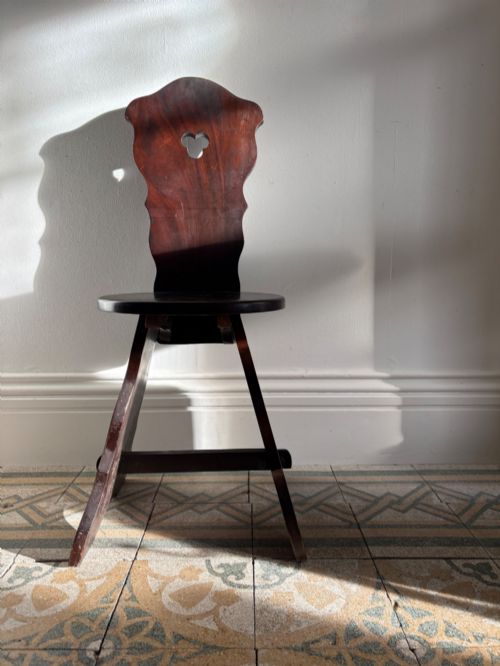
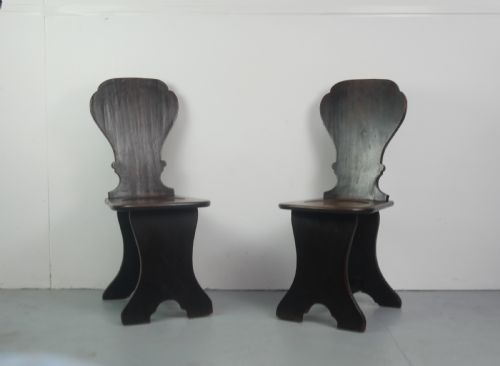
These antique sgabello chairs are low, stiff-backed seats with carved wooden supports, designed for formal hallways and grand entrances.
Antique Sgabello
An antique sgabello is a distinctive form of hall chair characterised by a vertical back and solid trestle supports instead of traditional legs. Buyers searching for this phrase encounter sculptural seats rooted in historical European furniture traditions.
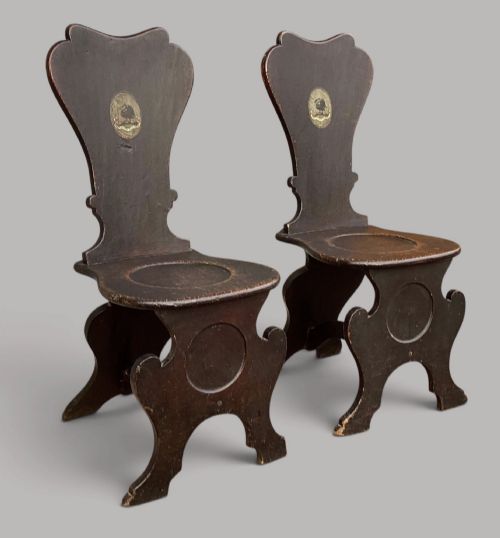
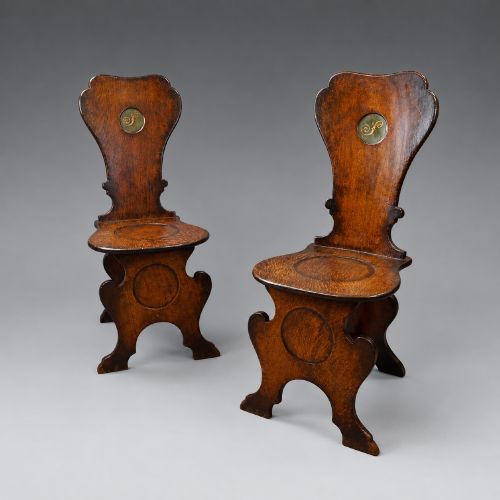
The examples gathered here span from the eighteenth century through the Victorian period, including Renaissance Revival interpretations and George II designs. Forms range from single accent pieces to matched pairs, often functioning as dramatic hall chairs.
Origins stretch across British, Italian, and Flemish workshops, utilising diverse regional aesthetics. Oak, walnut, and fruitwood predominate, occasionally upholstered in velvet or enriched with carved armorials.
How they were made
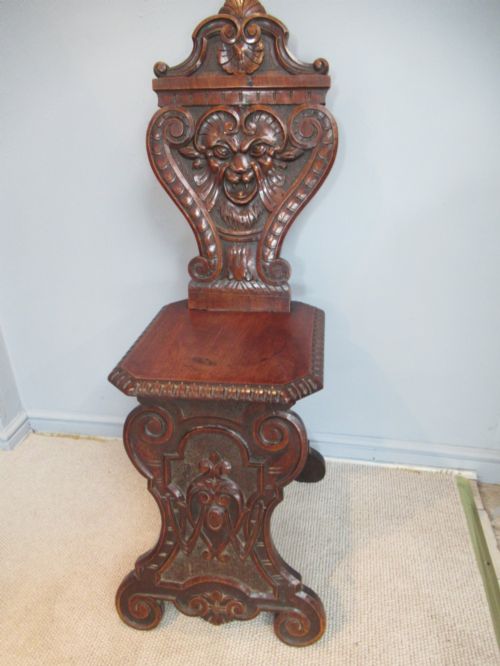
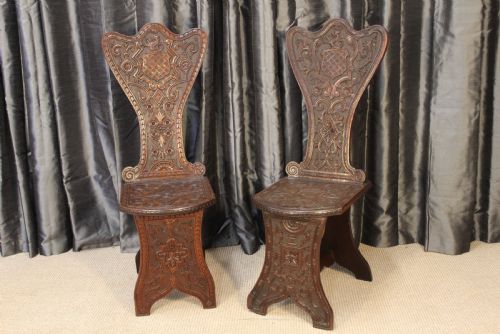
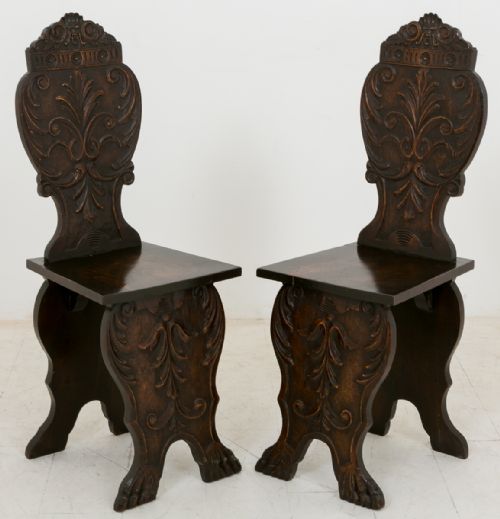
Construction relies on solid hardwoods such as oak, walnut, mahogany, and fruitwood, shaped by hand to form the characteristic upright back and thick side planks. Artisans carved intricate details directly into the wood, creating high-relief ornamentation on the backs and bases.
Surface decoration frequently includes applied paint, intricate bone inlay, or lime wood carving to highlight the architectural silhouette. Joinery is robust and traditional, designed to withstand the formal demands of domestic entryways.
Antique Sgabello Retail Price Guide 2026
Typical asking prices for sgabello among the pieces listed under this phrase on Sellingantiques today, from the lower quarter to the upper quarter. They describe what is for sale here now, not the wider market.
Listings feature woods spanning oak, walnut, mahogany, fruitwood, and lime wood, alongside decorative elements like bone inlay.
What varies in quality
Depth and crispness of the carving distinguish finer pieces from simpler utilitarian production. Sharp relief work on walnut and oak surfaces demonstrates superior craftsmanship.
The choice of primary timber influences the character and weight of the chair, with dense hardwoods and figured fruitwoods commanding greater visual presence. Integrated details like bone inlay or painted armorials add layers of decorative complexity.
The Antique Sgabello Glossary
- Sgabello
- A light, portable Renaissance chair with a high back and two carved board supports instead of legs. They were typically placed in large halls for guests to use while waiting.
- Armorial
- Relating to heraldry or a coat of arms. These painted or carved emblems denote family lineage and status.
- Trestle support
- A structural upright replacing conventional legs, taking the form of a solid board or column. This design distributes weight evenly across the floor.
- Renaissance Revival
- A nineteenth-century artistic movement that drew inspiration from sixteenth-century European design. It manifests in heavy carving and architectural motifs.
- Fruitwood
- Timber sourced from fruit-bearing trees such as pear or apple, prized by cabinetmakers for its fine grain. It accepts detailed carving exceptionally well.
Antique Sgabello: Frequently Asked Questions
What is an antique sgabello chair?
An antique sgabello is a rigid, high-backed chair supported by solid planks rather than standard legs. Originating in the Renaissance, these seats were designed to make a strong visual statement in entryways.
They function primarily as decorative accent pieces or hall chairs today. Their narrow profile allows them to sit flush against walls in hallways and landings.
Where were sgabello chairs placed?
Historically, these chairs stood along the walls of grand halls and corridors in large estates. Servants or visitors used them briefly while waiting for admittance to inner rooms.
In modern interiors, they serve a similar decorative purpose. They anchor narrow spaces where a bulky armchair would obstruct movement.
How do I identify the period?
Dating relies on observing wood species, carving styles, and construction techniques. Eighteenth-century examples often feature Georgian proportions in mahogany or fruitwood.
Nineteenth-century pieces frequently embrace Renaissance Revival or Flemish aesthetics with heavy, deep-relief carving. Comparing the joinery helps clarify the age of the woodwork.
Are they comfortable for everyday seating?
Sgabellos possess upright wooden backs and solid wooden seats without padding. They are designed for brief posture rather than prolonged lounging.
Some examples include small velvet pads, but their primary appeal remains sculptural. They are chosen for their striking silhouette rather than relaxed comfort.