
Antique Sewing Work Table
An antique sewing work table provides a dedicated parlour piece for needlework, housing compartments and drop leaves within refined period timber.
Antique Sewing Work Table
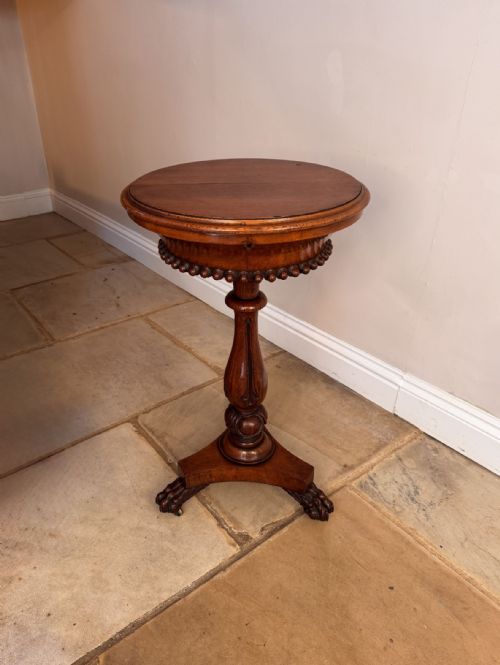
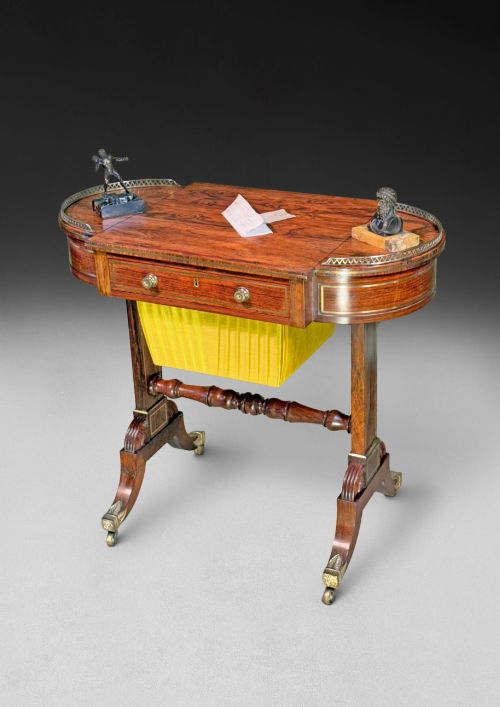
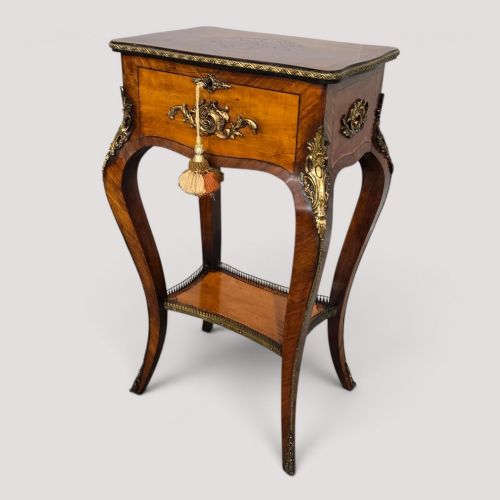
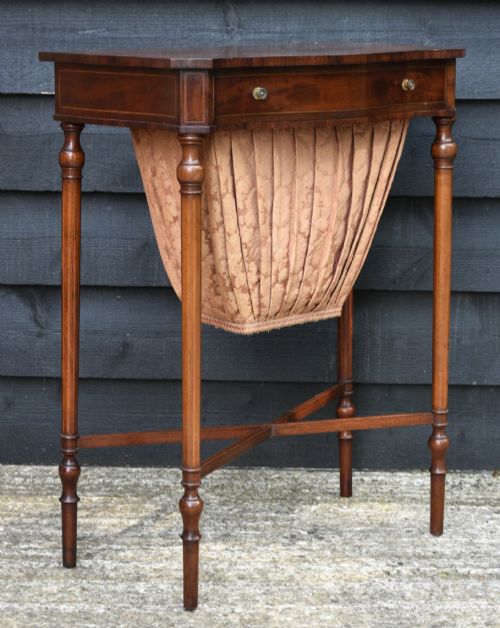
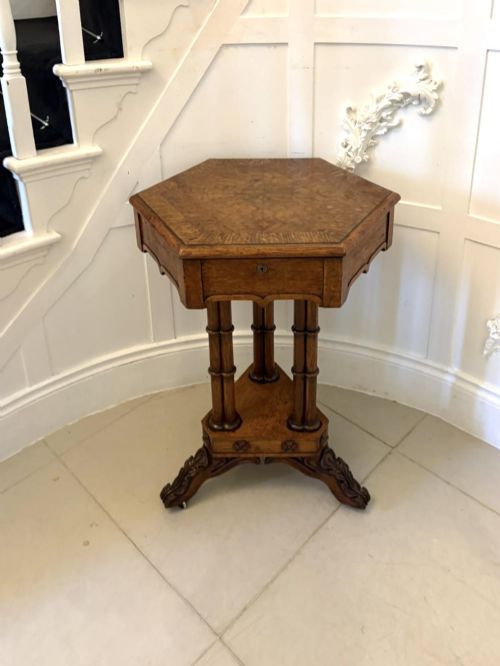
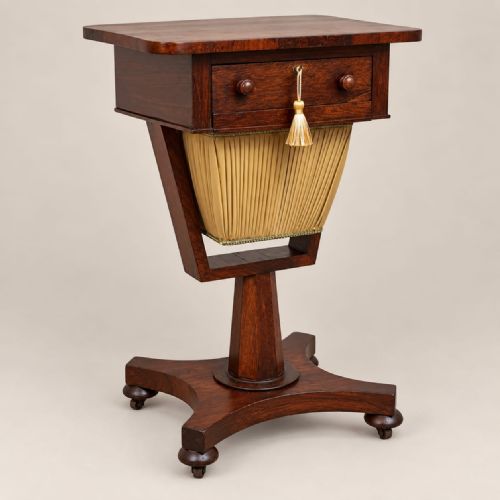
An antique sewing work table combines domestic utility with parlour elegance, designed to hold threads, needles, and textile crafts within compartmentalised drawers and hanging fabric bags. These pieces emerge frequently from the Georgian, Regency, and Victorian eras, carrying the craftsmanship of cabinetmakers who catered to the domestic pursuits of ladies.
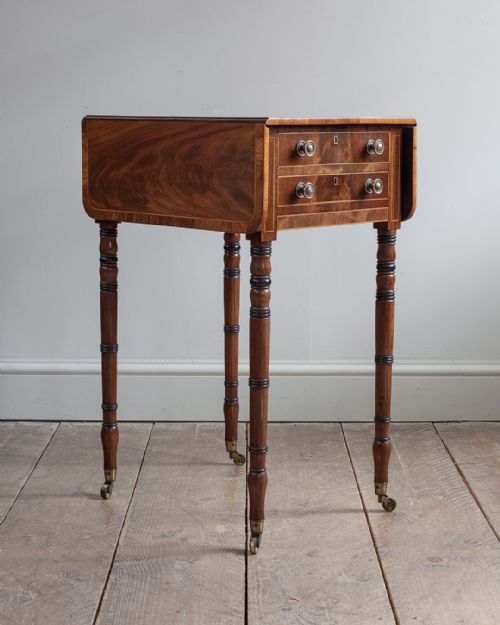
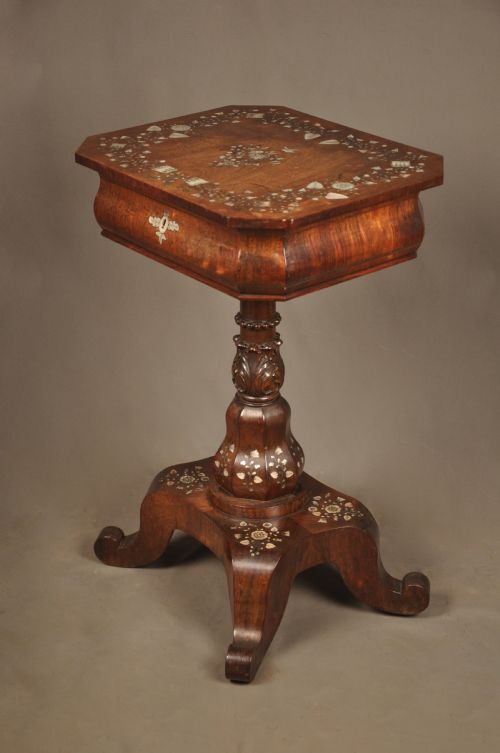
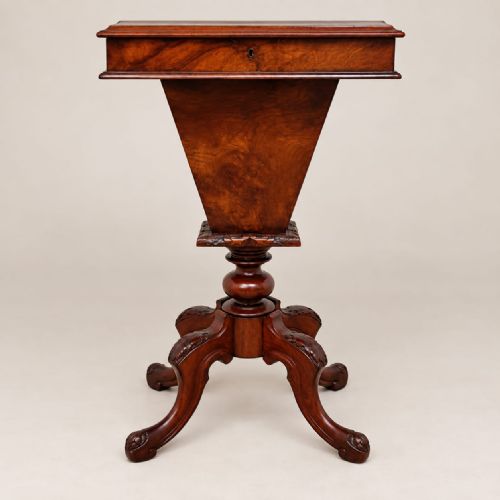
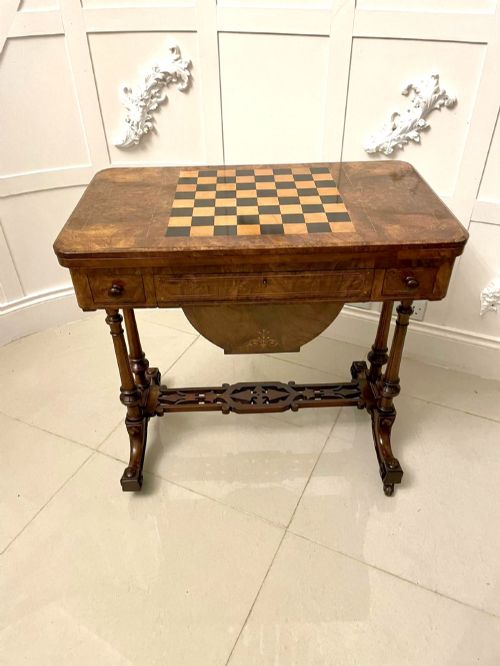
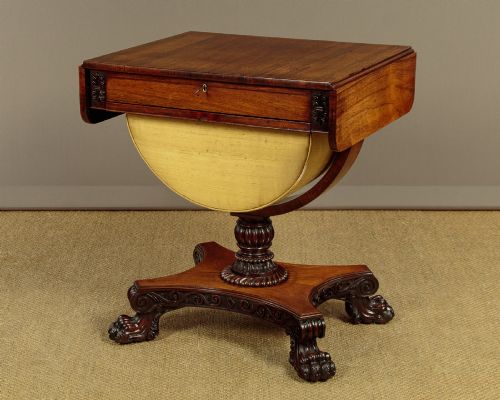
The form appears in several distinct shapes, including pedestal trumpet tables with octagonal bodies, drop leaf pembroke variants, and games tables incorporating chess boards. Walnut, rosewood, and mahogany provide the primary structural timbers, often enhanced by satinwood inlay or intricate carving.
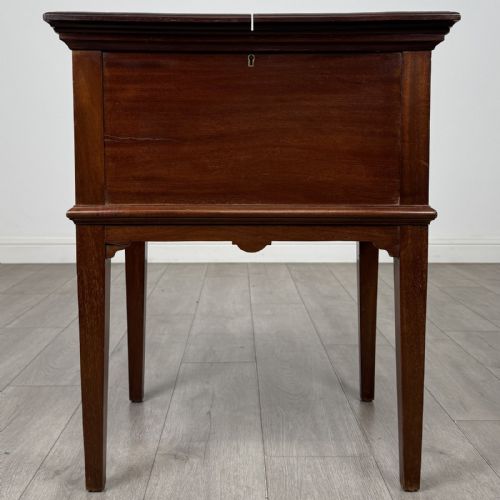
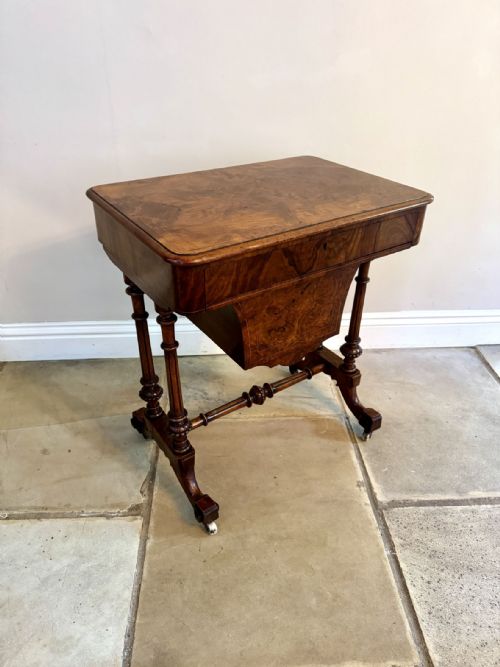
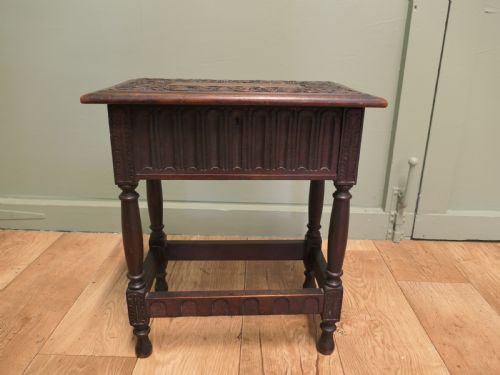
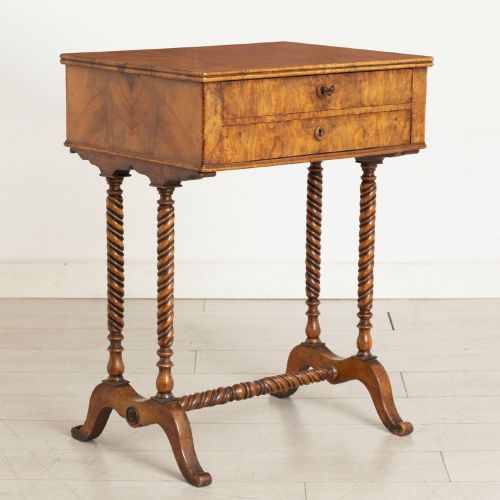
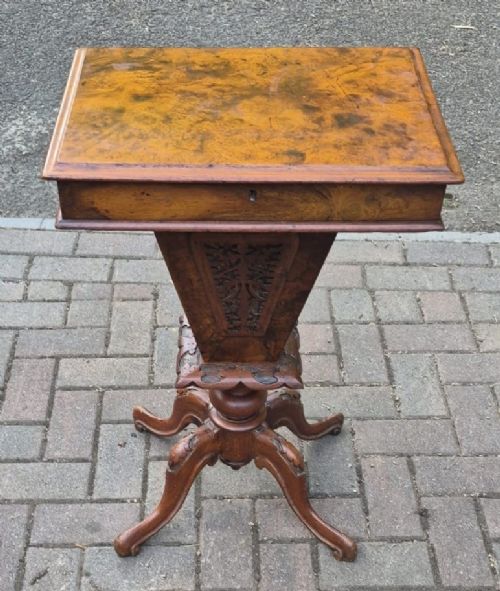
Buyers meet examples ranging from simple mahogany work boxes on stands to elaborate burr walnut pedestal tables with fitted interiors and silk catch bags. Each variation reflects the specific social habits and interior requirements of nineteenth-century drawing rooms.
How they were made
Cabinetmakers utilised dense tropical hardwoods like rosewood and mahogany alongside native English timbers, applying flame mahogany veneers and burr walnut to create striking figured surfaces. Internal compartments utilise secondary woods and feature precise joinery to house small implements securely.
Decorative techniques include delicate stringing in satinwood, brass mounts, and carved pedestal bases featuring motifs such as lion mask handles or sunbursts. Silk and fabric components line the storage bags suspended beneath the main body, while specialised mechanisms operate drop leaves and internal writing slides.
Several pieces arrive with secret compartments designed to hide clandestine love letters alongside the darning needles.
What varies in quality
The selection of timber veneer dictates the visual impact, with choice cuts of burr walnut or figured rosewood marking the higher tier of production. Superior examples display meticulous attention to internal fittings, such as solid ivory or bone thread spools and multi-compartment sliding trays within the drawer.
Execution of secondary details separates standard production from exceptional pieces, visible in crisp carving on pedestal columns, precise inlay work, and sophisticated drop leaf or swivel top mechanisms that operate smoothly without binding.
The Antique Sewing Work Table Glossary
- Pembroke table
- A small occasional table featuring hinged drop leaves on two opposing sides. These tables often contain a single functional drawer.
- Trumpet table
- A pedestal table characterised by an octagonal or flared body resembling a musical instrument, lifting to reveal a fitted interior and wool bag.
- Penwork
- A decorative technique utilising fine ink drawing on a prepared timber surface to simulate more costly inlay or marquetry.
- Drop leaf
- A hinged flap on a table surface that lifts to extend the top and drops down when not in use.
- Burr walnut
- Timber taken from a tree growth displaying intricate, swirling grain patterns highly prized for decorative veneering.
Antique Sewing Work Table: Frequently Asked Questions
What is an antique sewing work table used for?
These tables served as functional furniture for storing needlework, threads, and small personal items used during parlour crafts.
Today, collectors utilise them as side tables or bedside cabinets where their compact drawers store modern accessories.
How do I identify a Regency work table?
Regency examples typically feature dark timbers like mahogany or rosewood, bold brass mounts, and classical pedestal bases.
They often incorporate silk work bags and delicate penwork or gilt lacquer decoration reflecting the tastes of the early nineteenth century.
Are these tables suitable for small rooms?
Their modest proportions and drop leaves make them ideal for compact spaces requiring functional surface area.
The internal storage drawers assist with keeping tabletops clear of clutter.