

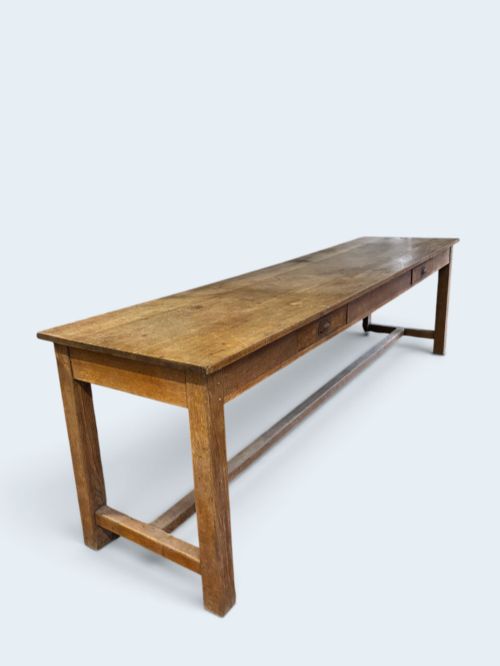
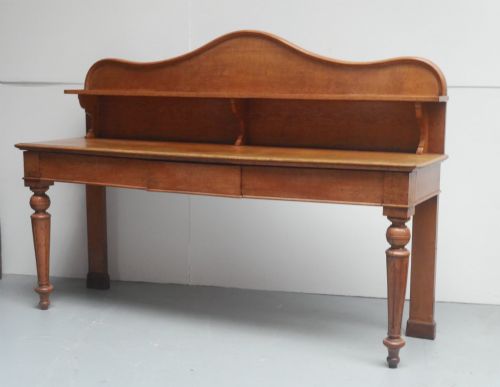


Antique Serving Counter
An antique serving counter brings heavy timber and honest work into a room, offering a functional surface rooted in past commerce and country life.
Antique Serving Counter
When you search for an antique serving counter, you are looking at substantial wooden furniture originally built for shops, domestic serving, or rural work. These pieces combine utilitarian surfaces with the character of past decades and centuries.
You are most likely to meet pieces from the Victorian era and the nineteenth century, alongside a few early twentieth-century examples. The selection spans drapers tables, shop counters, and robust sideboards.
Origins vary from English workshops to French provincial makers and Scottish timber yards. Each piece reflects the functional demands of its original setting, whether a drapery shop or a country house.
How they were made
Makers relied on solid hardwoods like oak, walnut, and mahogany, alongside pine for secondary elements. Iron and brass hardware added structural strength and operational utility to doors and fittings.
Construction techniques prioritized daily endurance over delicate ornament, utilising thick timber tops and sturdy framing. Glass and carved detailing appeared on specific cabinet forms, while some shop counters incorporated functional adjustments like adjustable feet.
Antique Serving Counter Retail Price Guide 2026
Typical asking prices for serving counter among the pieces listed under this phrase on Sellingantiques today, from the lower quarter to the upper quarter. They describe what is for sale here now, not the wider market.
Listings feature items spanning the nineteenth century through the 1920s, utilising oak, mahogany, walnut, pine, iron, and glass.
What varies in quality
Quality rests in the integrity of the timber selection and the honesty of the construction. Solid oak and dense walnut command attention through their weight and grain depth.
The degree of original hardware preservation and the handling of the wood finish dictate the standing of a piece. Counters retaining their functional adjustments and unaltered surfaces sit at the top of the range.
The Antique Serving Counter Glossary
- Drapers table
- A long wooden table originally used in fabric shops for displaying and measuring cloth. These counters typically feature deep proportions and sturdy timber construction.
- Buffet
- A sideboard or serving piece designed for holding food and tableware. These items often incorporate panelled doors and carved ornamentation.
- Console table
- A table designed to fit against a wall, supported by console brackets or legs. They provide a narrow surface for serving or display.
- Gothic Revival
- A nineteenth-century style drawing inspiration from medieval architecture. Pieces in this style display pointed arches, tracery, and heavy carved walnut.
Antique Serving Counter: Frequently Asked Questions
What is an antique serving counter?
An antique serving counter is a heavy wooden table or cabinet originally built for commercial shops or domestic service during the nineteenth and early twentieth centuries.
These pieces provide a durable surface and substantial storage, constructed from timbers such as oak, mahogany, and pine.
How do I live with an antique counter?
Living with a serving counter involves utilising its large wooden surface for daily tasks or display while protecting the historic finish from excess moisture and heat.
Their robust timber construction allows them to function as central kitchen islands, hallway consoles, or dining room sideboards.
How do I identify the period?
Dating these pieces relies on examining the timber types, construction methods, and stylistic details such as Gothic Revival carving or Victorian proportions.
Makers utilised regional woods like Scottish oak and French walnut alongside specific hardware to mark their era of production.