



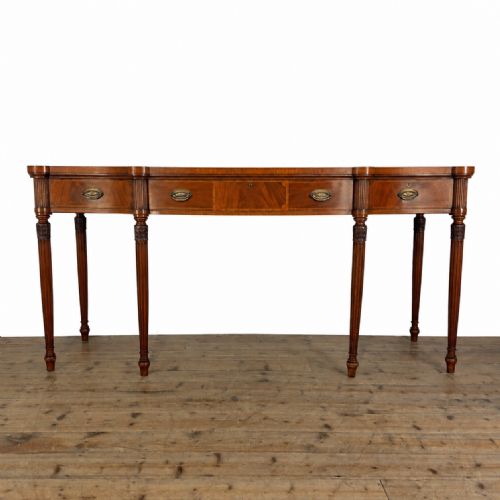
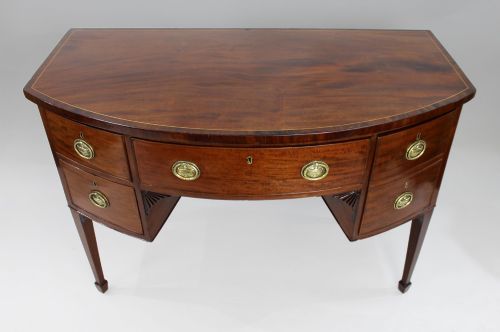
Antique Serving Buffet
An antique serving buffet is a formal dining room piece designed to hold dishes and silver, offering both surface space and storage.
Antique Serving Buffet
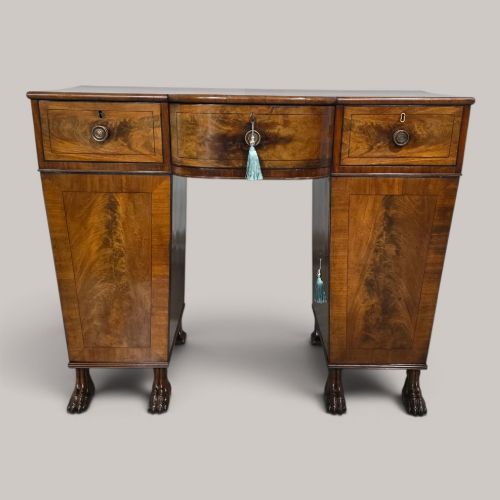
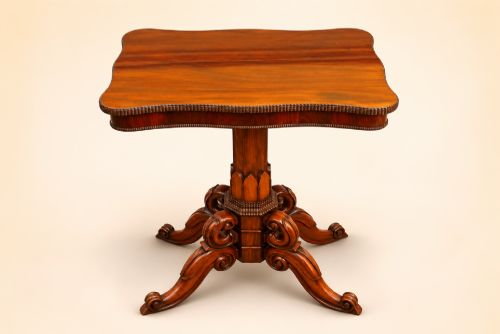
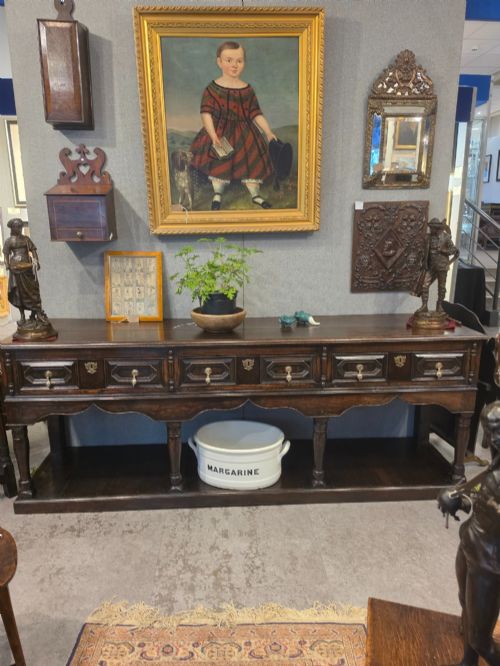
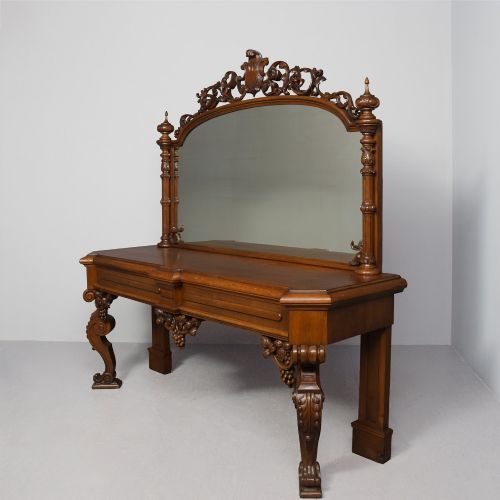
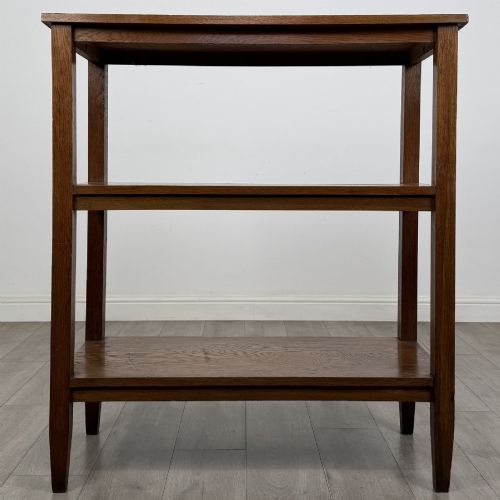
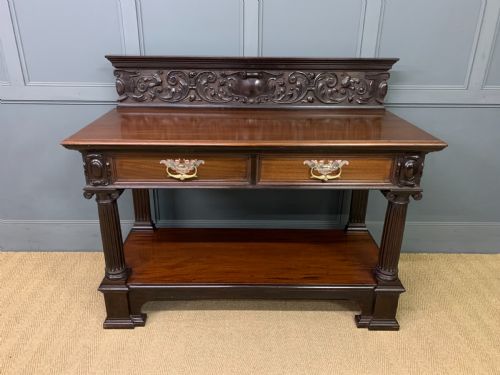
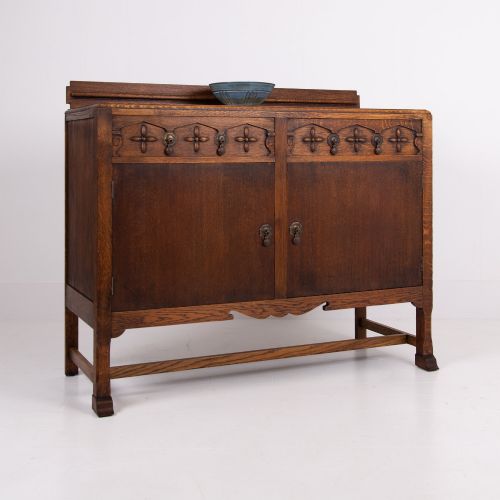
An antique serving buffet brings grand dining traditions into modern rooms through substantial forms in mahogany, oak, and walnut. When searching for an antique serving buffet, buyers encounter a range of related serving furniture including sideboards, console tables, and multi-tiered dumb waiters.
The selection spans from Georgian and Regency eras to Victorian and Edwardian revivals, with nineteenth-century mahogany pieces appearing most frequently. These items served dining rooms by holding food and tableware during large meals.
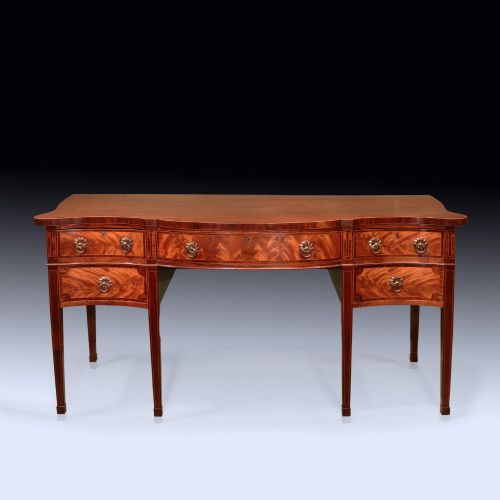
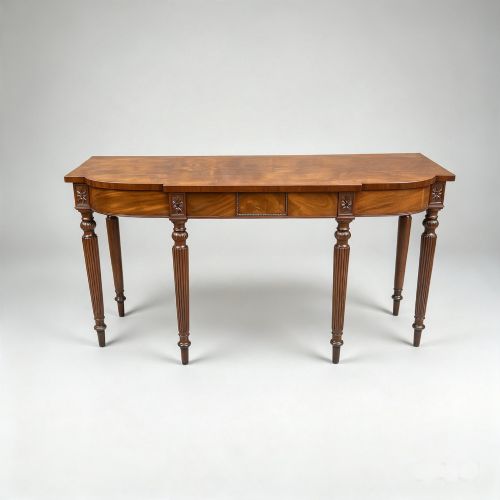
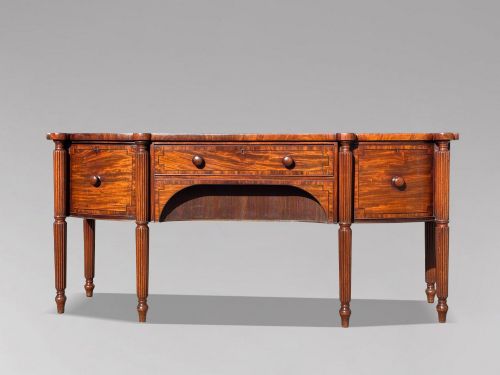
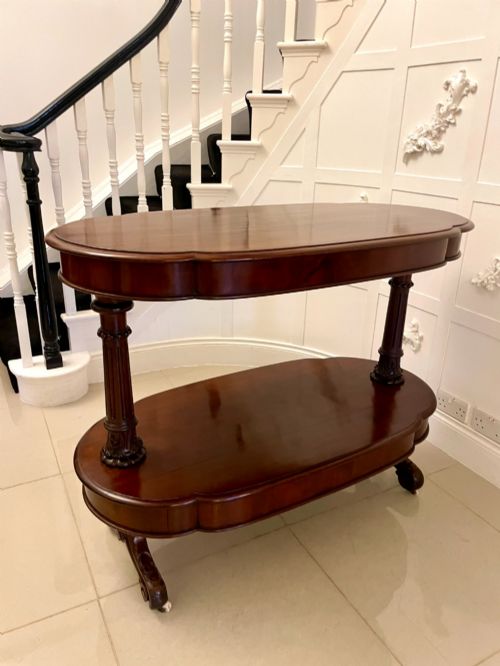
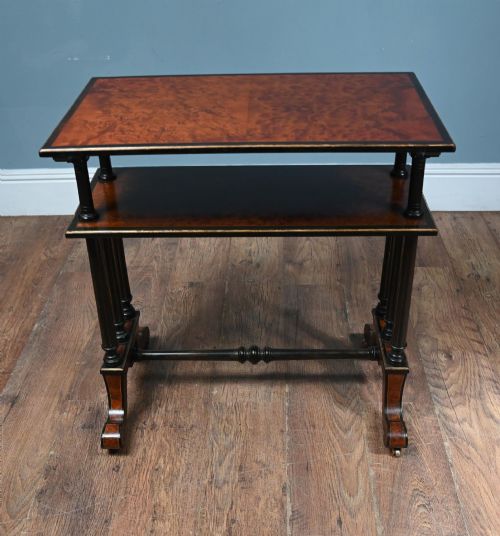
Different regional and period workshops produced distinct silhouettes, from serpentine console tables with neoclassical carving to breakfront sideboards and rise-and-fall tier trolleys. Buyers choose these forms to anchor a dining room with traditional storage and display surfaces.
How they were made
Cabinetmakers constructed these serving pieces primarily in solid mahogany and oak, often applying flame mahogany veneer or burr walnut to prominent surfaces. Timber selection governed the visual impact of the front elevation and top boards.
Craftsmen incorporated fine details such as boxwood stringing, wood inlay, and brass hardware to accent the primary woods. Structural joinery supported heavy marble tops on console tables and mechanical movements on rise-and-fall or telescopic dumb waiters.
Antique Serving Buffet Retail Price Guide 2026
Typical asking prices for serving buffet among the pieces listed under this phrase on Sellingantiques today, from the lower quarter to the upper quarter. They describe what is for sale here now, not the wider market.
Listings feature serving pieces spanning the eighteenth, nineteenth, and early twentieth centuries, dominated by mahogany construction with occasional oak and walnut examples.
What varies in quality
The distinction between standard utility items and exhibition pieces lies in the choice of timber and the ambition of the carving. Finely figured flame veneers and crisp neoclassical carving elevate a standard sideboard into a standout display piece.
Mechanical complexity also dictates grade, particularly in adjustable dumb waiters and rise-and-fall buffets where smooth operation of tiers reflects superior workshop execution. The crispness of inlaid boxwood and the integration of secondary timbers reveal the original maker's investment of time.
Maurice Adams·Gillows
The Antique Serving Buffet Glossary
- Dumb waiter
- A multi-tiered serving stand with rotating or fixed circular shelves, used for holding dishes without servants present. These pieces often feature three tiers supported by a central turned column.
- Breakfront
- A cabinet or sideboard whose central section projects forward from the flanking outer sections. This architectural arrangement creates depth and shadow across the front elevation.
- Serpentine
- A front contour characterised by a convex central section flanked by concave curves. This fluid line requires skilled carpentry to shape the timber accurately.
- Flame mahogany veneer
- A prized slice of mahogany timber cut from the fork of the tree where branches join the trunk. It yields a distinctive, fiery grain pattern used on drawer fronts and cabinet doors.
- Boxwood stringing
- Thin inlaid lines of pale boxwood set flush into darker wood surfaces to create geometric borders. This decorative technique frames panels and tabletops.
Antique Serving Buffet: Frequently Asked Questions
What is the difference between a buffet and a sideboard?
Buffets and sideboards both serve dining rooms, but traditional sideboard designs often include deep cupboards and drawers for heavy silver storage. Serving buffets and serving tables frequently emphasise surface display and lighter tiered structures.
Over the nineteenth century, cabinetmakers blurred these distinctions by combining cupboards, drawers, and tiered display shelves into unified dining furniture.
How were dumb waiters used in period homes?
Dining rooms utilised dumb waiters to hold extra plates, glassware, and courses so diners could serve themselves without domestic staff present. The tiered revolving shelves kept dishes within arm's reach around the dining table.
Victorian homes later adopted telescopic and rise-and-fall versions that allowed the shelves to adjust in height for different serving requirements.
How do I date a mahogany serving piece?
Cabinet construction, hardware styles, and timber choice help date these items from the eighteenth through the late nineteenth centuries. Georgian pieces often display straight-forward solid mahogany frames, while Regency and Victorian examples introduce elaborate veneers and mechanical tiers.
Revival pieces from the early twentieth century often mimic earlier Georgian or Sheraton proportions while employing twentieth-century secondary woods.
Where should I place a serving buffet at home?
Dining rooms provide the most authentic setting, offering a practical surface for serving food and displaying silver during meals. Large console and breakfront versions also suit entrance halls and spacious living areas as focal display tables.
Freestanding oval and marble-topped tables work well away from walls where their finished backs and carved pedestals remain visible.