





Antique Seaside Art
Antique seaside art captures the enduring appeal of the coast through historical paintings and crafted objects.
Antique Seaside Art
Antique seaside art encompasses visual representations and decorative items inspired by the coast, spanning from the Victorian era to the mid twentieth century. Buyers seeking this phrase encounter framed watercolours and oil paintings depicting harbours, cliffs, and shorelines alongside occasional folk art objects.
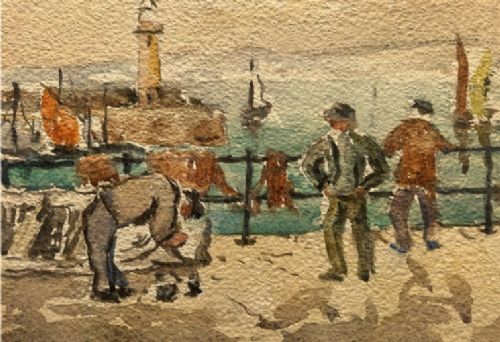
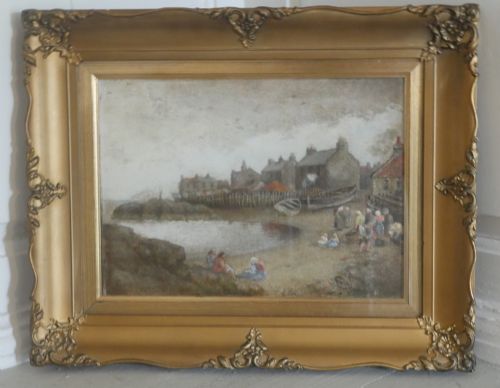
The pieces on this page lean heavily towards British and French coastal scenes, executed in watercolours on paper or oils on canvas and board. Traditional harbour views and figures on beaches dominate the forms available.
Materials and Methods
Artists relied primarily on watercolour on paper and oil paints applied to canvas, board, or panel to capture changing coastal light and weather. Framed works frequently utilise gilt wood mouldings that complement the palette of the period.
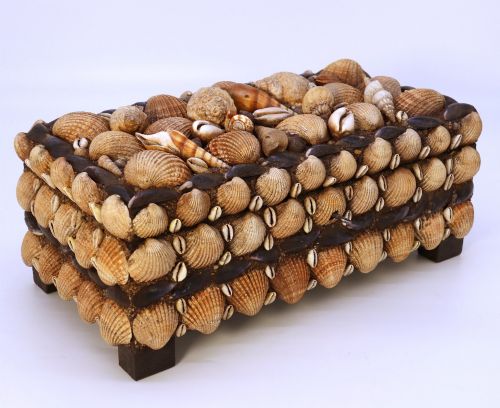
Beyond paintings, the evidence includes folk art shellwork boxes constructed from wood and layered shells, demonstrating domestic decorative craftsmanship from the interwar period.
Antique Seaside Art Retail Price Guide 2026
Typical asking prices for seaside art among the pieces listed under this phrase on Sellingantiques today, from the lower quarter to the upper quarter. They describe what is for sale here now, not the wider market.
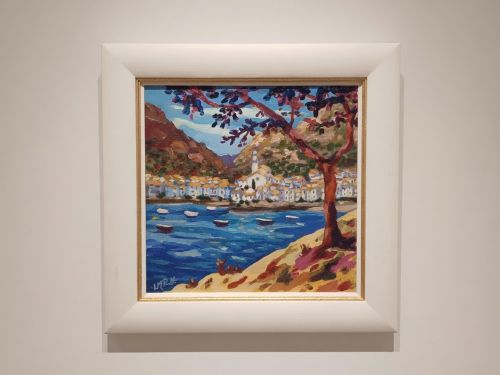
Represented artistic movements include British Impressionism, Post-Impressionism, and English Folk Art.
Quality and Execution
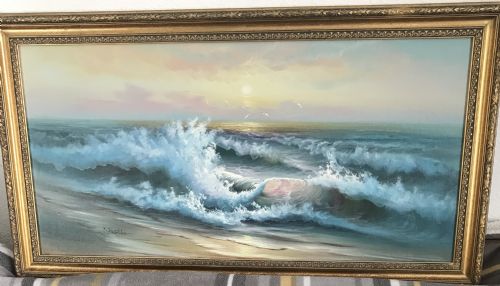
Quality rests in the artist's handling of light, atmosphere, and proportion, distinguishing competent topographical records from accomplished artistic interpretations of maritime life. Stronger works convey movement in the surf and atmospheric coastal haze with assured brushwork.
Condition of the paper or canvas also dictates standing, where clean watercolour sheets free of foxing and original unlined oil canvases command greater regard among collectors.
William Banks Fortescue·John Bedloe Goddard·Norman Lloyd·Sir Thomas Newenham Dean·William Raymond Dommersen·Sir William Russell Flint·H.E. Tidmarsh·Alfred Henry Vickers·Percy Brooke·Alfred Robert Quinton·James George Bingley·John Sanderson Wells·Robert Macaulay Stevenson·John Abernethy Lynas-Gray·William Greaves·James Watson·Edwin Bagshaw·James Kinnear·Yves Brayer·William Shayer·George Marks·Henry Valter·Harry John Pearson·John Duvall
The Antique Seaside Art Glossary
- Watercolour
- A painting method where fine pigment is suspended in a water-soluble binder on paper. It requires a swift hand to capture transparent washes of light over coastal scenes.
- Impressionism
- An art style focused on accurate depiction of light in its changing qualities. Practitioners prioritized visible brushstrokes and open compositions over rigid academic detail.
- Folk art
- Utilitarian or decorative objects created by self-taught or non-professional makers. Shellwork boxes exemplify this tradition through assembled natural materials.
- Gilt wood
- Timber frames or decorative objects coated with a thin layer of gold leaf or metallic powder. They provide traditional framing for nineteenth century oils and watercolours.
Antique Seaside Art: Frequently Asked Questions
What periods do these coastal artworks represent?
The selection spans the nineteenth century through to the mid twentieth century, encompassing Victorian, Edwardian, and interwar periods. Most works date from the late Victorian era up to the 1930s.
Artists during these decades documented both bustling fishing ports and quiet leisure beaches across Britain and France.
How were these paintings displayed originally?
Paintings from this era were typically housed in heavy gilt wood frames designed to isolate the canvas or paper from surrounding wall decorations. Many retain their period framing, which often shows historical wear.
Watercolours required glass protection to shield the delicate paper and pigments from moisture and light exposure.
What subjects appear most frequently in seaside art?
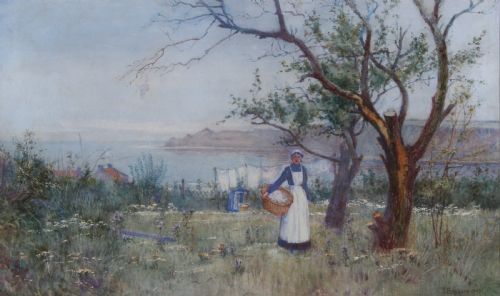
Common subjects include harbour scenes with working fishing boats, dramatic chalk cliffs, and sandy expanses populated by figures. Artists frequently painted everyday activities such as children playing, fishermen hauling catches, and families walking along the shore.
Topographical accuracy varies, with some works recording specific named locations like St Ives or Whitby while others capture general coastal moods.
Are all the items paintings?
While the majority of pieces are oil paintings or watercolours, the category also includes lithograph posters and decorative objects. Interwar folk art shellwork boxes appear alongside fine art canvases.
These varied items share a direct thematic connection to the maritime environment and coastal recreation.