





Antique Screw Earrings
Antique screw earrings offer secure screw-back fastenings paired with period gemstone and metal designs from the Victorian era to the mid-century.
Antique Screw Earrings
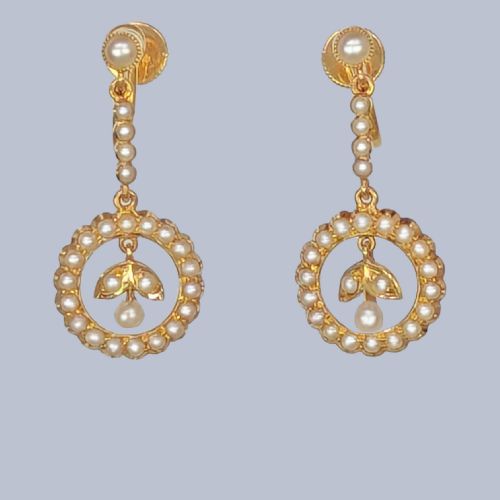
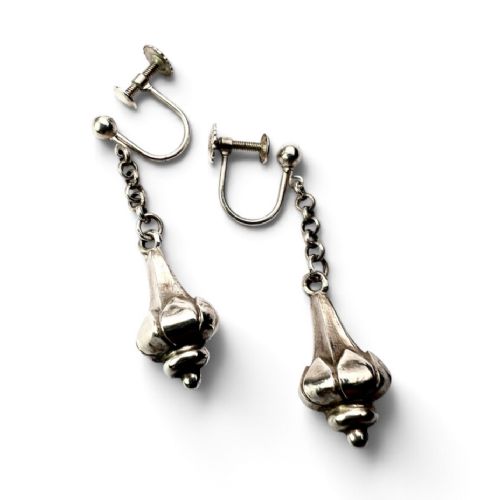
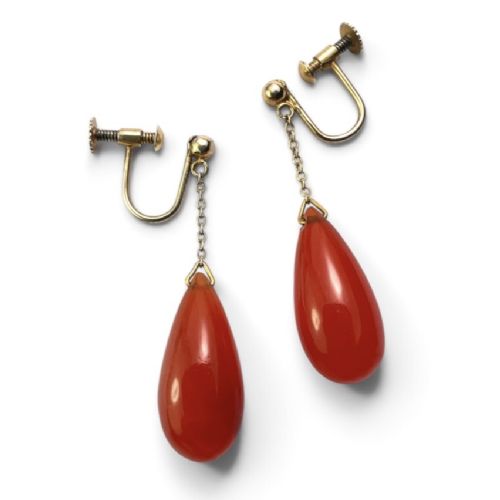
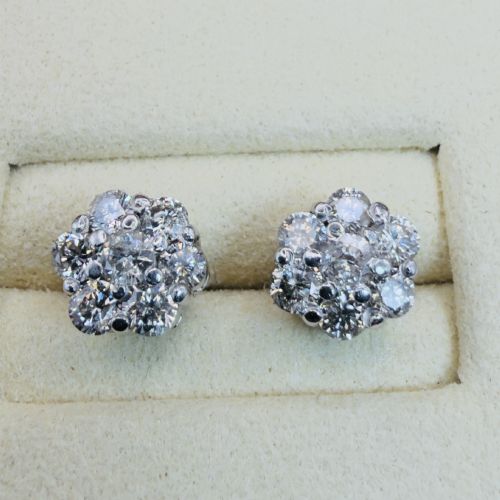
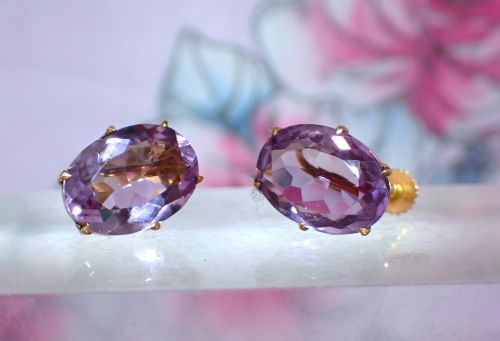
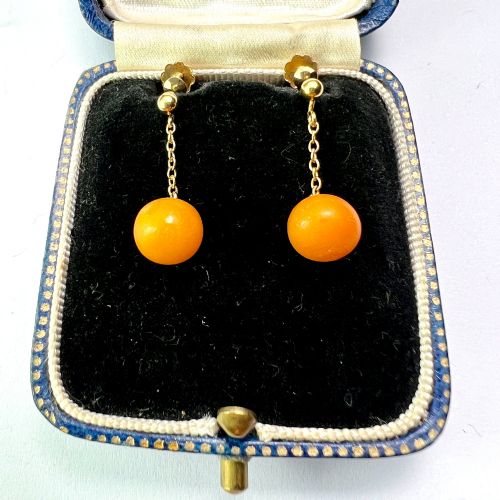
Antique screw earrings feature a threaded post and screw mechanism designed for non-pierced lobes, appearing across Victorian, Edwardian, Art Deco, and mid-century periods. The selection spans delicate drop styles, chain drops, tassel fringes, and floral or geometric cluster studs.
Victorian and Edwardian iterations frequently combine yellow gold or sterling silver with pearls, amethysts, garnets, and paste stones. Later twentieth-century examples introduce white gold, platinum, diamonds, and jade set within screw-back or screw-stud configurations.
How they were made
Goldsmiths utilised nine-carat and fifteen-carat gold alongside sterling silver and platinum to form the mountings, often incorporating fine wirework and chain links for drop designs. Screw mechanisms required precise threading on the back posts to allow tension adjustment against the lobe.
Gemstones including diamonds, amethysts, pearls, coral, amber, and paste were hand-set into bezels, collets, or cluster arrangements. Enamel and marcasite details frequently appear alongside carved stones such as jade and white chalcedony.
Antique Screw Earrings Retail Price Guide 2026
Typical asking prices for screw earrings among the pieces listed under this phrase on Sellingantiques today, from the lower quarter to the upper quarter. They describe what is for sale here now, not the wider market.
Screw earrings let you wear elaborate Victorian fringes and sunburst clusters without ever committing to a piercing needle.
What varies in quality
The precision of the screw mechanism determines functional longevity, with smoother threads and robust hinges marking superior manufacture. Metal purity and the weight of the gold or platinum chassis also dictate the tier of the piece.
Stone selection ranges from natural diamonds, tourmalines, and seed pearls to moulded paste and glass, altering the overall calibre. Hand-carved organic materials like coral, jade, and amber reflect individual artisan skill.
The Antique Screw Earrings Glossary
- Screw-back
- A fastening mechanism utilising a threaded post and a small rotating nut to secure the earring without a pierced hole. This design allows the wearer to adjust the pressure on the earlobe.
- Paste
- Hand-cut lead glass used as a gemstone substitute in historical jewellery. It was often backed with foil to enhance colour and brilliance.
- Cluster
- A stone setting arrangement where a central gem is surrounded by a tighter group of smaller stones. This configuration maximises visual impact and light reflection.
- Chain drop
- An earring design where the decorative lower element hangs suspended from a fine metal chain. Movement is a key characteristic of this style.
Antique Screw Earrings: Frequently Asked Questions
Are screw-back earrings comfortable to wear?
The threaded mechanism allows the wearer to control the exact pressure applied to the earlobe, preventing the pinching often associated with standard clip-ons.
Most people find that adjusting the screw so it rests snugly rather than tightly provides comfortable wear throughout the day.
How do I date an antique screw earring?
Dating relies on combining the metal alloy used, the cut of the gemstones, and the prevailing style of the period, such as Victorian floral clusters or Art Deco geometric motifs.
Examining the construction of the screw mechanism itself can also offer clues regarding the manufacturing decade.
Can screw earrings be converted to posts?
While conversion is physically possible by a jeweller, altering the original mounting removes the historical integrity of the piece.
Most collectors prefer to keep the original screw-back mechanism intact as part of the item's mechanical history.
What metals were commonly used?
Gold in nine-carat and fifteen-carat purities, alongside sterling silver, dominates the nineteenth and early twentieth-century examples.
Later pieces from the mid-century introduce platinum and nine-carat white gold alongside traditional yellow gold.