



Antique Schoolhouse Lighting
Antique schoolhouse lighting brings enduring utility and robust character to modern spaces through time-tested industrial design.
Antique Schoolhouse Lighting
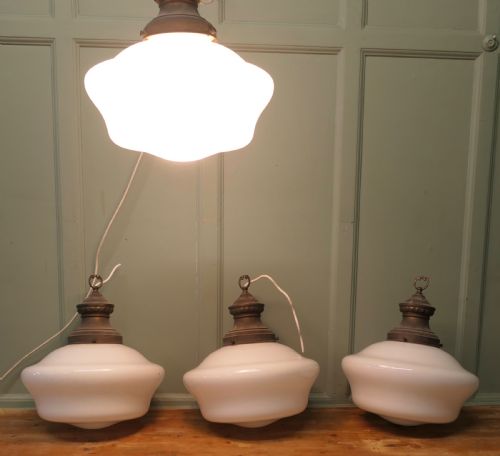
Antique schoolhouse lighting spans pendant lights, ceiling lights, and wall clocks produced across the early twentieth century. These items reflect the utilitarian demands of public institutions, churches, and industrial buildings from periods including nineteen hundred, nineteen-twenty, and nineteen-thirty.
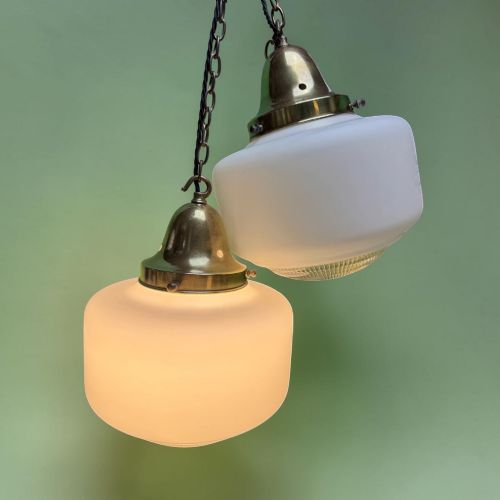
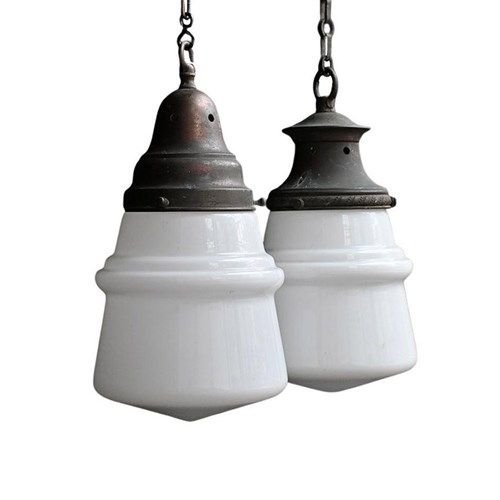
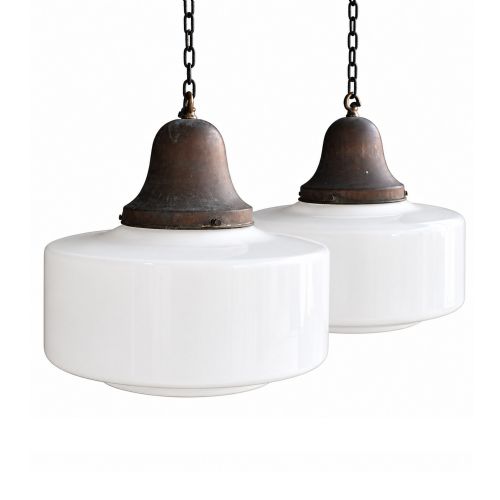
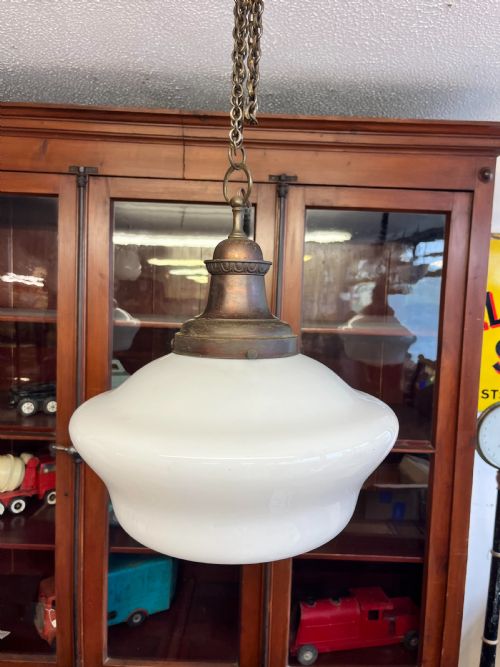
Pendant lights dominate the available selection, often featuring generous glass shades designed to distribute light evenly across large rooms. Industrial ceiling lights and drop-dial wall clocks complement these fixtures, utilising oak cases, brass, and iron to achieve a cohesive aesthetic.
The aesthetic vocabulary encompasses early twentieth-century design alongside distinct influences from the Edwardian, Art Deco, Industrial, and mid-century modern movements. Pieces range from matched pairs of church lights to single reeded opaline pendants.
How these fixtures were constructed
Makers shaped illumination through the extensive use of opaline glass, opal glass, and clear glass for shades. These translucent materials softened harsh illumination while maintaining high output for large communal spaces.
Supporting structures rely on robust metals such as brass, copper, and iron for durability in heavy-use environments. Wall clock housings incorporate light oak cases paired with mechanical movements like fusee mechanisms.
Antique Schoolhouse Lighting Retail Price Guide 2026
Typical asking prices for schoolhouse lighting among the pieces listed under this phrase on Sellingantiques today, from the lower quarter to the upper quarter. They describe what is for sale here now, not the wider market.
Schoolhouse lighting includes an eight-inch dial wall clock tucked neatly among the glass pendants.
What separates standard examples from exceptional pieces
Quality differences emerge in the scale and preservation of glass shades, where unusually large dimensions or specialised reeded designs indicate higher ambition. Matched sets and pairs demonstrate greater desirability than isolated fixtures.
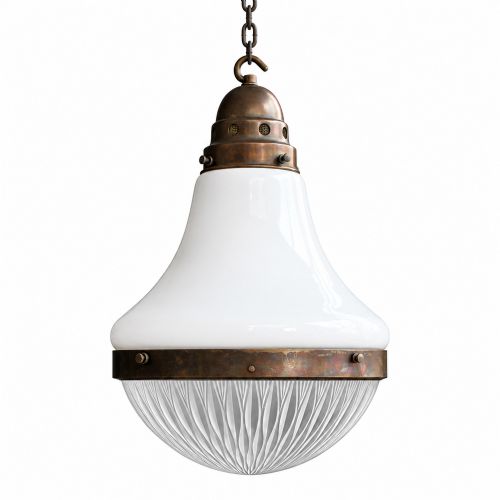
Material selection dictates distinction, with prismatic glass treatments such as double prismatic formations offering superior optical refraction compared to plain clear alternatives. The integration of finished brass or copper hardware similarly elevates an object above basic utility.
The Antique Schoolhouse Lighting Glossary
- Opaline glass
- A milky, translucent glass variant that diffuses light softly without glaring. It appears frequently in pendant and chapel lighting.
- Fusee
- A mechanical clock movement using a cone-shaped pulley to maintain even tension as the mainspring unwinds. This mechanism ensures accurate timekeeping in drop-dial wall clocks.
- Prismatic glass
- Glass moulded with small optical ribs or prisms designed to bend and direct light efficiently. Double prismatic versions feature multi-layered refraction.
- Drop-dial wall clock
- A clock featuring a circular dial face mounted above an elongated wooden case. The light oak version holds an eight-inch dial.
- Reeded
- Surface decoration consisting of parallel convex ridges carved or moulded into the material. This technique adds texture to opaline pendants.
Antique Schoolhouse Lighting: Frequently Asked Questions
What defines antique schoolhouse lighting?
These fixtures encompass utilitarian pendant and ceiling lights manufactured during the early twentieth century for public buildings and institutions.
Materials typically include milk or opaline glass shades suspended from brass, copper, or iron hardware designed for longevity.
How were schoolhouse lights originally used?
Institutions hung these pendants high in classrooms, hallways, and chapels to provide broad, even illumination for students and congregations.
The durable glass and metal construction withstood daily vibrations and the demands of large public spaces.
How do I style these lights at home?
Single pendants suit hallways or kitchens, while matched sets provide balanced illumination over dining tables or kitchen islands.
Pairing industrial metal fixtures with complementary wall clocks helps anchor the historical aesthetic in a contemporary room.
How do I identify different periods?
Early twentieth-century pieces often display straightforward utilitarian forms, whereas items from the nineteen-twenties and nineteen-thirties incorporate Art Deco or industrial styling.
Observing specific glass treatments, such as reeded surfaces or prismatic moulding, helps narrow down the production era.