





Antique Schoolhouse Light
These antique schoolhouse light fixtures bring honest industrial utility and robust character directly into modern domestic spaces.
Antique Schoolhouse Light
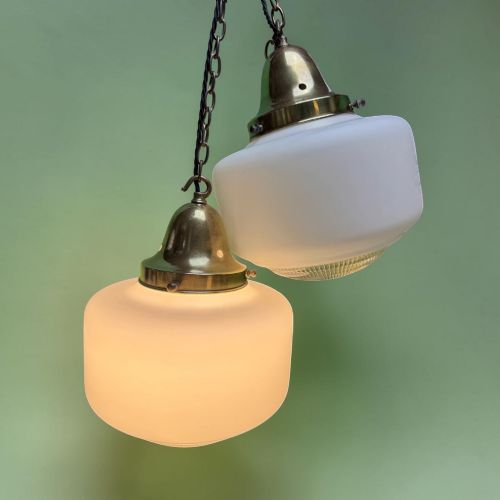
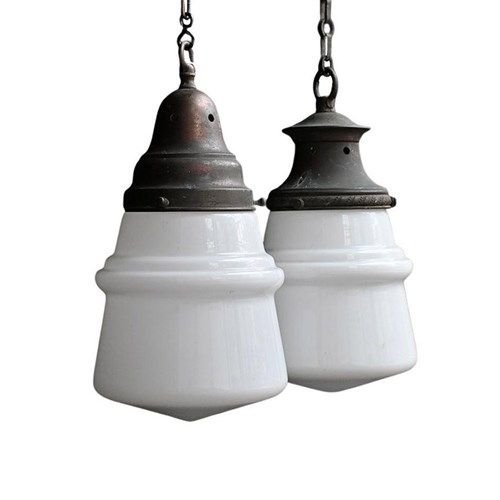
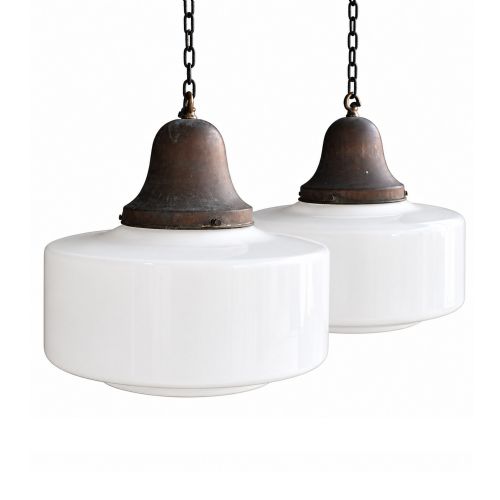
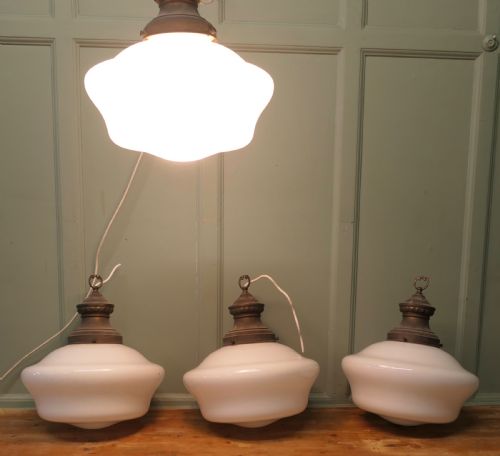
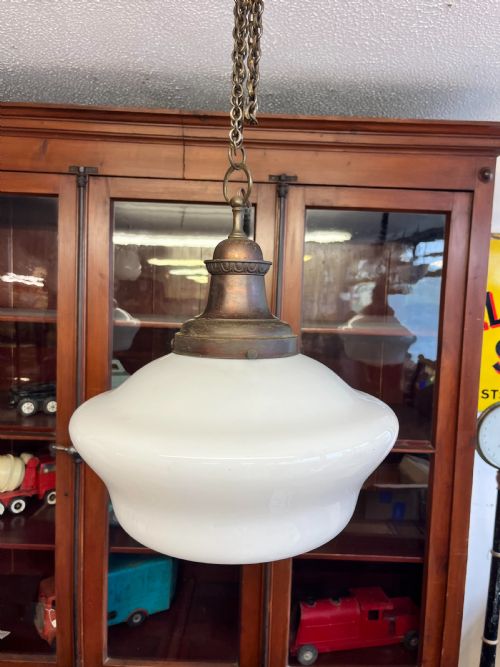
An antique schoolhouse light represents the sturdy and functional illumination once fitted in public institutions, chapels, and industrial buildings during the early decades of the twentieth century. When searching for an antique schoolhouse light, buyers encounter ceiling-hung pendants and larger multi-light configurations designed for utilitarian spaces.
The inventory on this page spans the Edwardian era through the Art Deco and Mid-Century Modern periods, capturing industrial aesthetics. Pendant lights and ceiling lights dominate the current selection, alongside occasional utility pieces like drop-dial wall clocks housed in light oak.
Most examples originate from the 1900s to the 1930s, reflecting a time when durability dictated design. Buyers frequently find matching pairs and sets of four, which suit larger rooms or commercial interiors requiring uniform illumination.
How they were made
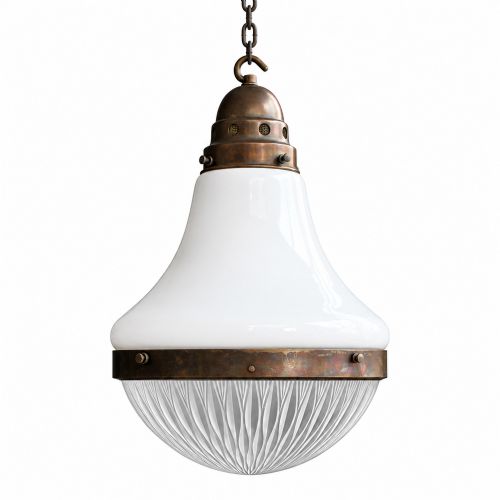
The construction relies on robust metals paired with specialised glass diffusers designed to spread light evenly without harsh glare. Makers utilised brass, copper, and iron for structural galleries, fitments, and suspension hardware.
Shades were formed from opaline glass, opal glass, clear glass, and reeded or prismatic designs such as Holophane glass. These materials provided both functional resilience and controlled light distribution suited for classrooms and high-ceilinged halls.
Antique Schoolhouse Light Retail Price Guide 2026
Typical asking prices for schoolhouse light among the pieces listed under this phrase on Sellingantiques today, from the lower quarter to the upper quarter. They describe what is for sale here now, not the wider market.
One wall clock snuck into the lighting listings because it shares the same schoolhouse origin as the pendants.
What varies in quality
Quality rests upon the purity and finish of the glass shades, with opaline and prismatic examples showing superior optical control. Heavier metal galleries cast in brass or copper indicate higher production standards than lighter iron alternatives.
Original matching sets and matched pairs command greater consideration because finding identical survivors from institutional buildings remains difficult. The presence of makers' patterns, such as reeded surfaces or named prismatic lines, distinguishes standard utility items from finer architectural commissions.
The Antique Schoolhouse Light Glossary
- Opaline glass
- A milky-white translucent glass that diffuses light softly while hiding the bulb within. It was widely used in institutional lighting to reduce glare.
- Holophane
- A brand of scientific glass featuring precise prismatic ribs designed to bend and direct light efficiently. These shades are prized for their optical performance.
- Pendant light
- A single light fixture suspended from the ceiling by a cord, chain, or metal rod. This form directs task or ambient illumination downward.
- Drop-dial clock
- A wall-mounted timepiece featuring a circular dial above a tapered wooden drop case that houses the pendulum. They often shared space in the same public buildings as large pendants.
- Art Deco
- A design style emerging in the interwar years characterised by geometric symmetry and streamlined forms. It influenced the shaping of metal galleries and glass shades during the 1920s and 1930s.
Antique Schoolhouse Light: Frequently Asked Questions
What rooms suit these lights?
These pendant fixtures fit well in hallways, kitchens, and high-ceilinged living spaces where robust character is desired.
Their substantial drop and institutional presence require adequate vertical clearance to hang properly.
How do I hang a heavy pendant?
Installation typically requires securing the fixture directly to ceiling joists using appropriate hooks or mounting plates.
Due to the weight of thick glass shades and metal galleries, professional electrical installation is recommended.
Are original shades fragile?
The historic glass used in these fixtures is thicker than modern domestic glass but still vulnerable to sharp impacts.
Handling during cleaning requires removing the shade from the metal gallery on a stable surface.
How do I date an industrial light?
Dating relies on material combinations, screw thread types, and design motifs associated with periods like Edwardian or Art Deco.
Utility fixtures often bear subtle manufacturing stamps or patent marks hidden inside the metal fitter neck.