



Antique Satinwood Caddy
An antique satinwood caddy brings warm golden timbers and delicate marquetry into a room, offering both period charm and practical storage.
Antique Satinwood Caddy
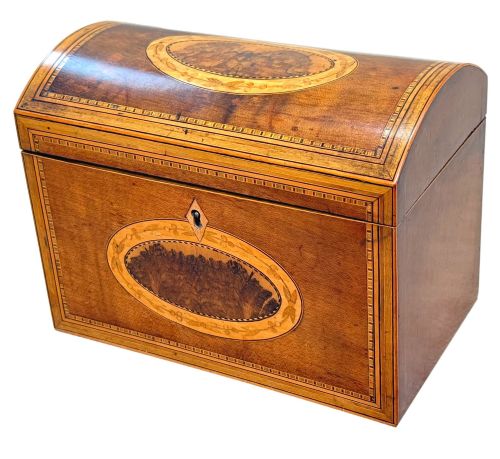
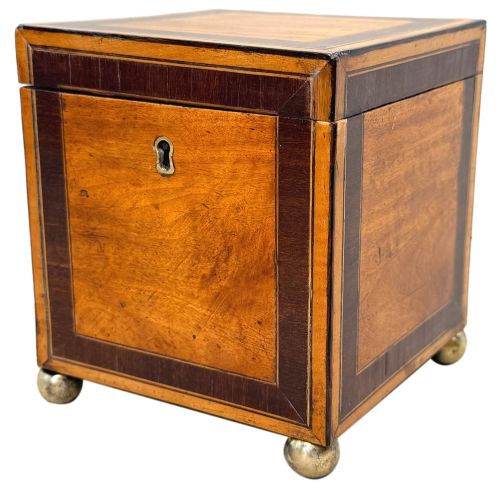
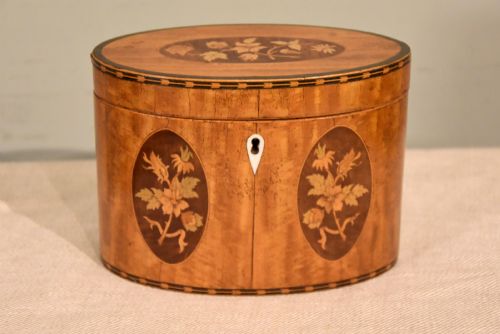
An antique satinwood caddy is primarily found in forms designed for storing tea, featuring rectangular, oval, octagonal, or sarcophagus shapes from the Georgian, Regency, and Victorian eras. These pieces often arrive with contrasting wood inlays such as harewood, mahogany, and boxwood, highlighting the natural shimmer of the primary timber.
Buyers will most frequently meet tea caddies and decorative boxes dating from the late 18th century and the George III period, alongside occasional adaptations like stationery boxes and needlework chests. The wood grain possesses a characteristic sheen that catches light differently depending on the viewing angle, distinguishing it from simpler domestic timbers.
Origins stretch across the 18th, 19th, and early 20th centuries, taking in Sheraton and neoclassical design movements that prioritised symmetry and refined decorative motifs. While tea caddies dominate the selection, related forms such as small chests of drawers and wine coolers occasionally appear carrying similar satinwood surfaces.
Materials and construction methods
Cabinetmakers utilised satinwood veneers laid over sturdy secondary woods, applying meticulous boxwood, ebony, and bone stringing to define the edges and panels. Marquetry and butterfly inlays were carefully cut and fitted by hand to create central medallions and geometric borders.
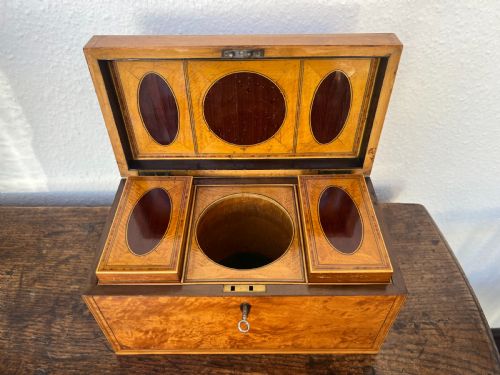
Metal mounts in brass provided functional security for locks and hinges, whilst internal elements such as glass mixing bowls and foil linings completed the traditional construction of tea storage vessels.
Antique Satinwood Caddy Retail Price Guide 2026
Typical asking prices for satinwood caddy among the pieces listed under this phrase on Sellingantiques today, from the lower quarter to the upper quarter. They describe what is for sale here now, not the wider market.
Current listings feature pieces spanning the 18th century through the Edwardian period, incorporating materials such as brass, bone, mahogany, and boxwood.
Judging the standard of execution
Quality rests upon the crispness of the wood inlay and the depth of figure within the satinwood veneer itself, where superior examples exhibit a chatoyant ripple across the surface. The precision of the mitred joints and the survival of original brass hardware elevate an object's standing.
The sophistication of the design, such as an unusual oval or octagonal profile combined with contrasting harewood and calamander bandings, separates standard production boxes from masterwork pieces of the Sheraton period.
The Antique Satinwood Caddy Glossary
- Satinwood
- A durable tropical timber valued for its pale yellow colouring and natural chatoyant sheen that reflects light like satin. It served as a primary veneer for high-end cabinetmaking throughout the Georgian and Regency periods.
- Harewood
- Sycamore wood that has been stained grey, frequently utilised in conjunction with satinwood to provide cool contrasting tones in neoclassical and Sheraton marquetry.
- Sarcophagus form
- A box shape featuring a domed or peaked lid reminiscent of a stone coffin, popular for Regency tea caddies and decorative chests.
- Marquetry
- Decorative patterns formed by fitting together thin pieces of coloured wood, veneer, and bone to create pictorial or geometric designs on box surfaces.
- Stringing
- Thin inlaid lines of contrasting timber used to outline panels, drawers, and lids on period cabinetry and boxes.
Antique Satinwood Caddy: Frequently Asked Questions
What were antique satinwood caddies used for?
These boxes originally stored expensive dry tea leaves, which were kept under lock and key to protect them from household servants and damp conditions. Many interiors included internal compartments and glass mixing bowls for blending different varieties.
Over subsequent generations, many of these containers transitioned into general storage for jewellery, stationery, and needlework as tea packaging evolved and loose leaf storage habits changed.
How do I date an antique satinwood caddy?
Dating relies on observing the overall form, construction methods, and prevailing stylistic traits such as Sheraton neoclassical inlays or Regency sarcophagus proportions. Eighteenth-century examples often display simpler oval or octagonal geometries with delicate shell motifs.
Internal fittings, such as handwritten paper labels, original blown glass bowls, and hand-cut dovetailing on internal tea canisters, also provide reliable clues to the decade of manufacture.
How should I care for satinwood furniture?
Satinwood benefits from being placed away from direct sunlight and strong heat sources, which can dry out the veneers and cause the timber to fade or warp. Maintaining a stable indoor humidity preserves both the wood and the delicate inlays.
Occasional dusting with a soft, dry cloth is sufficient, avoiding silicone-based polishes that can build up and dull the natural chatoyant lustre of the surface.
Are all satinwood caddies made of solid wood?
Most period caddies utilise satinwood as a fine veneer applied over a stable secondary timber carcass, such as pine or mahogany, which prevented the wood from splitting. This technique allowed cabinetmakers to display the most highly figured sections of grain across the exterior surfaces.
Solid satinwood is less common for the main body due to the tendency of the timber to move, though smaller mouldings and feet were frequently turned from solid stock.