
Antique Sapphire Diamond Jewellery
Antique sapphire diamond jewellery brings together deep blue corundum and brilliant stones in rings, pendants and earrings from the Victorian period to the mid-century.
Antique Sapphire Diamond Jewellery
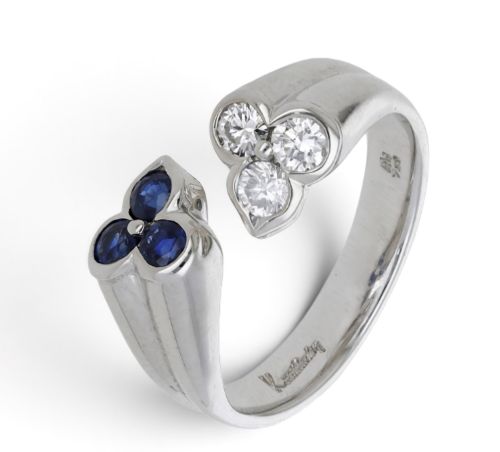
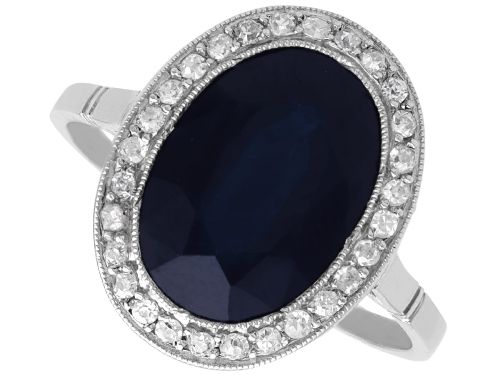
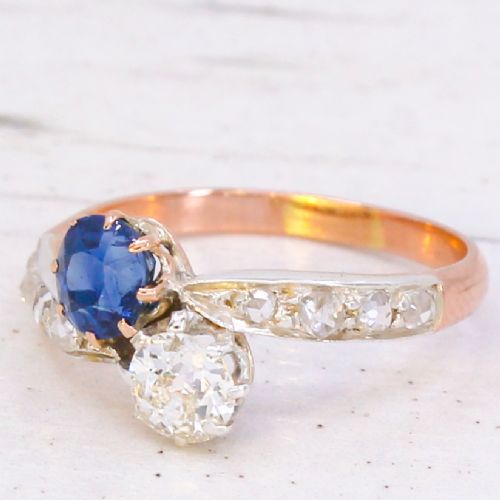
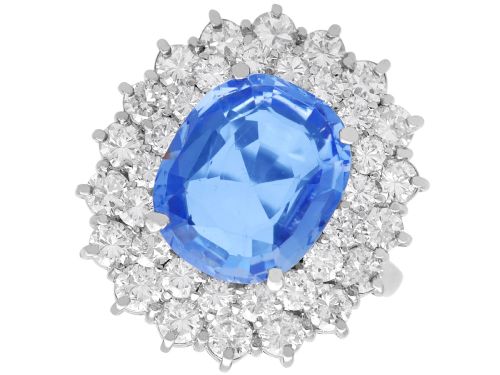
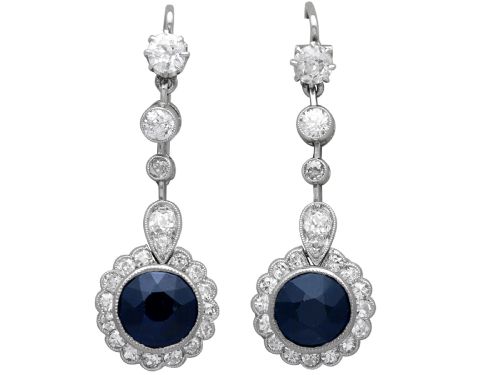
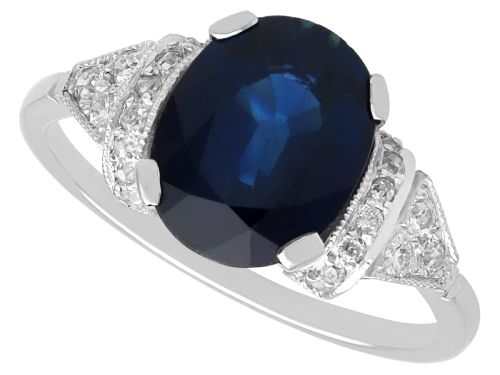
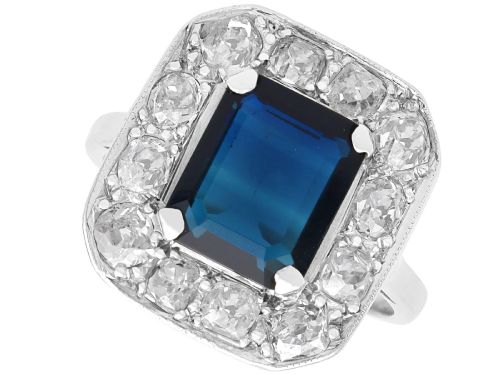
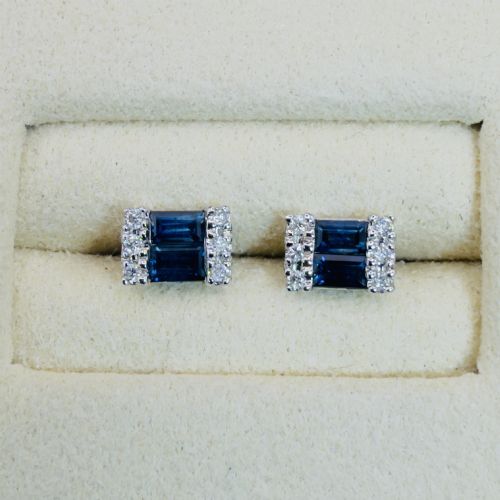
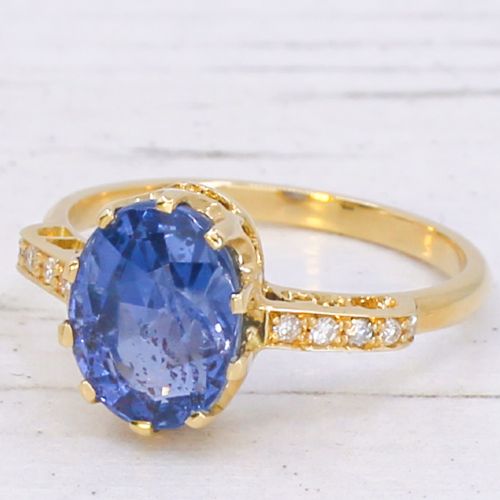
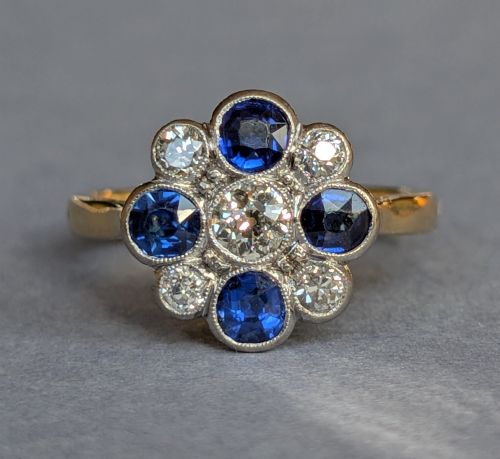
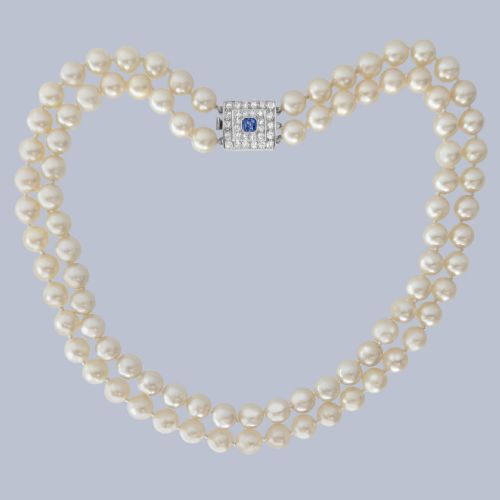
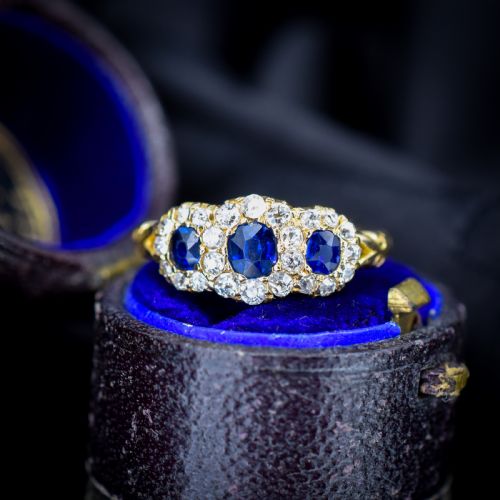
The most common form on this page is the cluster ring, where a central blue sapphire is encircled by diamonds, set in platinum or 18ct gold. These pieces also appear as necklaces featuring sapphire and diamond clasps, alongside stud earrings and target rings dating from the 1900s to the 1960s.
How they were made
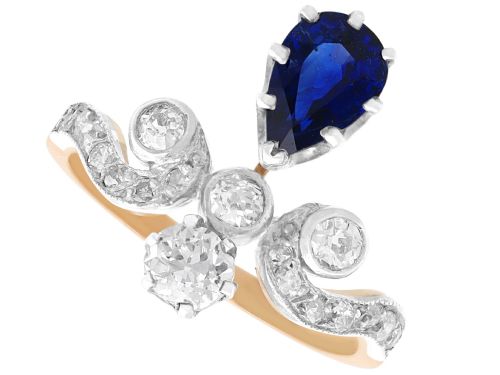
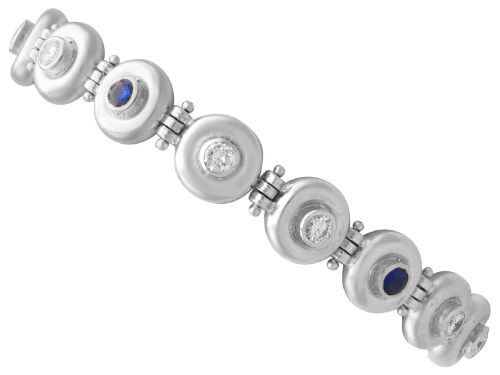
Goldsmiths utilised 18ct yellow gold, 18ct white gold, and platinum to fabricate the mounts, often combining metals during the Edwardian and Art Deco periods to frame the stones effectively. Platinum gained favour in the 1920s for its strength and bright finish, allowing intricate calibre cuts and fine wirework.
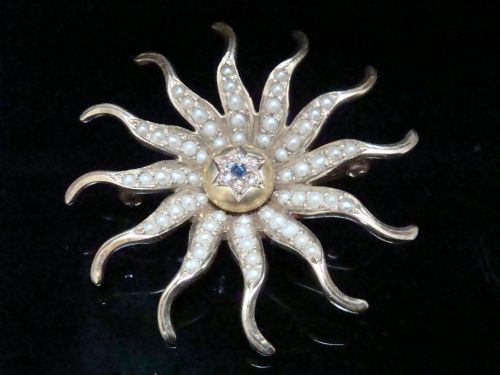
Gemstones were shaped by hand using old mine cuts and old cut diamonds alongside oval, round, and calibre cut sapphires. Stones originated from sources including Ceylon, Burma, and Kashmir, set securely within cluster, gypsy, and starburst configurations.
Several pieces combine blue sapphires with pink sapphires, emeralds, and tourmalines in a single colourful Edwardian harem ring.
What varies in quality
The standard of antique sapphire diamond jewellery depends upon the natural origin and thermal treatment of the sapphire, with unheated stones from sources like Burma, Ceylon, and Kashmir commanding greater attention. The saturation of the blue hue and the clarity of the surrounding diamonds influence the visual impact of each piece.
Manufacturing technique and metal choice also define the tier of a piece, from heavy platinum Art Deco mounts with precise calibre-cut stones to simpler 18ct yellow gold Victorian gypsy rings. The integrity of the original claw or bezel settings and the minimal wear to facets determine the preservation of the item.
The Antique Sapphire Diamond Jewellery Glossary
- Calibre cut
- Stones cut specifically in square, rectangular, or trapezoidal shapes to fit tightly together in geometric patterns. This technique is typical of Art Deco design.
- Cluster ring
- A ring featuring a prominent central gemstone surrounded by a border of smaller stones, usually diamonds. This layout maximises the optical brilliance of the face.
- Old mine cut
- An early diamond cut characterised by a cushion shape, high crown, small table, and large culet. It was shaped by hand under candlelight before modern machinery.
- Gypsy ring
- A band where the gemstones are flush-set directly into the thick metal of the shank rather than held in raised claws. This style dates back to the Victorian period.
- Target ring
- A circular cluster design featuring concentric rings of contrasting gemstones or metal around a central stone. The concentric bands create a concentric bullseye pattern.
Antique Sapphire Diamond Jewellery: Frequently Asked Questions
What periods do these pieces come from?
These items originate from the Victorian, Edwardian, and Art Deco eras, extending into the nineteen-fifties and sixties.
Each period brings distinct metal choices and mounting styles, from yellow gold gypsy settings to platinum geometric designs.
How do I care for antique sapphire jewellery?
Clean these items gently using warm water, mild soap, and a soft brush to remove everyday oils from the stones.
Avoid harsh ultrasonic cleaners, particularly on pieces with unheated stones or delicate pearl elements.
Are the sapphires treated?
Some sapphires carry certifications noting they are unheated, while others possess standard treatments common in period gems.
Laboratory reports usually accompany significant unheated stones from origins like Burma or Kashmir.
What metals were used in these mounts?
Goldsmiths utilised eighteen-carat yellow gold, eighteen-carat white gold, and platinum across these pieces.
Platinum became particularly common during the Art Deco period for its bright, durable framework.