






Antique Sampler Wall Art
These antique sampler wall art pieces bring centuries of hand-stitched domestic history and intricate needlework directly to the wall.
Antique Sampler Wall Art
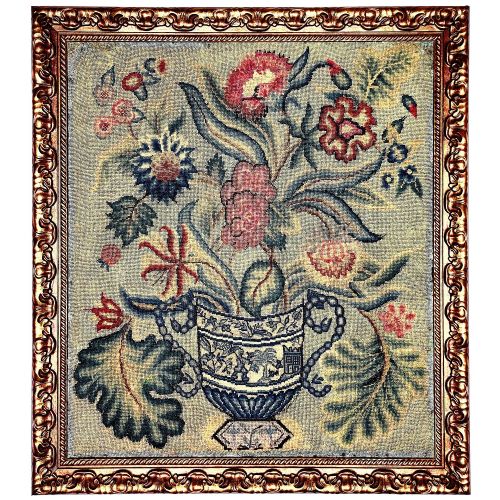
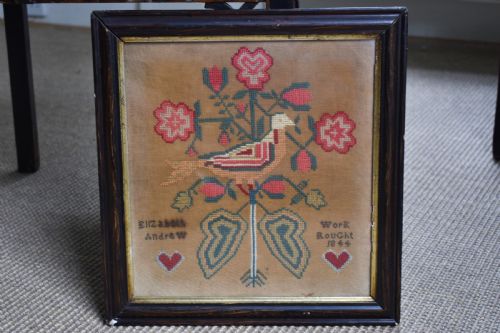
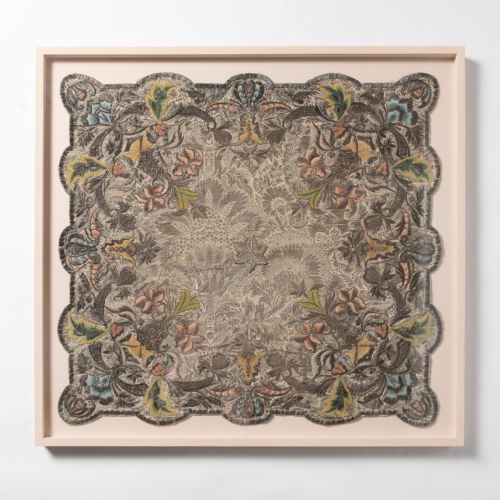
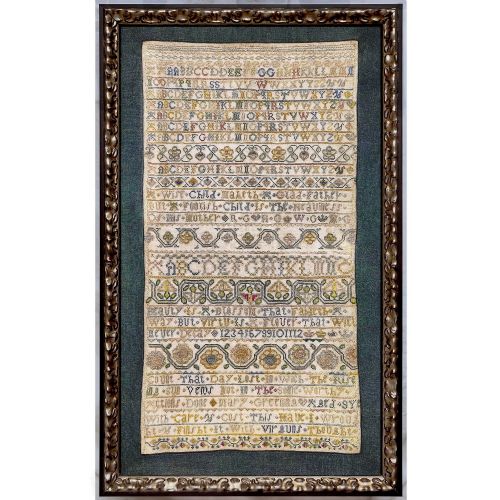
Antique sampler wall art encompasses needlework panels, alphabet samplers, map samplers, and pictorial embroidered scenes created across several centuries. These textile works range from early band samplers to Victorian wool work, framed panels, and tapestry pieces.
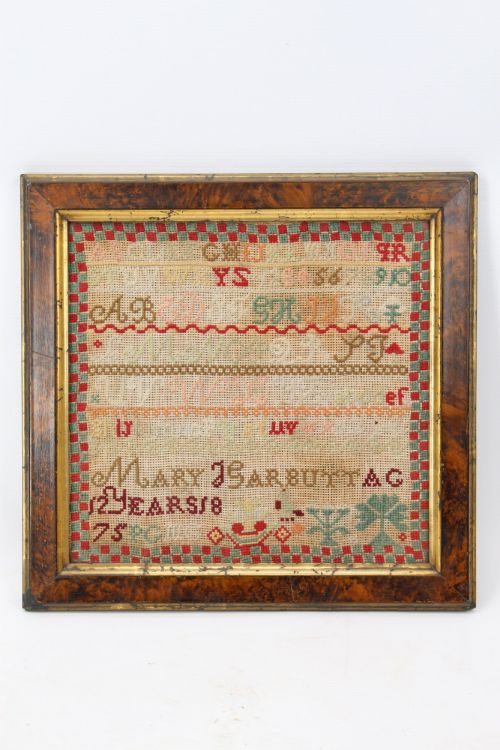
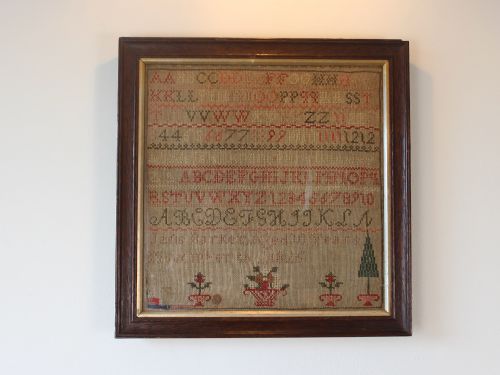
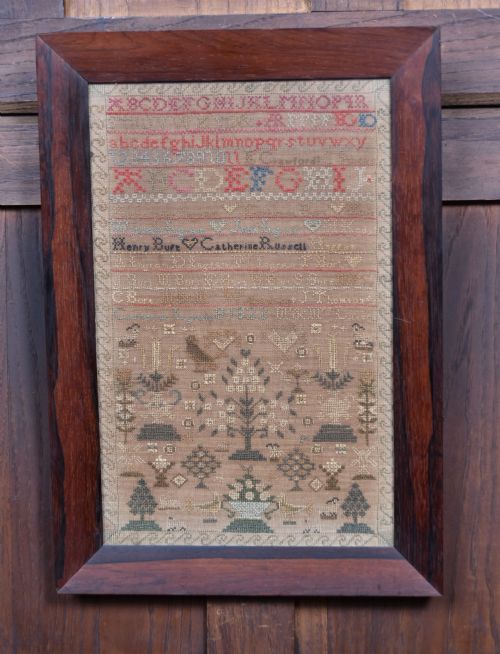
The pieces most frequently encountered span the 18th century and the Victorian era, alongside Georgian examples and occasional 20th-century folk art pieces. Makers often included names, ages, dates, and schools, preserving personal histories within each stitched composition.
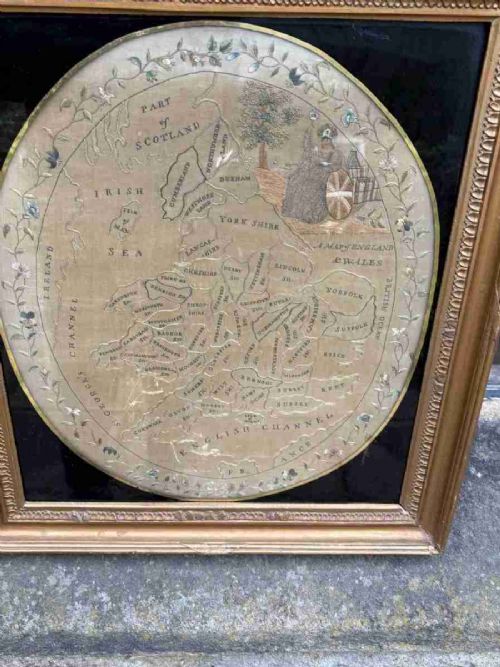
Geographic origins include English, Scottish, and French examples, incorporating styles from the Regency, Stuart, William IV, and Edwardian periods. Common formats feature framed needlework pictures and detailed maps of England and Wales alongside traditional alphabets.
Materials and construction techniques
The foundational support relies on woven linen and canvas, providing a stable grid for intricate hand embroidery. Stitches utilise wool, silk, silk floss, and thread to build up pictorial scenes, lettering, and decorative borders.
Execution involves various needlework techniques, including gros point, petit point, and tapestry work. Many surviving examples retain their period timber frames, such as rosewood, which protect the delicate textiles beneath glass.
Antique Sampler Wall Art Retail Price Guide 2026
Typical asking prices for sampler wall art among the pieces listed under this phrase on Sellingantiques today, from the lower quarter to the upper quarter. They describe what is for sale here now, not the wider market.
Materials recorded in the pieces include silk floss, wool, thread, glass, and rosewood framing.
Differentiating quality in needlework
Quality rests upon the precision of the stitch work, the complexity of the design, and the survival of the original materials. Finer examples display meticulous control of silk and wool thread, creating detailed figurative scenes or legible cartography rather than simple repetitive alphabets.
The condition of the textile and the retention of identifying details like the maker's name, age, and date elevate a piece. Additionally, the presence of an original period frame, such as rosewood with intact glass, preserves the integrity of the fabric.
The Antique Sampler Wall Art Glossary
- Band sampler
- An early form of sampler featuring horizontal rows of diverse embroidery patterns and stitches. These pieces served as pattern references for young stitchers.
- Map sampler
- A specialised needlework piece depicting geographical regions, often showing counties and country boundaries. Mary Pinfold's map of England and Wales is a notable Regency example.
- Gros point
- A coarse needlepoint stitch executed on canvas, typically worked in wool. It provides a durable, textured surface suited to pictorial wall panels.
- Petit point
- A fine needlepoint stitch worked over a single thread of canvas, allowing for high detail and shading in faces and landscapes. It frequently appears alongside coarser gros point work.
- Alphabet sampler
- A textile piece focused primarily on alphabets and numerals, demonstrating the maker's proficiency in lettering. These often include dates and the maker's age.
Antique Sampler Wall Art: Frequently Asked Questions
What is an antique sampler?
An antique sampler is a piece of needlework created to demonstrate and practice embroidery skills. They often feature alphabets, numbers, motifs, and the maker's name and age.
These textiles were typically produced by young girls as part of their education. Today, they survive as framed wall art preserving personal and social history.
How do I date a sampler?
Many samplers include an embroidered date and the maker's age, providing a direct point of reference. Stylistic details, such as the lettering style, motifs, and framing materials, help narrow down the period.
Evolving stitching techniques and regional schooling patterns also offer clues to the decade of manufacture. Comparing the fabric and thread types against known examples confirms the era.
How should I display needlework safely?
Needlework samplers require protection from direct sunlight to prevent the fading of silk and wool threads. Framing behind glass creates a barrier against dust, moisture, and handling.
Keeping pieces away from damp environments and extreme temperature fluctuations preserves the linen and canvas support. Professional conservation framing ensures the textile remains uncompressed and stable.
What are map samplers?
Map samplers are specialised embroidered pieces that depict geographical maps, frequently focusing on England and Wales. Young scholars stitched these as part of geography and needlework instruction.
These works combine cartographic accuracy with decorative borders and stitch variations. They represent a distinct intersection of education, geography, and textile art.