
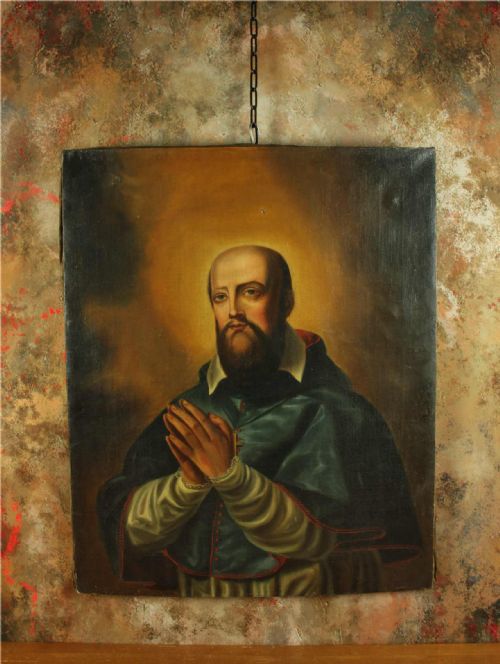
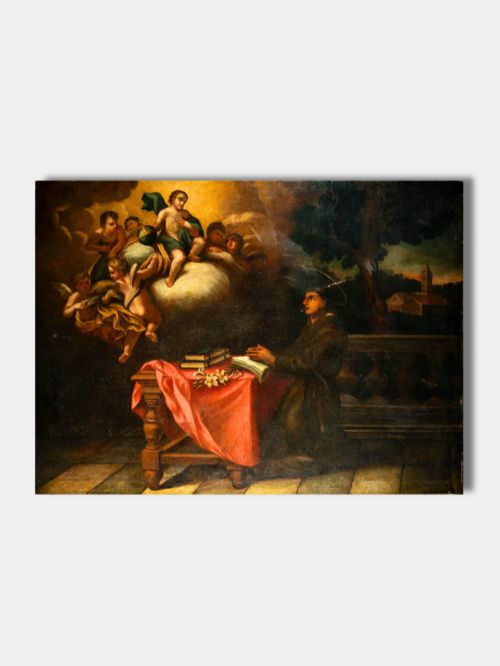


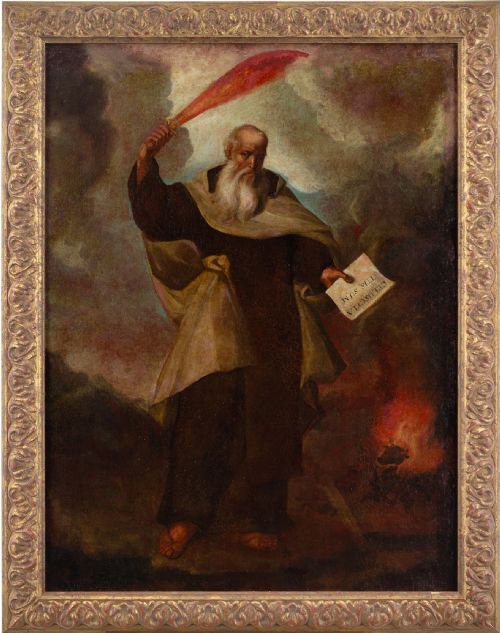


Antique Saint Painting Canvas
An antique saint painting canvas brings centuries of devotional portraiture and Italian, Spanish, or Russian workshop traditions directly into a room.
Antique Saint Painting Canvas
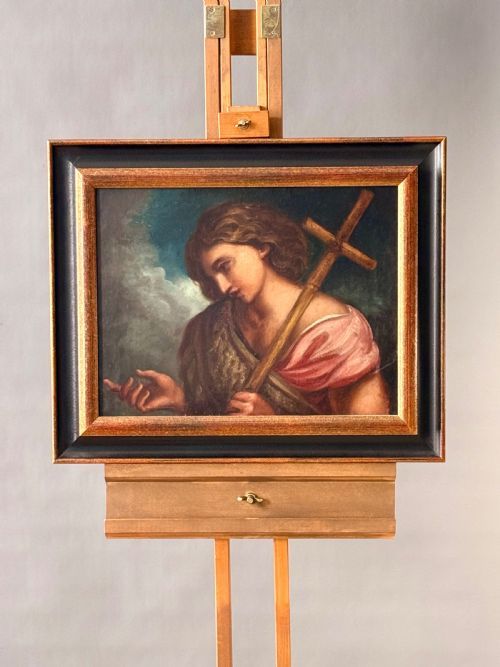
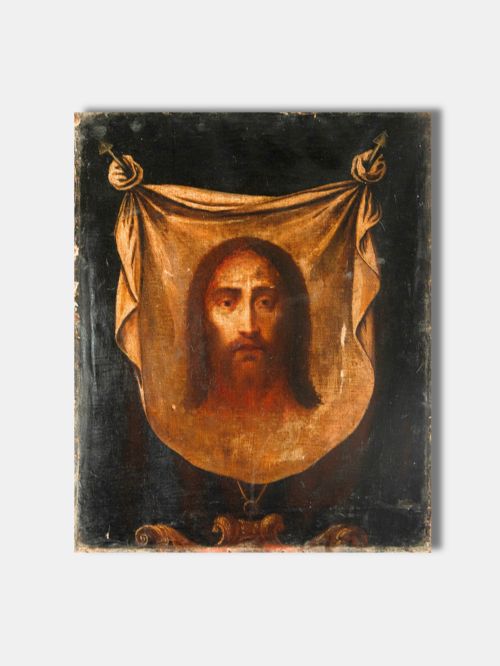
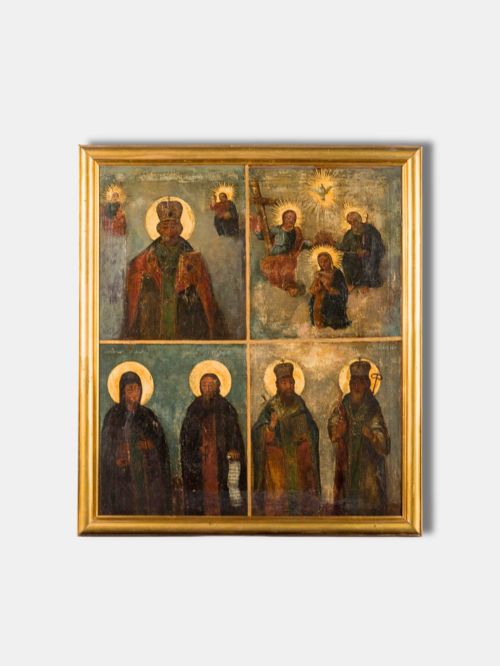
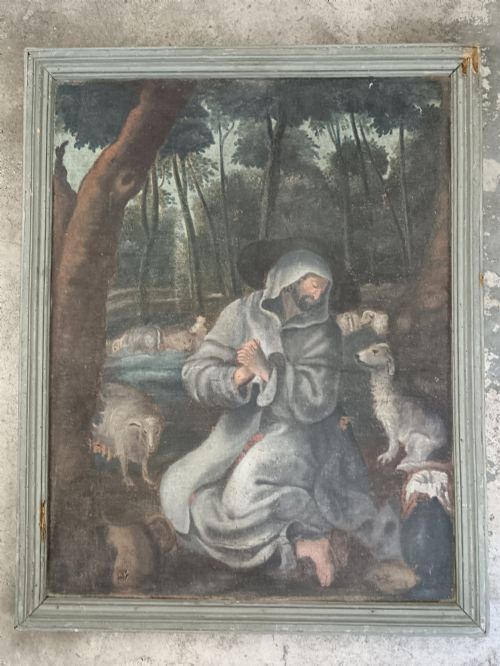
When someone searches for an antique saint painting canvas, they encounter centuries of religious fine art rendered in oil or tempera upon woven supports. These works range from monumental Spanish compositions and intimate Italian school portraits to Russian Orthodox icons featuring gold leaf. Subjects frequently include figures such as Saint John the Baptist, Saint Francis, and the Holy Family.
The selections available here lean heavily toward seventeenth- and eighteenth-century European traditions, alongside nineteenth-century interpretations. Pieces span distinct regional schools, including Emilian, Madrid, and colonial workshops, often capturing after-works of Renaissance masters like Raphael and Correggio. Buyers also find British military portraits bearing saintly names and nineteenth-century processions.
How they were made
Painters applied oil and tempera pigments directly onto prepared canvas, sometimes utilising wood supports or incorporating gold leaf and giltwood framing. The application of oil paint allowed artists to build rich layers, visible in techniques like pentimento where earlier compositional thoughts show through the surface.
Workshops operated under the direction of master painters, producing both original devotional studies and careful copies after renowned predecessors. The integration of canvas preparation and traditional framing completed each fine art painting before it left the studio.
Listings feature canvases executed in oil and tempera, spanning seventeenth-century Spanish and Italian Baroque styles to nineteenth-century British depictions.
What varies in quality
The distinction between a standard workshop piece and a masterwork lies in the dexterity of brushwork and the depth of psychological expression captured in the saint's face. Skilled handling of light and shadow, characteristic of Baroque and Renaissance revival movements, elevates certain canvases above routine decorative copies.
Provenance and attribution also differentiate the works, as documented connections to known workshops or followers of historical painters add substantial contextual weight. The integrity of the original canvas and the harmony of the accompanying giltwood frame further distinguish the finest examples.
Francesco Solimena Workshop·Gaspar de Figueroa·Pierre Mignard Studio·Frederick Tully Lott·Sir Godfrey Kneller
The Antique Saint Painting Canvas Glossary
- Pentimento
- Alteration in a painting evidenced by previous strokes showing through the upper layers. This phenomenon reveals the artist changing their composition during the creative process.
- Tempera
- Fast-drying painting medium consisting of coloured pigments mixed with a water-binder such as egg yolk. It frequently appears on earlier religious icons before oil techniques dominated.
- Giltwood
- Wood carved and covered with a thin layer of gold leaf or gold paint. This material forms the ornate frames traditionally housing antique fine art paintings.
- Baroque
- Artistic style originating around sixteen hundred, characterised by exaggerated motion and clear detail used to produce drama. Many seventeenth-century religious canvases display these theatrical traits.
- Icon
- Panel painting of a holy person used as an object of veneration in Orthodox Christian traditions. These works often incorporate gold leaf and specific symbolic imagery.
Antique Saint Painting Canvas: Frequently Asked Questions
What periods do these paintings cover?
The available works span from the seventeenth and eighteenth centuries through the nineteenth century, including specific dates around seventeen-fifty and eighteen hundred.
These pieces reflect distinct historical movements such as the Baroque period, Spanish and Italian regional schools, and Russian Orthodox traditions.
Who are the common subjects depicted?
Paintings frequently feature revered figures like Saint John the Baptist, Saint Francis of Assisi, Saint Jerome, and the Holy Family.
Other compositions portray specific historical or religious moments, such as the Virgin and Child, saintly processions, and various biblical conversions.
How do you identify a school of painting?
Attributions rely on stylistic traits, brushwork techniques, and regional characteristics associated with specific artistic centres like Madrid or Emilia.
Many listings identify works as following or being after established masters such as Raphael, Correggio, and Murillo.
What materials support these artworks?
The primary support is canvas, often painted in oil or tempera, sometimes accompanied by gold leaf accents.
Secondary materials include wood panels for icons and elaborate giltwood frames designed to house the fine art pieces.