

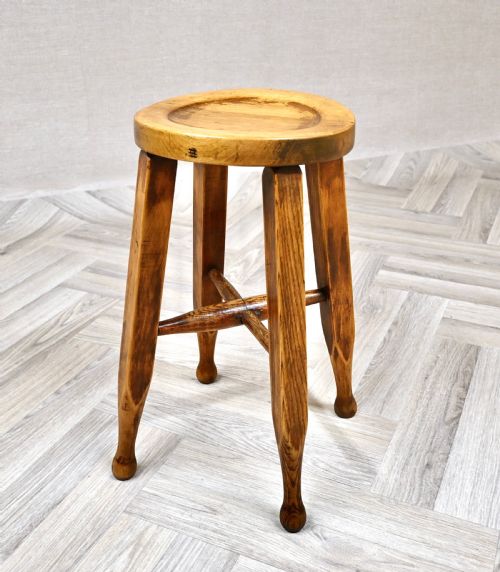


Antique Round Stool
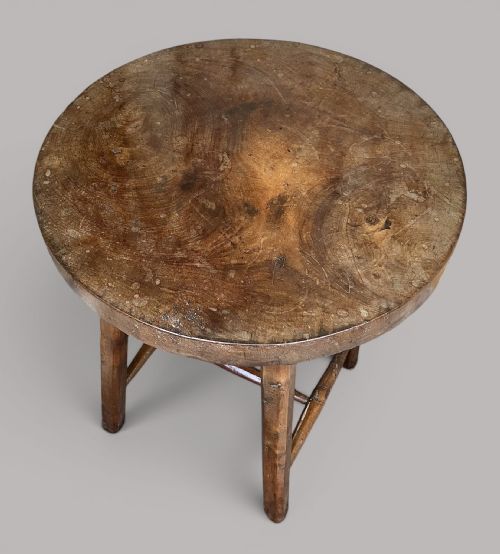
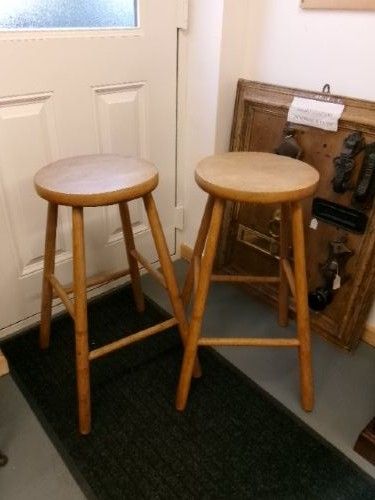
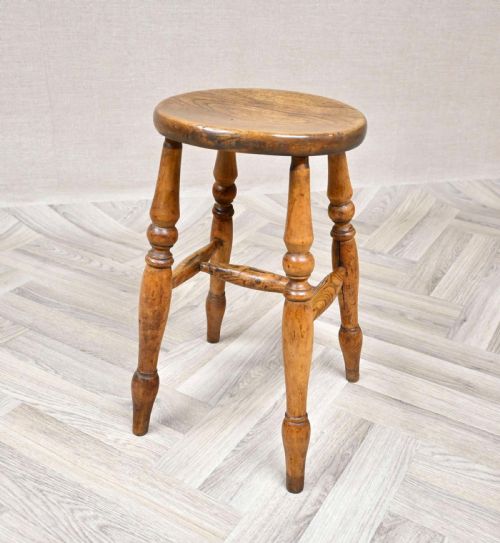
An antique round stool offers compact seating with a distinct circular top, ranging from rustic country elm to carved Victorian walnut.
Antique Round Stool
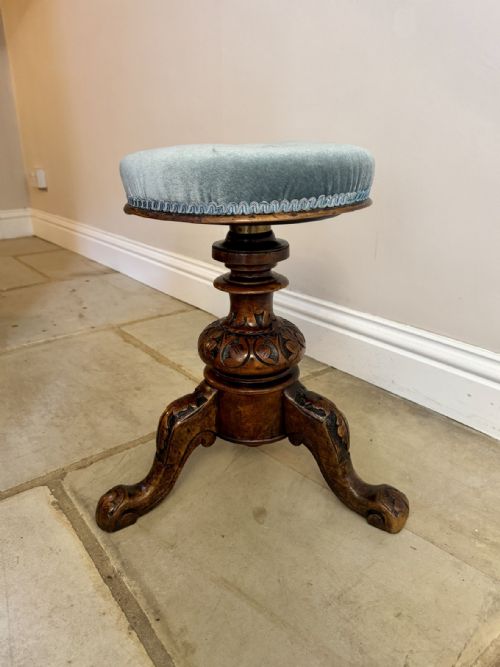
The selections span simple three-legged country pieces in elm alongside highly finished Victorian walnut and rosewood piano seats. Formats extend from small needlepoint footstools to tall breakfast or bar heights, reflecting the broad utility demanded of round seating in historic interiors.
Materials and construction methods
Makers utilised native hardwoods such as elm, oak, and beech for sturdy vernacular frames and solid circular tops, turning legs on lathes and joining seats with traditional pegged construction. Walnut and mahogany appear frequently in finer Victorian piano stools, often combined with complex mechanical height-adjustment screws.
Upholstered versions incorporate textile coverings like velvet, needlepoint tapestry, silk, and kilim over padded interiors, sometimes finished with deep buttoning or intricate beadwork. Structural integrity relies on sound timber seasoning and secure joinery, whether built for rustic farmhouse use or formal drawing room display.
Listings feature 19th Century, Victorian, Georgian, and 1920s pieces in elm, walnut, mahogany, oak, and beech.
Judging quality and execution
Quality rests upon the selection of timber and the precision of the turning and carving, where dense pollard oak or figured walnut separates standard utility items from superior examples. Finely articulated legs, crisp hand-carved details on frames, and robust mechanical adjusting screw actions indicate superior workshop standards.
The preservation of original upholstery materials, textiles, and underlying stuffing dictates the desirability of soft-topped examples. Solid timber surfaces show quality through deep natural grain figuring, honest patination, and the absence of crude structural alterations.
Gillows·H Brooks and Co.
The Antique Round Stool Glossary
- Vernacular
- An object made by local craftsmen following traditional regional designs rather than academic pattern books. These pieces prioritise practical utility and local timber availability.
- Tunbridge Ware
- Small woodwork decorated with precise mosaic patterns formed from tiny pieces of naturally coloured woods. This technique creates geometric and pictorial surface decoration on Victorian boxes and stools.
- Revolving piano stool
- A seat featuring a threaded spindle or screw mechanism that allows the user to alter the height by spinning the top. These pieces were common in nineteenth-century music rooms.
- Cricket table
- A small, light occasional table typically featuring three legs and a round wooden top. The design provides stable placement on uneven historic floorboards.
Antique Round Stool: Frequently Asked Questions
How do I date an antique round stool?
Dating relies on identifying timber species, construction techniques, and stylistic markers such as Victorian turned legs or Georgian proportions. Tool marks and fastener types offer further clues to the period of manufacture.
Comparing pieces against documented examples in archive records helps confirm whether a stool dates to the nineteenth century or earlier eras.
Were piano stools adjustable?
Many nineteenth-century piano stools feature mechanical systems that allow the circular top to rise or lower. These mechanisms use central wooden screws or metal threaded spindles.
Users turned the seat to match their preferred height for playing keyboard instruments correctly.
What timber was used most often?
Makers selected local hardwoods based on availability and the intended function of the piece. Elm and oak appear frequently in country and vernacular pieces for their strength.
Walnut, mahogany, and rosewood were chosen for formal Victorian seating where dark polished grain was desired.
How should I clean a wooden top?
Maintain finished timber surfaces by dusting gently with a soft dry cloth to remove grit. Avoid modern silicone polishes that build up residue over historic varnish.
Nourish dry wood periodically with appropriate microcrystalline wax or traditional beeswax applied sparingly according to the manufacturer guidance.
Can these stools be used daily?
Solid timber examples and sturdy piano stools remain structurally sound for everyday seating in modern rooms. Check joints periodically to ensure legs remain firmly fixed.
Upholstered footstools function well as secondary seats or rests, provided the historic textiles are treated with care.