




Antique Rosewood Flip Top
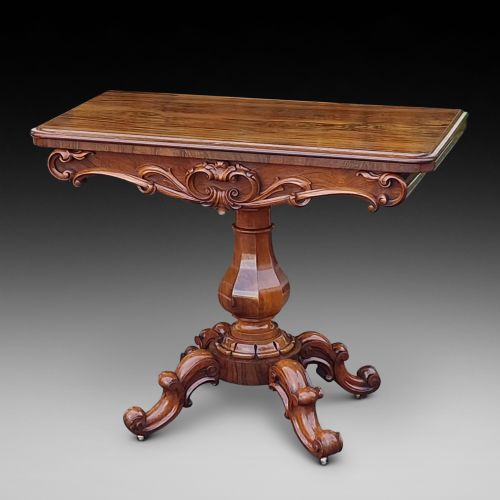
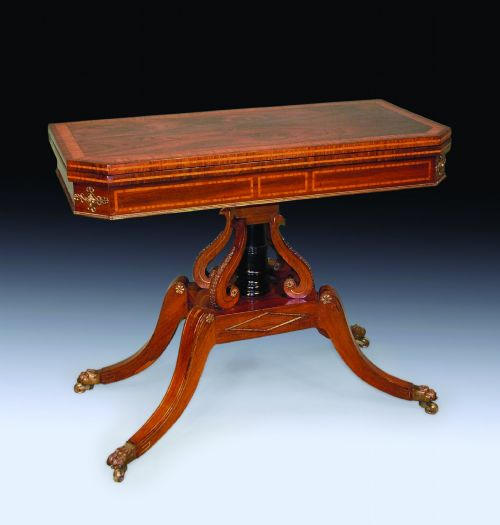
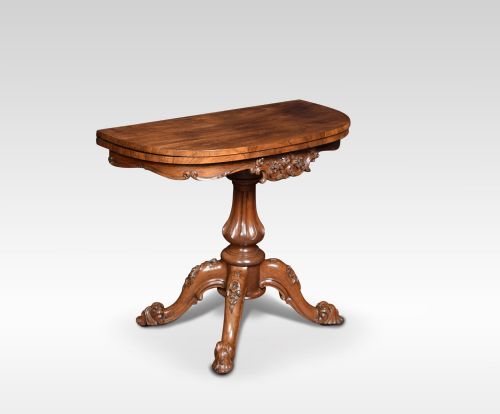
These antique rosewood flip top tables bring dual-purpose elegance to a room, turning a compact console into a proper card or tea table.
Antique Rosewood Flip Top
An antique rosewood flip top table functions as a dual-purpose piece, shifting easily from a side console to a larger surface for cards, tea, or games. When you search for an antique rosewood flip top, you meet tables built primarily during the Regency, William IV, and Victorian periods.
The most common forms on this page include card tables, tea tables, and games tables featuring fold-over or snap-top mechanisms. These objects served polite society for evening entertainment and social gatherings in formal drawing rooms.
How they were made
Cabinet makers utilised dense timber foundations faced with figured rosewood veneer, often selecting palisander or goncalo alves for distinctive grain patterns. Workshops applied intricate wood inlay, boxwood lines, and brass stringing to accent the tops and borders.
Structural support relied on sturdy pillar columns, scroll pedestals, and platform bases, sometimes reinforced with secondary timbers like mahogany. Precision hinges and pivoting mechanisms allowed the heavy tops to turn and lock securely into position.
Listings span the Regency, William IV, and Victorian periods, utilising rosewood, mahogany, brass, satinwood, and boxwood.
What varies in quality
Quality rests in the choice of timber veneer and the crispness of the secondary wood inlay. The best examples display harmonious grain matching across the fold-over surfaces rather than patched sections.
Stability in the pedestal base and the smooth action of the pivoting mechanism distinguish superior cabinet work from heavier, clumsier constructions. Refined carving on the scroll pedestals and brass details separates standard production from elevated workshop output.
William Trotter·George Bullock·Gillows
The Antique Rosewood Flip Top Glossary
- Flip top
- A hinged table surface that opens, folds over, or rotates to double the available top area. This mechanism conceals a shallow well beneath for storing cards or game pieces.
- Card table
- A specialised table designed for evening gaming, featuring a fold-over top that typically reveals a baize or felt-lined playing surface. They became essential drawing room furniture during the eighteenth and nineteenth centuries.
- Tea table
- A small occasional table built to hold tea service equipment, which often doubles as a card table through a folding leaf design.
- Scroll pedestal
- A heavy central pillar base carved with scrolled or curved wooden brackets that flare outward to provide stable floor support. This form is particularly characteristic of Regency and William IV furniture.
- Palisander
- A dense, heavily figured exotic timber often grouped with rosewood varieties, valued by period cabinet makers for its deep colour and striking grain.
Antique Rosewood Flip Top: Frequently Asked Questions
How do I use a flip top table?
You lift and rotate or fold the top leaf over to rest upon the extended frame, creating a stable surface for dining, writing, or playing cards. Many designs include a hidden storage compartment underneath the top for keeping small items out of sight when closed.
When returning the table to its console position, you simply lift the leaf back and swing the support gate or pivot the top square with the base. Treating the hinges with care ensures the mechanism continues to function smoothly.
What is the difference between a tea and card table?
Tea tables were designed primarily to hold tea equipment during social calls, while card tables were constructed specifically for evening gaming with flat, often cloth-lined interiors. In practice, cabinet makers frequently built hybrid forms that served both domestic functions interchangeably.
Both types utilise the same folding leaf mechanism, making visual distinction depend largely on the internal lining and the presence of rule joints or corner supports.
How do I identify a Regency rosewood table?
Regency tables display classical architectural influences, featuring bold brass inlay, rosewood veneers, and central pillar pedestals on platform bases. The detailing often incorporates geometric brass stringing and restrained carving rather than heavy Victorian ornamentation.
Construction methods from this era rely on solid secondary timbers and hand-cut joints, visible beneath the base or within the internal compartments.
Where should I place a games table at home?
These tables sit well against a hallway or living room wall in their closed console position, acting as decorative side furniture. Opening the top requires clearance around the base, so placing them where the leaf can fully extend without obstruction works best.
Keeping them away from direct sunlight protects the rosewood veneer and prevents the polished timber from fading unevenly over time.