




Antique Room Marker
These antique room marker pieces cover scoreboards and table accessories from the nineteenth and early twentieth centuries, offering practical utility for games and studies.
Antique Room Marker
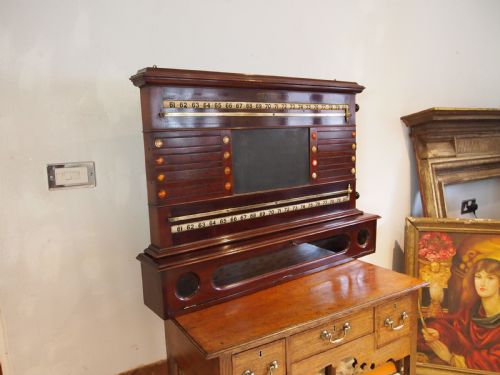
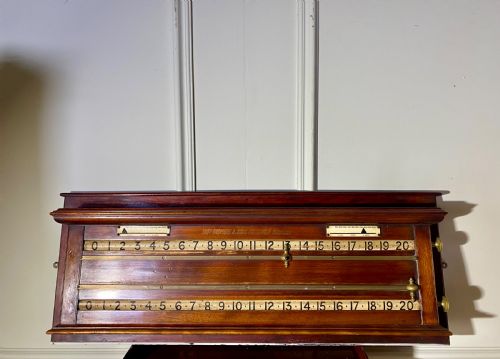
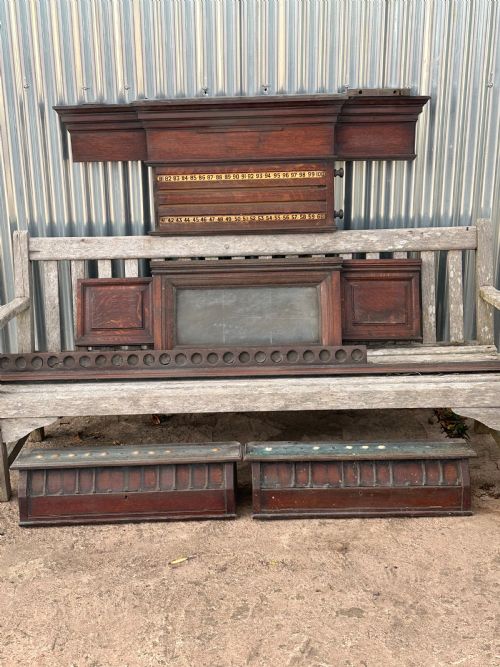
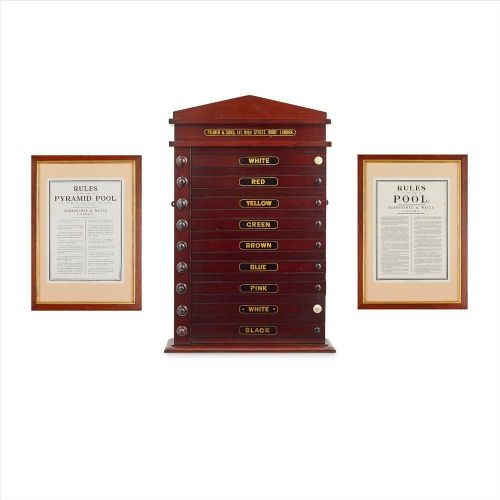
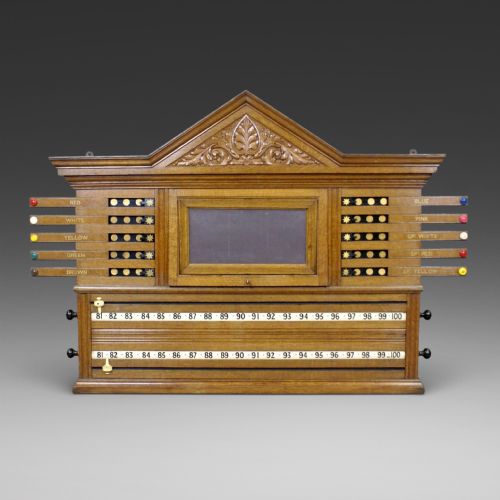
An antique room marker most commonly takes the form of a billiards, snooker or pool scoreboard designed for nineteenth-century games rooms. These large wall-mounted boards record scores using sliding wooden markers and rollers housed in timber frames.
Beyond the games room, listings under this description also encompass smaller desk and table items such as silver novelty advertising bookmarks and set silver place holders modelled as horses heads. These pieces date from the Victorian era up to the nineteen-thirties.
The dominant forms across the selection are substantial timber scoreboards in oak or mahogany, frequently bearing the stamps or attributes of notable makers. Smaller silver items provide a different class of marker intended for books or dining tables.
Materials and construction
The large scoreboards rely on dense hardwoods like mahogany and oak, chosen to support the mechanical weight of sliding scoring dials and brass indicators. These timbers are often polished to a deep finish that highlights the grain.
Smaller items utilise contrasting materials such as silver, silver plate, bone, glass and slate. The silver place card holders and bookmarks demonstrate detailed casting and engraving techniques characteristic of early twentieth-century metalwork.
Antique Room Marker Retail Price Guide 2026
Typical asking prices for room marker among the pieces listed under this phrase on Sellingantiques today, from the lower quarter to the upper quarter. They describe what is for sale here now, not the wider market.
Evaluating craftsmanship
Quality in these scoreboards rests upon the sophistication of the mechanical movement and the integrity of the timber framing. Finer examples include complete brass numbering tracks, smooth-running rollers and original bone or ivory pointers.
Attribution to documented makers elevates a piece considerably above unsigned workshop variants. The presence of makers names or specialist firm brass plaques confirms professional London manufacture and superior joinery.
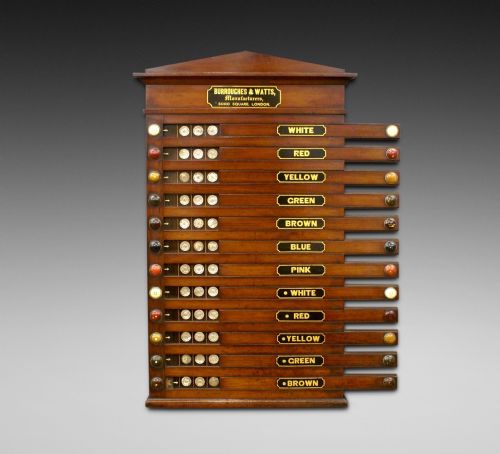
Thurston and Co of London·Cox and Yeman London·Burroughes and Watts·Palmer and Sons
The Antique Room Marker Glossary
- Scoreboard
- A board used for recording the score in games such as billiards or snooker. These items often feature sliding markers set into wooden runners.
- Life pool
- A variation of pool where players lose lives based on potting balls. Scoreboards designed for this game include specialised scoring rows.
- Silver plate
- A thin layer of silver applied to a base metal object. This technique provided the appearance of solid silver at a lower production cost.
- Novelty bookmark
- A bookmark shaped to resemble an object or advertising subject. These items were often produced in silver during the early twentieth century.
Antique Room Marker: Frequently Asked Questions
What is an antique room marker?
An antique room marker is a functional piece used to track scores in a games room or manage details in a study or dining room. The category includes large wooden scoreboards and smaller silver accessories.
Most surviving examples date from the Victorian period through the nineteen-thirties, reflecting the social habits of their eras.
How do billiards scoreboards work?
These scoreboards use sliding wooden pointers, brass dials, or rollers mounted within a timber frame to keep track of points during a game. Players move the markers along numbered grooves as the score advances.
Larger boards accommodate multiple players and complex games like life pool, featuring separate rows for different scoring increments.
How do I identify a maker?
Makers often marked their scoreboards with inset brass plaques or direct stamps into the timber frame. Prominent London firms like Thurston or Burroughes and Watts frequently signed their equipment.
Examining the upper edge or the centre of the board usually reveals these trade signatures.
Where were these pieces used?
Large scoreboards were built specifically for nineteenth-century billiard rooms, gentlemen's clubs and private homes with dedicated entertainment spaces. Their substantial size required wall mounting in rooms with adequate clearance.
Smaller items like place card holders and bookmarks belonged in dining rooms and libraries rather than the games room.